SEO Alone Is No Longer Enough—Here’s How Strategic Content Builds Market Authority
For over a decade, search engine optimization has dictated online success. Businesses optimized their pages, obsessed over keyword placements, and chased backlinks relentlessly. But the rules have changed. Today, content marketing and SEO have become inseparable, not because keywords have lost importance, but because search engines now prioritize value over tactics. Brands that fail to recognize this shift risk invisibility, no matter how well they optimize metadata.
Marketers once relied on calculated tricks—embedding relevant keywords in structured hierarchies, manipulating metadata, and acquiring backlinks through any means possible. These SEO strategies worked for a time. But Google’s latest updates don’t reward optimization techniques alone; they reward depth, originality, and expertise. Algorithms now prioritize content that engages readers, answers comprehensive queries, and builds authority over time. This transition has transformed how businesses must approach, SEO, marketing, and digital growth.
The fact remains: transactional content is obsolete. Search engines increasingly reward brands that create immersive experiences—resources people want to read, share, and return to. This shift extends beyond text; videos, interactive media, and in-depth guides now dominate rankings. Every major industry has seen a shift toward platforms that curate knowledge rather than just funnel traffic. The era of mechanical SEO is over, and those still clinging to outdated tactics will find themselves outpaced by competitors who have mastered narrative-driven content marketing.
Consider brands that have successfully adapted. Companies like HubSpot, Shopify, and Adobe have grown beyond mere products; they’ve built educational ecosystems designed to empower their audiences. Their success proves that businesses no longer compete on keywords alone—they compete on trust, authority, and engagement.
Adaptation requires strategy. It’s no longer enough to create content for content’s sake. Businesses must now conduct deep audience research, analyze keyword intent beyond search volume, and develop valuable content that meets users where they are in their journey. This means moving beyond quick blog posts and into multi-channel storytelling—integrating valuable blogs, videos, email campaigns, and social engagement into a cohesive content ecosystem.
Many businesses marketing online hesitate to embrace this shift, fearing the time and resource investment required. But the irony is clear: those who delay are already falling behind. Automation and AI-powered content creation have flooded the internet with generic material, making originality more valuable than ever. The brands that win will be those who build relevance through expertise, own their niche with authority, and cultivate communities around knowledge—not just rank in search results.
The shift is not a future possibility—it’s happening now. The old SEO playbook is no longer a competitive advantage; it’s a liability. Forward-thinking companies recognize that SEO and content marketing aren’t just a supplementary strategy—it is the foundation of modern digital success. In this landscape, SEO is no longer about search engines; it’s about creating valuable experiences that earn organic visibility through genuine engagement.
Businesses that invest in strategic content marketing aren’t just optimizing for algorithms—they’re building market dominance. Understanding this reality separates those who evolve from those who fade into irrelevance. The next stage requires a decisive move: replacing outdated SEO tactics with a content-first growth strategy built for the era of engagement.
Authority & E-E-A-T + Algorithm Cluster

Search visibility is now governed by experience, expertise, authority, and trust (E-E-A-T) rather than by mechanical ranking factors. Every Google algorithm update reinforces this direction, rewarding SEO content marketing strategy that demonstrates real-world credibility, verifiable authorship, and topical authority. What once depended on backlinks and metadata now depends on how consistently a brand delivers authentic expertise and measurable value across its ecosystem.
AI & Automation Cluster
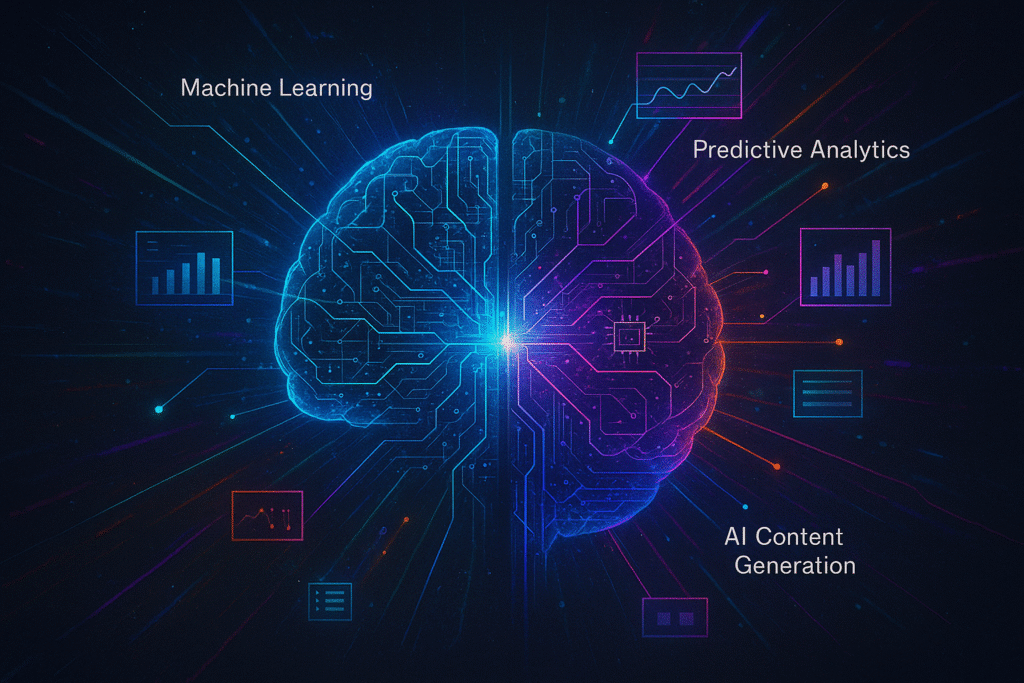
Machine learning and natural language processing have reshaped how algorithms interpret intent. Search engines now use predictive analytics to anticipate what a user truly seeks, not just the keywords they type. That means businesses must adopt AI-enhanced SEO workflows for research and AI content generation—not to replace creativity, but to amplify precision and scale.
Strategy & Content System Cluster
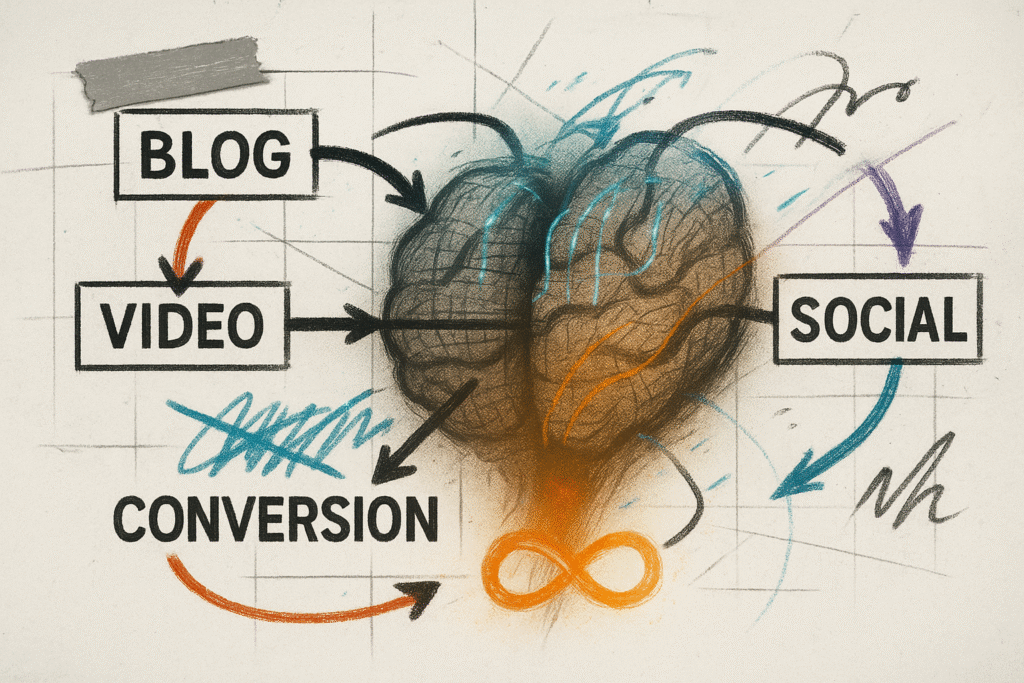
Leading marketers begin with a full content audit to identify strengths and topic gaps, then construct pillar pages and interconnected content clusters that deepen semantic coverage. This architecture increases crawl depth and helps each asset reinforce the next, creating a compounding visibility loop. Combined with a disciplined editorial calendar and attention to content marketing velocity, it forms the operational backbone of sustainable organic growth.
The Rise of Authority-Driven Search—Why SEO Alone No Longer Works

For years, SEO functioned as a rigid formula: keywords, backlinks, and technical tweaks determined a brand’s visibility. Companies invested heavily in ranking mechanics but failed to engage real audiences with high value marketing potential. The result? Websites climbed the SERPs but struggled to convert visitors into loyal customers.
Today, search engines no longer reward mere keyword placement. Algorithms now prioritize depth, authority, and consumer engagement, shifting the landscape entirely. Businesses can no longer expect SEO to work in a vacuum. Instead, those who create meaningful, high-value content are the ones dominating organic reach. In essence, content marketing redefines SEO itself, replacing outdated ranking tricks with genuine authority-building strategies.
Topical Authority + Schema + Trust Signals

Search engines now evaluate not just what you write, but how each piece of high quality content reinforces the topical authority of your entire site. A single high-performing article can elevate—or weaken—the perceived expertise of the whole domain. Implementing schema markup clarifies that expertise for crawlers, translating your brand’s knowledge graph into structured data that reinforces trust signals and authority score simultaneously. This level of precision gives Google explicit context for who you are, what you teach, and why you’re credible.
Conversion Optimization + Behavioral Metrics

But authority alone isn’t enough—conversion optimization has become part of the modern SEO equation. Google measures satisfaction indirectly through engagement metrics: dwell time, click depth, return visits. Pages that convert demonstrate relevance and usefulness, signaling to the algorithm that the experience delivers on intent. Businesses that treat optimization as a full-journey process—from search to conversion—create compounding trust and visibility.
Automation + Crawl Depth Reinforcement

AI-based site audits and content automation tools now allow teams to monitor crawl depth and detect where authority signals are failing to pass through internal links. Automated systems can pinpoint orphaned pages, measure interlinking efficiency, and even recommend new SEO anchor patterns to strengthen thematic relevance. The brands executing this level of precision are no longer chasing rankings—they’re engineering marketing discoverability itself.
How Search Behavior Has Evolved—And What This Means for Your Brand
Customer behavior has fundamentally changed. People no longer just search for information—they demand relevance, expertise, and depth of insight. The modern audience doesn’t engage with keyword-stuffed pages or generic blog posts. Instead, they seek out businesses that provide real value through blogs, videos, and market-leading insights.
Consider the rise of conversational search queries—users ask complex, specific questions expecting search engines to deliver nuanced, expert-driven answers. Google’s recent updates reflect this shift, rewarding brands that provide comprehensive marketing content rather than fragmented SEO tactics. Businesses that fail to adapt to this new reality risk irrelevance as their competitors build lasting authority.
This fundamental search evolution places companies at a crossroads. Brands that continue using SEO as a technical checklist will struggle, while those that master content-driven engagement will thrive.
Search Intent + Semantic Search
Modern search behavior isn’t keyword-first—it’s intent-first. Search engines interpret meaning through semantic search, analyzing context, entities, and user patterns rather than just phrases. When audiences ask specific, conversational questions, Google seeks optimized content that mirrors real human thought not just broad brand marketing material. This evolution has made search intent alignment one of the most decisive ranking factors in today’s landscape.
User Journey + Content Experience
The customer journey now unfolds across multiple touchpoints before a single click. Zero-click results, featured snippets, and predictive autosuggestions shape decisions before visitors ever reach your site. Businesses must therefore design a seamless SEO content experience—one that meets users at awareness, evaluation, and action stages with precision. Every asset should advance the reader through that continuum, reflecting a deep understanding of behavioral flow and eventually landing on your prime marketing assets.
Predictive Personalization + Engagement Signals
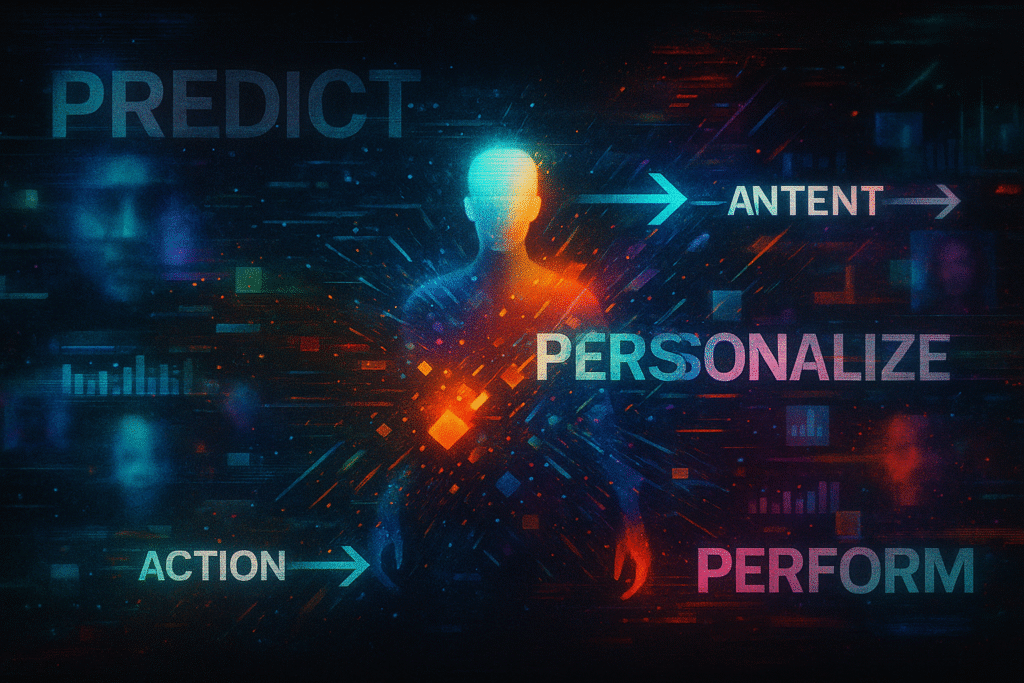
AI now fuels predictive personalization, anticipating what readers need next and tailoring recommendations accordingly. Search engines measure satisfaction through engagement signals—scroll depth, repeat visits, and interaction velocity. When brands deliver content that consistently satisfies intent, the algorithm doesn’t just reward them with visibility—it reinforces their authority in future query contexts.
The Power of Content Strategy—Beyond Keywords and Clicks
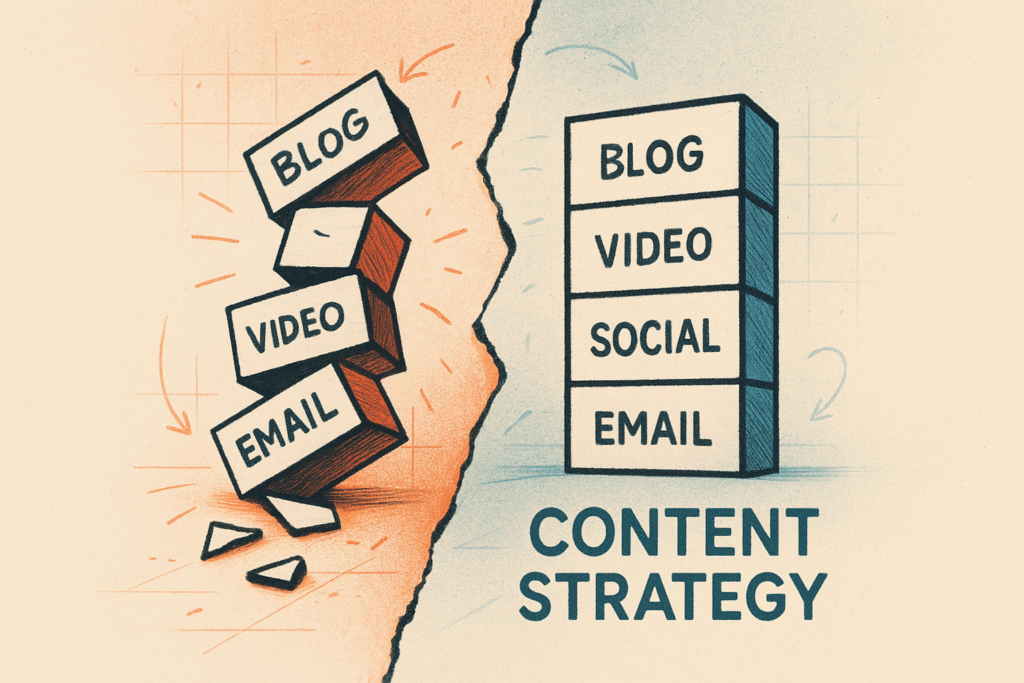
Effective content marketing doesn’t just generate visibility—it builds influence. While traditional SEO kept businesses focused on ranking mechanics, the new era demands a layered content strategy designed for actual human engagement. From long-form industry insights to interactive media, every piece of existing content must serve the dual purpose of ranking and resonating.
The shift is clear: Companies are no longer competing for mere clicks. Instead, the new measure of success is sustained attention, trust-based loyalty, and omnipresent authority in a given niche. A well-crafted content marketing ecosystem—blogs, videos, and strategic shares across social platforms—now outperforms outdated SEO tactics. This transition proves that quality content is no longer optional; it’s the new SEO foundation.
Content Frameworks + Omnichannel Integration
The strongest marketing engines today operate on interconnected content frameworks rather than isolated posts. Every piece—blogs, videos, and email sequences—feeds into a unified omnichannel strategy that compounds exposure across search, social, and owned media. This architecture not only maximizes reach but also reinforces thematic consistency, ensuring that every audience interaction strengthens the same core message.
Content Lifecycle + Repurposing + ROI Metrics
Top-tier brands manage their content lifecycle like an investment portfolio. A single high-performing asset is repurposed into multiple marketing formats—carousel visuals, micro-clips, and newsletters—each designed to extract additional return. By tracking ROI metrics such as engagement rate, organic impressions, and assisted conversions, marketers can quantify how SEO authority compounds over time instead of fading after publication.
Performance Tracking + Engagement Depth
Modern visibility depends on data-backed refinement. Continuous performance tracking across channels reveals which narratives sustain attention and which collapse early. When this feedback loop feeds into editorial planning, user engagement becomes measurable momentum rather than guesswork. This precision transforms seo efforts and content marketing from a creative exercise into an evolving system of predictable growth.
What Businesses Must Do Now to Stay Visible and Competitive
Transitioning from an SEO-only focus to a content-first strategy requires a mindset shift. Businesses must move beyond surface-level optimization and invest in comprehensive, deeply engaging assets that command audience trust.
First, brands must conduct deep research on their target customers’ needs, analyzing search intent and behavioral trends rather than just keyword density. Understanding what audiences truly seek allows businesses to create value-driven content that aligns with search engine priorities.
Second, companies must diversify their formats—long-form guides, high-impact videos, and conversion-driving email strategies must all work in harmony. This multi-layered content marketing approach ensures visibility across multiple platforms while strengthening long-term brand authority.
Finally, to future-proof organic reach, brands must transition from transactional marketing to relational content-building. Prospects don’t just want information; they want expertise, a proven track record, and an undeniable reason to trust a company. Businesses that deliver this consistently will not only rank higher but will dominate industry conversations.
Workflow Automation + Content Operations
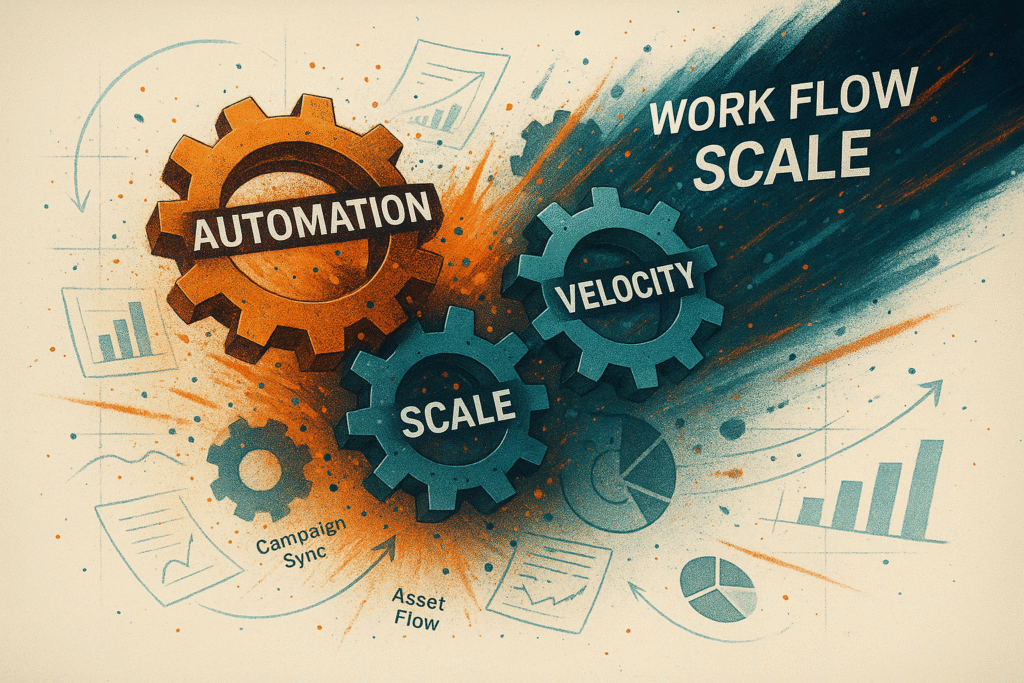
To execute at the level modern SEO demands, brands must systemize how ideas become assets. Scalable content operations now hinge on workflow automation—tools that synchronize writers, designers, and strategists through unified calendars, briefs, and feedback loops. This shift eliminates bottlenecks and ensures that marketing content production keeps pace with search velocity.
Cross-Functional Collaboration + Editorial Process
High-performing teams treat valuable content creation as a cross-functional collaboration between marketing, SEO, design, and data. Each department feeds insights into an integrated editorial process that balances creativity with technical precision. When content is planned through this shared intelligence model, every deliverable carries both narrative power and algorithmic alignment.
Data-Driven Optimization + Performance Scalability
Visibility compounds when optimization becomes cyclical. Data-driven optimization allows brands to adjust topics, visuals, and CTAs in real time, guided by performance metrics rather than intuition. At scale, this process transforms from routine reporting into performance scalability—a self-reinforcing engine where every improvement fuels the next marketing wave of discovery and conversion.
The Future of Visibility—Why Content is the Ultimate SEO Investment
Search algorithms will continue evolving, consistently prioritizing expert-driven, immersive optimized content. Businesses that embrace this shift today will hold an unshakable market advantage in the future. The reality is clear: content marketing sits at the core of SEO, and those failing to adapt will fall behind.
To thrive in this landscape, companies must stop chasing short-term rankings and start investing in sustained authority. Every blog post, video, and email must serve a strategic purpose—aligning with audience preferences, enhancing brand trust, and demonstrating niche leadership.
As the digital landscape keeps shifting, one fact remains: SEO alone won’t save a business, but the right seo content marketing strategy work to ensure its relevance, visibility, and long-term success.
Predictive AI + Algorithm Evolution
Search visibility is entering a predictive era. Algorithms now evolve continuously through AI-driven data modeling that anticipates emerging behavior patterns before they manifest. Predictive AI doesn’t simply interpret past performance—it forecasts what topics, queries, and experiences will matter next. Brands aligning their content strategy with these forward-looking signals stay relevant even as ranking factors shift beneath competitors.
User Experience Optimization + Content Scalability
Sustained visibility depends on how well brands translate expertise into user experience optimization. Fast load times, adaptive layouts, and intuitive navigation now contribute directly to search performance. At the same time, content marketing scalability—the ability to expand output without diluting quality—defines who maintains momentum. Companies that operationalize scalable excellence turn every update into a visibility event.
Long-Term Compounding Growth + Sustained Authority
The compounding effect of strategic publishing is the real differentiator. Each high-value article strengthens a brand’s sustained authority, feeding future performance through internal links, citations, and consistent engagement. Over time, this creates long-term compounding growth: a self-perpetuating loop where credibility attracts links, links attract discovery, and discovery fuels further trust.
Why Content Marketing Isn’t Just SEO—It’s the Entire Playing Field
The assumption that SEO exists in isolation—the idea that algorithms alone determine rankings and visibility—is rapidly fading. The reality is more profound: content marketing shapes the new SEO landscape. Businesses no longer optimize for search in a vacuum, they engineer their entire digital ecosystem around narrative-driven engagement. The search engines follow.
Brands that grasp this shift are scaling authority at warp speed. The new paradigm isn’t about relevant keywords alone, but about the architecture of digital influence. When AI-driven search engines evaluate a website, the priority isn’t just technical optimization—it’s the value, depth, and persuasiveness of the existing content. Marketers who understand this transform their companies into gravitational forces, pulling customers in rather than chasing them endlessly.
AI Content Engines + Omnichannel Ecosystem
The most advanced organizations now operate through AI content engines that manage entire omnichannel ecosystems—coordinating blog publishing, social distribution, and search optimization from a single intelligence layer. This isn’t about posting more marketing assets more often; it’s about precision orchestration. Every asset, from microcopy to long-form authority pieces, is engineered to contribute measurable value to visibility and conversion metrics alike.
Brand Storytelling + Data Orchestration
At the core of this system lies brand storytelling informed by data orchestration. Algorithms respond not just to keywords but to narrative coherence—how a brand’s themes, tone, and expertise interconnect across all digital properties. The result is a digital fingerprint that signals both human authenticity and SEO machine-readable structure, ensuring algorithms interpret your story as authority rather than noise.
Audience Retention + Continuous Optimization + Feedback Loops
Winning brands understand that growth isn’t a campaign; it’s a continuum. Audience retention depends on perpetual relevance—achieved through continuous optimization driven by real-time analytics. Feedback loops refine not just what you publish but why, ensuring every iteration strengthens your marketing position in both the algorithm and the audience’s mind. Over time, this cycle transforms visibility into inevitability.
The Framework That Lets Content Work Harder Than Ever
The businesses seeing exponential organic traffic growth aren’t just ‘publishing more’—they’re optimizing for compounding momentum. There’s a precise strategy at play: an intelligent system that ensures every piece of content reinforces authority, visibility, and trust across multiple marketing channels.
First, leading brands focus on interconnected, high-value content pillars. One powerful blog isn’t enough; brands structure entire content ecosystems that strategically interlink valuable resources, tutorials, thought leadership, and original research. This sustains visibility beyond short-term algorithmic swings, ensuring ongoing authority instead of temporary rankings.
Content Infrastructure + Automation Framework
High-performing brands treat their publishing ecosystem as content infrastructure—a living network of assets engineered for continuous reinforcement. Beneath it runs an automation framework that manages production schedules, publishing cadence, and version control across multiple teams. This ensures that content creation becomes predictable, scalable, and immune to the chaos of ad hoc marketing execution.
AI-Assisted Optimization + Internal Linking Structure
Every piece of high-value content feeds an AI-assisted optimization loop that evaluates on-page metrics, sentiment shifts, and engagement depth in real time. Automated recommendations adjust CTAs, meta data, and visuals while maintaining creative integrity. Parallel to this, a dynamic internal linking structure distributes authority intelligently, ensuring that cornerstone pages consistently reinforce emerging marketing assets and vice versa.
Knowledge Graph Alignment + Compounding Authority
Modern search engines understand meaning through entities and relationships—the knowledge graph. When brands align their framework with these connections, they gain algorithmic clarity: every topic reinforces another, and authority compounds naturally. Over time, this structured cohesion converts valuable content libraries into visibility ecosystems—self-sustaining engines that amplify reach without additional spend.
Second, they engineer diversified content formats that amplify engagement. SEO dominance isn’t blog-centric anymore—it integrates video, social media, and AI-enhanced storytelling that fuels multi-platform discovery. Search results now favor omni-channel presence, boosting brands with embedded, widely distributed content.
Finally, they leverage AI-enhanced content engines that analyze audience behavior, predict search intent, and craft hyper-relevant marketing narratives. This isn’t just about ‘creating more’—it’s about creating strategically. Businesses failing to integrate AI-driven insights into content development will lag behind as competitors automate precision visibility at scale.
The Erosion of Dated SEO Tactics and the Brands That Are Replacing Them

Many companies still cling to SEO practices that have lost their potency. The era of keyword-stuffing, standalone articles, and transactional blog posts is over. Search engines now prioritize high-quality, experience-driven content—meaning businesses that continue relying on outdated tactics will suffer diminishing returns.
The winners? Those who adopt authority-first content strategies. They don’t just create— they build movements. Their existing content becomes a trusted resource, optimizing not only for rankings but for community engagement and influence. This is why content marketing has overpowered isolated SEO techniques: the algorithm follows human behavior, not the other way around.
The shift is measurable. Businesses investing in long-form, research-backed, multi-channel content are outperforming outdated SEO strategies—doubling or tripling their organic reach year over year. The laggards? They’re seeing weaker website traffic, increasing ad spend, and declining engagement.
Legacy Tactics + Algorithm Shifts
The decline of legacy tactics—keyword stuffing, bulk backlinks, and thin content—wasn’t sudden. It’s the natural outcome of algorithm shifts designed to reward authentic engagement. Each Google core update penalized mechanical optimization a little more, forcing a clean divide between brands that understand audience psychology and those still playing by a decade-old marketing rulebook.
Performance Decay + Content Refresh Cycles
Even the best-performing articles decay over time. Performance decay sets in when once-relevant content no longer matches current search intent or audience context. Modern brands counter this through scheduled content refresh cycles—systematic reviews that update examples, reframe tone, and realign entities. This process restores freshness signals while preserving SEO authority momentum.
Authority Decay + Competitive Velocity + User Signals
Authority doesn’t just rise—it can erode. Authority decay occurs when competitors increase competitive velocity by publishing at higher frequency and relevance. Search engines monitor user signals to decide whose content meets evolving expectations. Brands that refresh consistently maintain dominance; those that pause become the case studies of stagnation.
How Brands Are Engineering Content at Scale to Stay Ahead
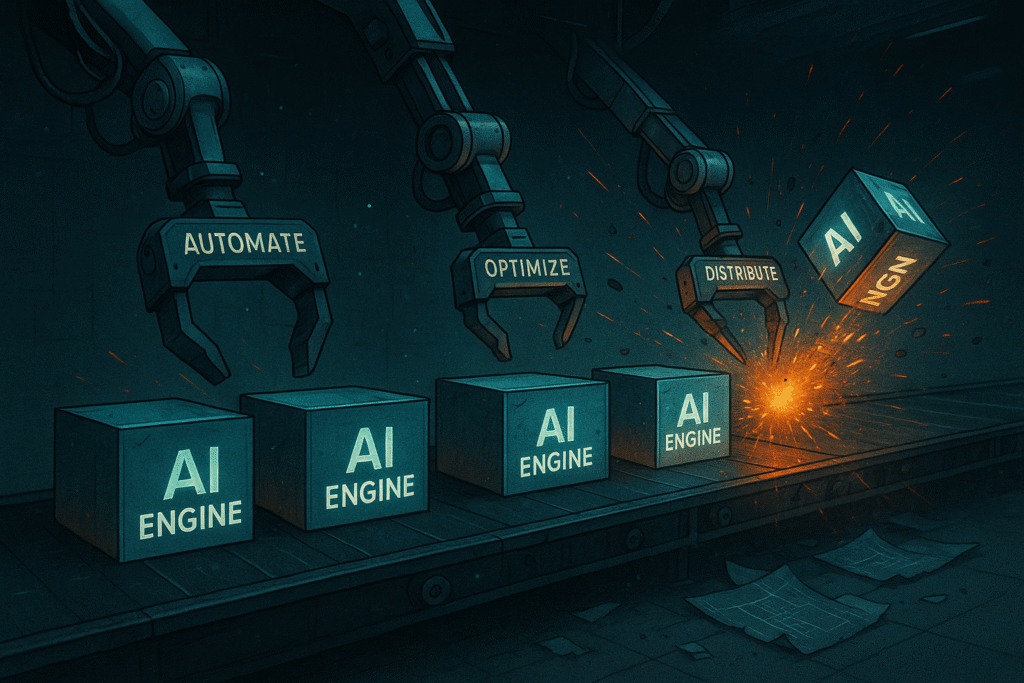
High-performing companies no longer treat content as an afterthought—they treat it as an asset class. The most successful businesses are integrating AI-powered platforms that develop SEO-driven content libraries effortlessly, ensuring perpetual growth through automated precision.
This shift isn’t just about volume—it’s about velocity and strategy. AI-assisted content engines eliminate inefficiencies, allowing brands to create, optimize, and distribute content at a level of consistency and quality unattainable through manual efforts alone.
The result? A perpetual content marketing system that compounds authority, continually reaches new audiences, and sustains dominance without stagnation. Businesses embracing this strategy are transforming their digital presence into a growing, self-sustaining force.
Generative AI + Workflow Automation + Production Velocity
Scalable execution now depends on generative AI integrated into workflow automation. These systems reduce bottlenecks by translating strategic intent into structured briefs, outlines, and even first drafts at production velocity no human team could sustain alone. What once took weeks now happens in hours—without compromising marketing alignment or creative direction.
Efficiency Scaling + Content Governance
To maintain consistency at this pace, brands rely on content governance frameworks that define voice, tone, and factual precision. This structure enables efficiency scaling—growth in volume without dilution of quality. Clear review hierarchies ensure every asset reflects both brand integrity and algorithmic best practices before publication.
Quality Assurance + Process Optimization
The final layer is continuous quality assurance powered by process optimization analytics. Automated audits check schema accuracy, keyword rankings coverage, and topical completeness in real time. This ensures that each published marketing piece strengthens the entire ecosystem rather than fragmenting it. When combined, these systems make scalability sustainable—an engine of perpetual improvement.
The Future: Compounding Growth for Brands That Build Content Ecosystems
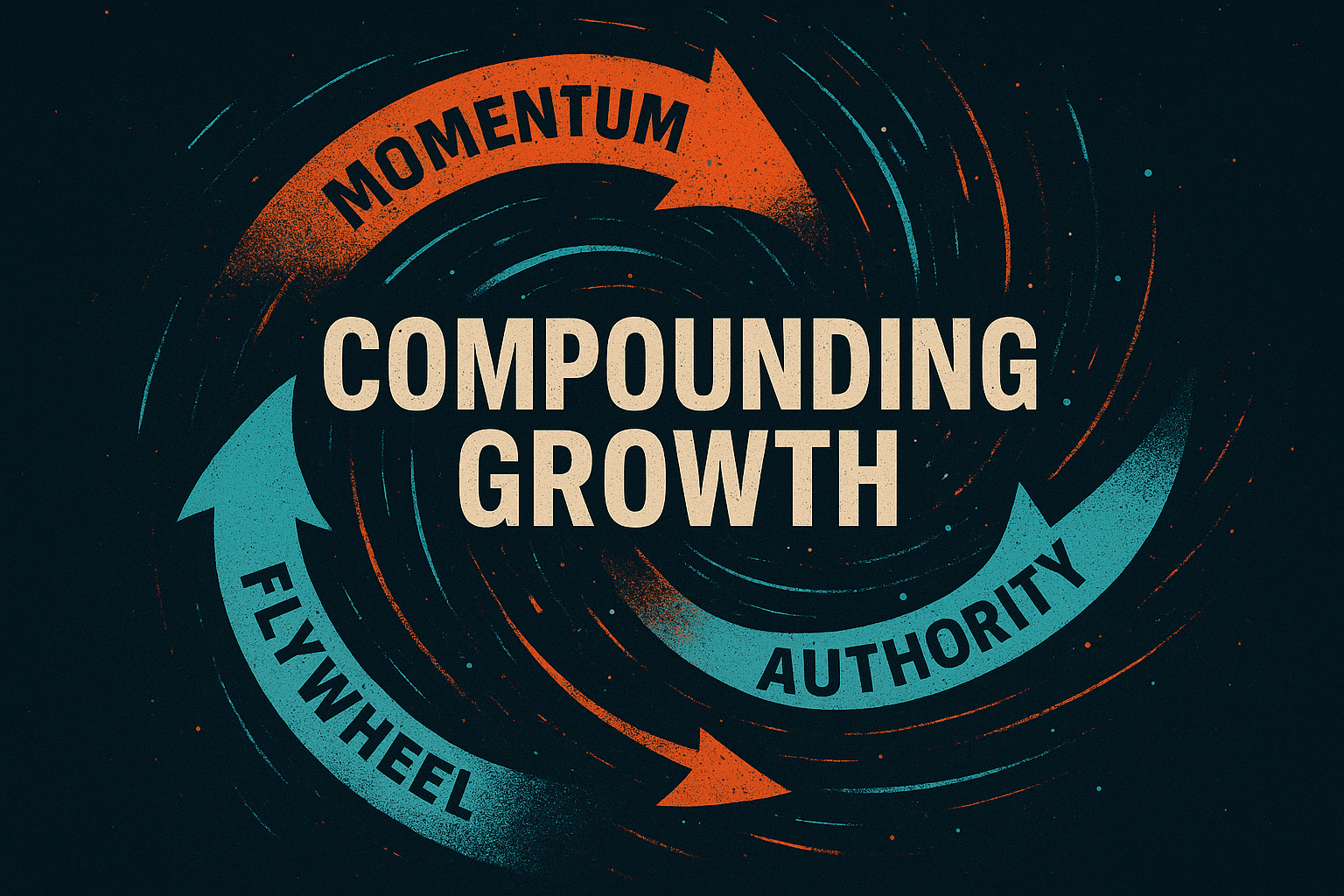
The next stage of digital dominance isn’t about reacting to SEO changes—it’s about building an unstoppable high quality content machine that drives organic authority indefinitely. Businesses that master this approach aren’t just optimizing for search, they’re outpacing competitors before algorithms even dictate the trend.
Ecosystem Maturity + Content Flywheel + Long-Tail Dominance
True ecosystem maturity emerges when each content piece fuels the next in an unbroken content flywheel. High-performing pages strengthen internal links, feed social amplification, and inform future keyword data clusters. Over time, this creates long-tail dominance—where hundreds of low-competition queries collectively generate exponential reach and authority far beyond any single headline term.
Evergreen Optimization + Topic Depth
Modern visibility depends on evergreen optimization. By expanding topic depth within existing clusters and periodically resurfacing cornerstone guides, brands maintain freshness while preserving authority continuity. Evergreen marketing pieces become living assets—continuously updated, contextually relevant, and algorithmically favored for sustained SEO visibility.
Audience Retention + Attention Flow + Algorithmic Reinforcement
Growth compounds only when readers stay within the ecosystem. Optimizing attention flow—the path between articles, videos, and conversion points—extends session duration and strengthens audience retention. These behaviors trigger algorithmic reinforcement, signaling to search engines that your brand consistently delivers value worthy of greater exposure. Each interaction becomes a feedback loop that magnifies discoverability.
The race isn’t to find visibility—it’s to own it. And the ones who realize this now will be the future market leaders.
Intelligent Automation Isn’t Just an Efficiency Play—It’s a Competitive Weapon

The strongest brands aren’t merely creating content—they’re building ecosystems. The shift happening now isn’t just evolutionary; it’s foundational. Businesses that once viewed search optimization as a battle of backlinks and technical tactics now understand that content marketing underpins effective SEO. But understanding is one thing—execution at scale is another.
The companies that have mastered AI-driven content automation aren’t just moving faster. They’re rewriting the rules of digital authority. Their advantage doesn’t rest in volume alone but in the precision of their strategy—where human insight fuses with AI’s limitless capacity for execution.
AI Orchestration + Adaptive Workflows
The new competitive edge lies in AI orchestration—the seamless coordination of multiple automation layers across research, production, and distribution. Within this framework, adaptive workflows respond dynamically to performance data, reallocating creative and technical resources in real time. The outcome is a living system that evolves alongside the algorithm, not behind it.
Decision Intelligence + Cognitive Automation
At its peak, automation transcends task execution and becomes decision intelligence. Using cognitive automation, brands can interpret audience sentiment, prioritize topics, and even predict which narratives will outperform before publication. This creates a closed-loop marketing advantage—every iteration of data makes the next decision smarter, faster, and more precise.
Human-in-the-Loop + Real-Time Analytics + Knowledge Transfer + Competitive Intelligence
Despite its sophistication, automation works best when human-in-the-loop systems guide creativity and contextual judgment. Real-time analytics inform these decisions, while knowledge transfer between teams ensures marketing insights scale organization-wide. This continuous feedback cycle becomes a form of competitive intelligence, allowing brands to anticipate shifts, preempt competitors, and convert speed into strategic superiority.
Yet, many brands hesitate. The skepticism surrounding automated content lingers, fueled by outdated fears—will AI dilute authenticity? Will search engines penalize AI-generated material? These concerns miss the bigger reality: intelligent AI content isn’t about replacing expertise. It’s about amplifying it. The businesses embracing this shift don’t just produce content—they dominate attention.
SEO Is No Longer a Sprint—It’s an Infinite Ecosystem of Influence
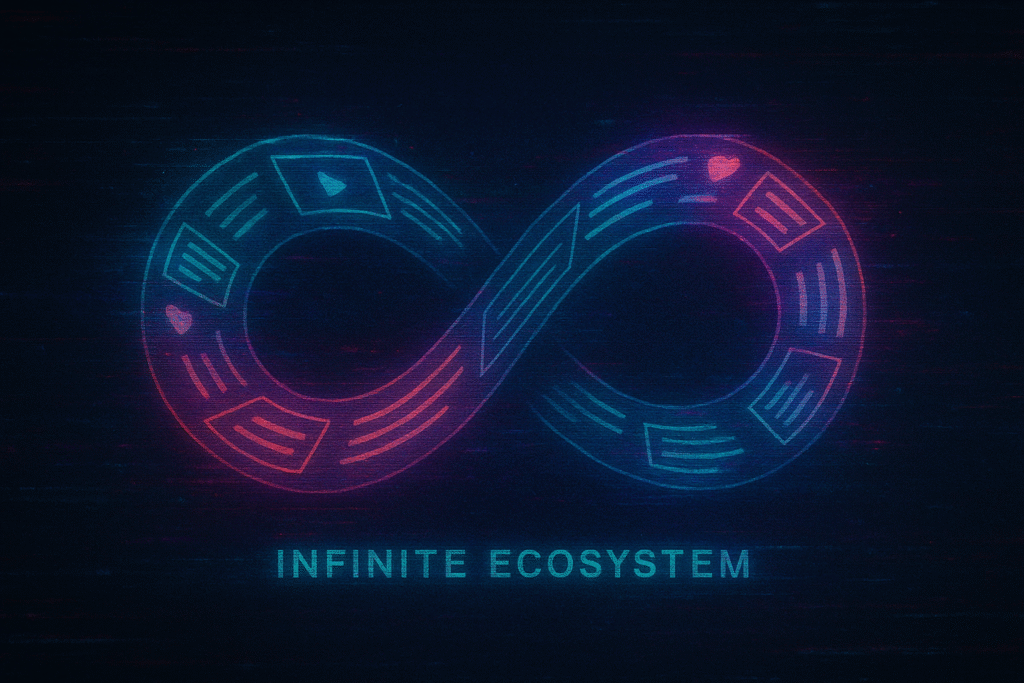
For years, businesses approached SEO as a process—an optimization effort designed to climb rankings and attract website traffic. But today, search dominance isn’t achieved by gaming algorithms; it’s earned through credibility, consistency, and strategically engineered engagement.
The reality is undeniable: companies that still see content as a series of one-off blog posts are being outrun by those developing entire knowledge ecosystems. The best marketers no longer just write—they orchestrate an unbroken sequence of high-value insights, multimedia formats, and AI-enhanced strategic distribution.
What’s emerging is a new paradigm where content marketing and search optimization are no longer separate disciplines. Today, brands create blog posts, video series, authoritative guides, and interactive experiences in a unified strategy designed not just to attract visitors but to hold their attention, convert them into leads, and build long-term brand loyalty.
In this new digital landscape, every stage of the customer journey is fueled by relevant, engaging, and data-backed content. SEO is no longer about merely being found—it’s about staying indispensable.
Why Businesses That Fail to Scale Content Will Be Left Behind
With search algorithms increasingly rewarding expertise, experience, and authenticity, the stakes are higher than ever. The brands that lack a sustained, AI-powered content engine will struggle for visibility as competitors accelerate their publishing cadence and refine their engagement strategies.
Consider this: businesses creating only sporadic content may address search demand in isolated bursts, but those executing a comprehensive AI-driven content ecosystem achieve exponential impact. Every blog, video, and article feeds into the next, ensuring the brand’s digital presence compounds over time rather than fading into search obscurity.
For companies that ignore this shift, the risks are stark. Targeted traffic decline isn’t just a potential outcome—it’s an inevitability. As content saturation increases, those without scalable automation will struggle to maintain relevance. The future doesn’t belong to those who create content merely to exist online—it belongs to those who dominate digital landscapes with relentless strategic execution.
AI-Enhanced Content Marketing Transforms Brands from Participants to Powerhouses
The evolution of content marketing isn’t just influencing SEO—it’s absorbing it. Forward-thinking companies no longer treat blog posts, videos, and long-form guides as isolated tactics. Instead, they integrate AI-driven workflows to analyze audience intent, identify topic gaps, and methodically deploy content that outpaces human competitors.
The businesses thriving in this new era don’t rely on guesswork. They use AI to assess search intent, optimize engagement strategies, and create hyper-relevant resources designed to attract, educate, and convert audiences at scale. The result? A brand that doesn’t just participate in digital conversations—it shapes them.
The opportunity now is clear. Businesses that learn to harness AI-driven content automation aren’t just keeping up with trends—they’re setting them. The brands that fully realize that content marketing powers organic SEO will walk away with the greatest market share, the deepest audience loyalty, and an unshakable position at the forefront of industry transformation.
The question isn’t whether AI-driven content automation works—it’s whether businesses will recognize its unmatched potential in time.
The Winners and the Forgotten—Why Content Marketing Leads SEO’s Evolution
Businesses that integrate AI-powered storytelling are no longer fighting for visibility—they’re setting the agenda. The shift is irreversible: content marketing fuels modern SEO, redefining how companies build authority, engage audiences, and drive demand. Those still clinging to outdated keyword stuffing and shallow blog updates will soon be whispering into the void—drowned out by brands wielding AI to craft high-value, search-dominating narratives.
The brands that understand this transformation aren’t just adjusting their content strategies; they’re reshaping entire industries. While competitors scramble for fleeting keyword rankings, visionary companies are using AI-guided storytelling to create lasting relevance, ensuring their content surfaces at the moment of highest impact. This is no incremental optimization—it’s a rewiring of digital influence itself.
How AI Is Redefining Authority—From Search Rankings to Brand Power
For years, businesses treated SEO as a technical puzzle—an algorithm to decode. That era is over. Today, search engines prioritize content that demonstrates authority, expertise, and authentic engagement. AI is no longer just an automation tool; it’s the force multiplying a brand’s ability to build, sustain, and expand its influence. Those leveraging AI-driven content generation in the right way are no longer just ranking—they’re owning their industries.
The shift isn’t about replacing human creativity with automation; it’s about merging technology with storytelling precision. AI can rapidly analyze market needs, identify gaps, and generate content strategies that deeply resonate with audiences. But it’s the synergy between AI-driven insights and human-amplified storytelling that creates long-term brand success. Companies who learn to balance these forces are dominating, while those resisting marketing evolution are fading.
Building a Narrative Ecosystem—Why Single-Channel Thinking Is Obsolete
Businesses that still view content marketing through the lens of one-off blog posts, scattered videos, or occasional newsletters are operating with a fragmented mindset that can no longer generate lasting impact. The truth is, isolated content efforts don’t build momentum—they dissipate it. AI-driven strategy allows brands to create interconnected storytelling ecosystems where blog posts feed video narratives, social discussions reinforce pillar topics, and personalized email journeys guide readers through customer lifecycles.
By structuring content as a living, evolving entity instead of standalone assets, brands ensure sustained visibility and engagement. Search algorithms reward interconnected value—momentum compounds, and brands secure not just website traffic, but lasting industry relevance. Companies that master this shift aren’t just optimizing for today’s SEO; they’re ensuring they remain discoverable, credible, and authoritative in every future iteration of digital search marketing.
The Consequence of Standing Still—Why Companies Must Act Now
Businesses that hesitate, waiting for AI strategies to become “proven,” are already falling behind. The market is moving at AI-driven speed, and companies lagging in content adaptation face more than just lower rankings—they face disappearing from the industry conversation entirely. Customers no longer wait for brands to catch up. They engage with those who are leading—who anticipate their needs, deliver seamless value, and evolve faster than the competition.
Legacy content strategies, disconnected SEO tactics, and hesitation over AI integration are no longer neutral positions; they are active liabilities. The moment for action is now. The brands that embrace AI-powered content ecosystems are setting new standards for influence and expansion. Those who delay? Their relevance will be an echo, fading as the next wave of industry giants takes over.
Claiming the Future—How Businesses Cement Their Dominance
This transformation isn’t theoretical—it’s already unfolding. Businesses that align with AI-driven, narrative-centric content strategies are creating networks of influence that outpace traditional marketing efforts by orders of magnitude. They aren’t just improving engagement or boosting traffic; they’re redefining what market leadership looks like.
The future of business visibility isn’t about ranking for temporary keyword gains—it’s about constructing lasting authority through interconnected, AI-accelerated storytelling. Content marketing isn’t just enhancing SEO; it has become SEO. The companies that recognize this now will be the ones shaping the industries of tomorrow.