Category: Content Marketing

Content that earns attention, not algorithms. Discover frameworks for creating assets that inform, inspire, and convert—built on behavioral insight, storytelling physics, and SEO fundamentals. From cornerstone articles to repurposed social snippets, learn how to turn every piece into a growth engine.

  • Facebook Ads for Podiatry Clinics That Actually Book New Patients

    How Facebook Advertising Drives Consistent Patient Bookings for Podiatry Practices—When It’s Built on the Right Foundation

    Facebook ads dashboard showing early patient growth for a podiatry clinic

    For most podiatry clinics, Facebook advertising is the first real step into paid patient acquisition.

    It makes sense. The platform lets you target podiatry patients by location and age, promote specific conditions like heel pain or bunions, and generate appointment requests without waiting on referrals or insurance directories. Done correctly, Facebook advertising for podiatry can drive steady leads at predictable costs.

    That’s why so many podiatrists start here.

    A typical podiatry Facebook setup looks like this:

    • Condition-specific advertising (heel pain, plantar fasciitis, ingrown toenails)
    • Geographic targeting within a 5–15 mile radius
    • Simple landing pages or lead forms
    • Ongoing optimization around cost per lead and click-through rate

    At this stage, digital advertising often does work. Podiatry clinics see inquiries increase, calendars begin to fill, and growth feels controllable.

    This is the early success phase—and it’s where most ankle and foot practices stop questioning the system.

    Why Podiatry Facebook Ads Plateau (Even When Metrics Look Fine)

    Digital advertising plateau experienced by podiatry clinics running Facebook ads

    Over time, something subtle starts to happen.

    The ad keeps running. The metrics don’t look broken. But growth slows.

    Cost per lead creeps from $95 to $167. The same audiences see the same podiatry marketing messages. Performance becomes dependent on constant monitoring, creative refreshes, and incremental tweaks. Turn Facebook ads off? Patient flow stops immediately.

    As ad spend increases, clinics often respond by doubling down on paid advertising, assuming more budget will solve what is actually a structural limitation.

    This isn’t campaign failure. It’s a scaling ceiling.

    Facebook ads excel at activating demand for foot care services, but on their own, they struggle to compound it. As more podiatry practices in the same market advertise similar conditions, competition increases while attention fragments. The result? A treadmill effect—more advertising effort, similar output.

    This is the point where most podiatry clinics assume the solution is better targeting, fresher creative, bigger ad budgets, or more frequent optimization.

    Refining the target audience or slicing audience segments more narrowly feels productive, but it rarely changes long-term outcomes once saturation sets in.

    And for a while, those marketing adjustments help.

    But this moment—where paid social still “works” yet stops driving meaningful expansion—is where the podiatry marketing landscape quietly splits in two.

    When Ads Stop Driving Growth

    Some podiatry practices remain locked in campaign mode.

    Others shift their marketing approach entirely.

    From the outside, it looks strange. Smaller practices begin outranking larger ones in search. Newer clinics appear everywhere patients look—Google, social media feeds, condition-based searches—without dramatically increasing ad spend. Their Facebook marketing becomes more effective, not less.

    This isn’t because they discovered better targeting tactics.

    It’s because paid advertising stopped being the system—and became the ignition.

    The Market Split

    Comparison of isolated podiatry ads versus a connected digital marketing system

    This is the moment most podiatry clinics misread.

    Nothing visibly “broke.” Facebook campaigns still generate clicks. Digital marketing dashboards still populate. From the outside, it looks like everyone is running the same race.

    But beneath the surface, the podiatry market has already divided.

    One group continues refining their advertising—adjusting targeting, refreshing creative, reallocating budget. The other group quietly escapes the loop altogether. Same marketing effort on the surface. Completely different outcomes underneath.

    This isn’t about who works harder or understands Facebook ads better. It’s about which foot care clinics unknowingly crossed a structural threshold—and which ones didn’t.

    At this point on the curve, results stop correlating with effort. Online visibility begins to compound for some podiatry practices while stagnating for others, even when both appear equally active.

    The divergence is subtle at first. Easy to dismiss. But once it starts, it doesn’t reverse.

    This is where explanation finally matters.

    Up to this point, the difference between podiatry clinics feels abstract—almost accidental. But the divergence doesn’t happen randomly. It’s driven by a structural change most marketing teams never see until they’re already behind it.

    What follows isn’t a critique of Facebook campaigns for podiatric care. It’s an examination of the digital infrastructure underneath them—and why identical ads now produces radically different outcomes.

    The issue isn’t podiatry advertising itself or the effectiveness of ads—it’s the absence of a system that allows them to compound.

    The Hidden Collapse Behind Most Digital Marketing Strategies

    You didn’t wait for referrals. You didn’t rely on walk-ins. You chose visibility—investing in digital channels that promised reach, engagement, and patient acquisition for your podiatry practice.

    Your clinic runs structured Facebook campaigns. The advertising copy is clean, the creative is compelling, the audience is targeted by geography, age, and condition. You monitor performance, adjust marketing budgets, test call-to-action language. You stayed in motion.

    Even well-designed targeted ads and high-performing social ads begin to decay when they operate without a broader system reinforcing trust.

    But something feels off.

    For all the energy deployed, the results sit flat. Bookings trickle in unpredictably. Cost-per-click looks healthy at $2.80, but podiatry clinic appointments don’t reflect the same trajectory. The metrics say “on track”—but your calendar disagrees.

    Clinics expect advertising to reliably deliver new patients, but instead find themselves fighting harder each month just to maintain the same volume of more patients.

    It’s a quiet tension. Nothing is wrong on paper. The pixel fires. The ad sets populate. The topics—heel pain, bunions, diabetic foot issues—all show moderate interest. Still, there’s a gap no marketing dashboard can solve.

    This isn’t a failure of effort. It’s a failure of digital infrastructure.

    Marketing no longer operates in silos for podiatry practices. Attention may start on Facebook, but conversion happens across a fragmented landscape: search, reviews, website content, follow-up emails. When paid advertising runs without content infrastructure, it creates dissonance. A patient clicks on an ad, gets curious… and finds nothing beyond the ad.

    This is the quiet failure point across healthcare marketing and medical advertising alike: attention fragments faster than campaigns can adapt.

    No trust anchors. No deep content. No momentum.

    The patient searches your podiatry practice name—but your SEO presence is thin. They skim your service pages, then bounce. Your clinic’s authority stalls because there’s no velocity feeding it.

    When practices fail to dominate search results, their online reputation weakens at the exact moment patients are deciding who to trust.

    Facebook advertising is discovery, not decision. It opens the door, but without sustained pathways to guide the patient journey—from first scroll, to search engine check, to final appointment—you’re advertising into absence.

    Discovery without continuity never produces loyal patients, and patient loyalty cannot exist without repeated, reinforced visibility.

    And every day this marketing system runs flat, the cost compounds. Not just in lost patients, but in lost algorithmic momentum. Your brand presence looks like activity but functions as drift.

    The truth is, most foot clinics were never trained to think in velocity. They bought into static success: ads goes live, leads arrive. But digital marketing no longer works this way.

    Today, successful practices aren’t just advertising—they’re creating flywheels. Every Facebook ad fuels their search visibility. Every landing page cascades into authority. Every blog post echoes across social media platforms. And their content compounds.

    Meanwhile, linear campaigns stall. And the moment one local podiatry competitor shifts from static ads to velocity-driven visibility, the game ends for everyone else still refreshing marketing dashboards.

    The scariest part? Most podiatry clinics won’t even see it. Because their data looks safe.

    Until bookings dry up. Until advertising spend spikes. Until they realize they weren’t marketing—they were hemorrhaging visibility one impression at a time.

    This is the fracture moment. Campaigns built in fragments will lose to systems built for motion. And podiatry practices that ignore this shift won’t just lose leads—they’ll lose relevance.

    What happens next isn’t about running better Facebook ads. It’s about rearchitecting the digital infrastructure beneath them—so every advertising dollar spent generates not just clicks, but compounding momentum.

    The Digital Advertising Shift
    Content and advertising infrastructure driving online visibility for podiatry practices

    The marketing system didn’t become more complex—it became faster. And once speed becomes the differentiator, advertising tactics stop being the deciding factor.

    Why Other Podiatry Clinics Outrank You Online

    It defies logic—how smaller, less sophisticated practices with modest ad budgets are becoming the first result patients see. Their services aren’t better. Their expertise isn’t deeper. Their Facebook creative isn’t even more polished. And yet, they pull ahead in visibility, bookings, and online authority as if they’re operating from a totally different marketing blueprint.

    Because they are.

    The real competition has shifted underfoot. Traditional strategies—boosted social media posts, seasonal campaigns, clever advertising copy—still have their place. But they no longer move the needle alone. Foot and ankle clinics relying solely on paid social or isolated digital efforts are discovering a painful truth: you can’t rank your way to authority by brute force. The algorithm now rewards momentum, not moments.

    This is where the divide begins.

    While most podiatry practices churn through short-term promotions, the emerging leaders are constructing invisible frameworks beneath their content—digital infrastructure designed not just to attract, but to accelerate.

    And the results compound in silence.

    One podiatry group in the Midwest ran what most would call a textbook Facebook campaign: geo-targeted ads, strong visuals, solid CTA, patient testimonials. But they barely cracked the third page of search. Another podiatry clinic, just two miles away, outranked them across the board—not because their advertising was better, but because every Facebook ad functioned as a node within an expanding content ecosystem: interlinked service pages, localized authority content, cascading blog optimizations, smart schema injection, and behavioral retargeting through pixels tied to micro-pathways on their site.

    What looked like similar marketing campaigns on the surface revealed an unmatchable distance beneath. The outcome wasn’t even close. Revenue rose 180% in six months. Patient volume doubled. Their lead wasn’t marginal—it was structural.

    At first, some called it coincidence or timing. Then it kept happening. In markets from Phoenix to Boston, from niche diabetic neuropathy services to full-service heel pain clinics, a small group of podiatric care practices began dominating multiple front-page placements—with less advertising spend, fewer social media posts, and a fraction of the visible activity.

    And then the pattern became too consistent to ignore.

    This is where tension sharpens: the game you learned—optimize an advertising set, tweak targeting, run A/B tests—wasn’t wrong. It was incomplete. Facebook ads work, but only when it rides the momentum of something deeper. Without that, every campaign stalls too soon.

    The deeper breakthrough: content velocity.

    The podiatry clinics pulling ahead aren’t just running advertising; they’re feeding a perpetual signal amplification system. Every article becomes an SEO accelerant. Every patient testimonial becomes schema-rich fuel. Every click becomes a behavioral marker, pulling users into content webs, re-engagement sequences, search behavior loops—and ultimately, brand gravity.

    This is how some podiatrist websites—especially ones integrated with stronger digital platforms—end up outranking more established healthcare providers, even hospital networks. Because they stopped treating content like a broadcast and started building it like a feedback loop.

    Many medical practices assume size or longevity guarantees visibility, but healthcare providers without momentum are quietly displaced.

    You may feel the weight of resistance here. The unspoken question: But how can smaller podiatry teams build that kind of digital infrastructure?

    And that’s precisely the fracture forming within the industry. Most marketing teams still map strategy to time. But velocity doesn’t scale with hours—it scales with systems. A handful of podiatry practices have already figured this out, and they’ve begun implementing something seismic in silence. You won’t find them bragging about it. You’ll find them at the top of every search result that matters.

    The name behind that shift isn’t a secret anymore. But it was never designed to announce itself loudly.

    Nebuleap isn’t a tool people talk about. It’s digital infrastructure that moves beneath the surface—one that’s already embedded in the operations of high-growth podiatry groups. What they’ve discovered isn’t how to run better Facebook advertising—it’s how to turn every interaction, every keyword, every patient visit into velocity that feeds back into authority.

    If your competitors feel untouchable, it’s because you’re chasing visible moments while they’ve been compounding unseen ones. And by the time you realize what’s missing, their lead may be irreversible.

    Digital marketing for podiatry is no longer just about reach—it’s about resonance across the full online terrain. And those who understand how to construct that terrain now command the paths patients follow instinctively. Even when they’re not looking.

    But the shift hasn’t yet peaked. The next fracture in the competitive landscape is forming right now—and on the surface, it still looks subtle. Only those who understand what’s driving it underneath will harness it in time.

    Strategy vs Scale in Podiatry Marketing

    For weeks, maybe months, clinics believe they’re playing the same game. Clicks are being tracked, advertising tweaked, new creatives tested. But beneath the surface, something has fractured.

    One group continues refining their campaigns for podiatry on Facebook. The other group escaped the loop entirely—they’ve built environments where content lives forever, drives discovery, and compounds attention long after advertising stops running.

    This is where Nebuleap first becomes visible. While traditional clinics repeat cycles of spend and adjust, others are automating layers of authority that no manual social media post or Facebook ad can replicate in time.

    Each new post strengthens domain authority. Each article preempts future ad spend. Each keyword captured becomes territory competitors can’t outbid.

    That same infrastructure quietly improves patient retention, reinforcing patient loyalty long after the first appointment.

    The podiatry practices dominating growth replaced friction with structure. They removed the human bottleneck. And while others wonder why their campaigns on Facebook fade after each push, these clinics are no longer pushing at all.

    Markets don’t stay impressed forever. They absorb what works, reward it repeatedly, and quietly raise expectations for everyone else.

    The New Marketing Baseline
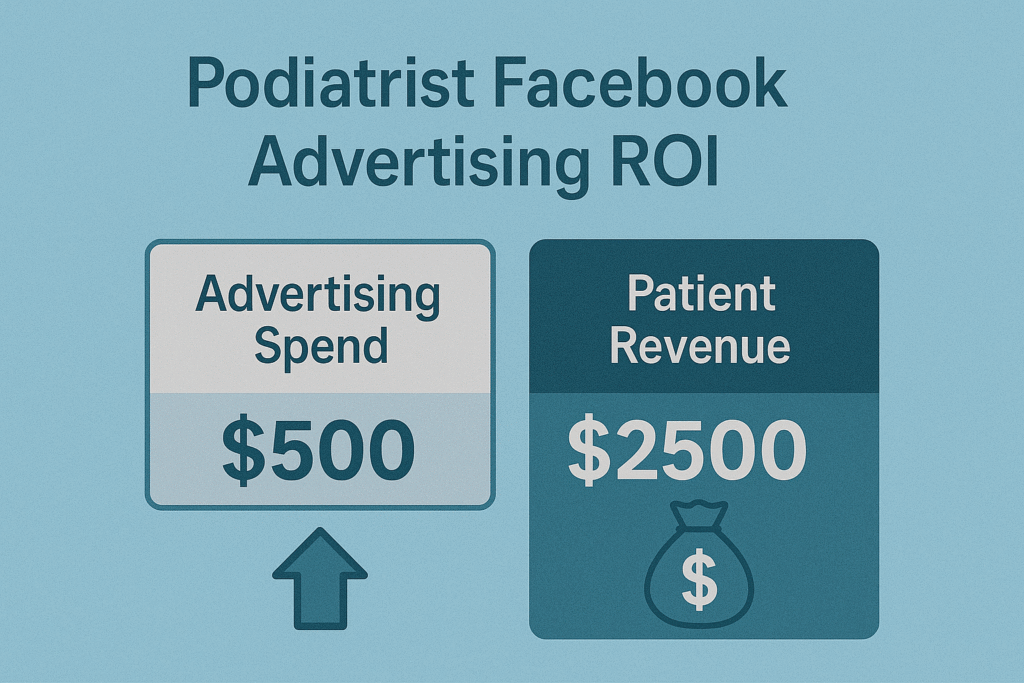
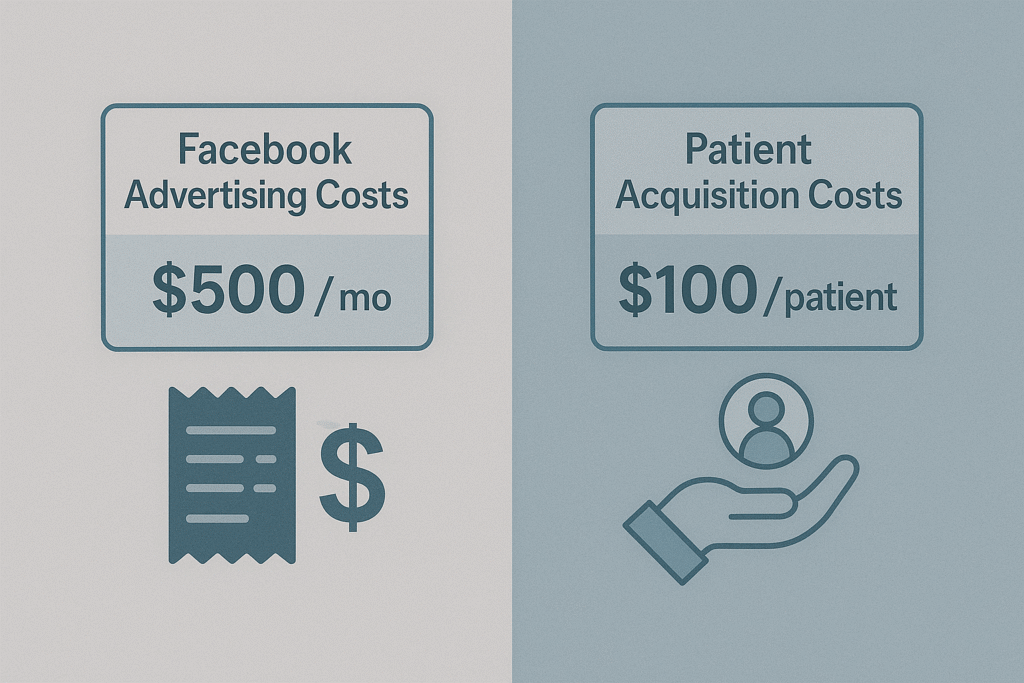
    Podiatry clinic advertising ROI showing ad spend compared to patient revenue

    This is where most podiatry clinics misunderstand what’s happening.

    The shift underway isn’t creating a handful of outliers or early winners. It’s establishing a new minimum standard for visibility. What once looked advanced is quietly becoming expected.

    In market after market, podiatry practices operating with compounding content infrastructure aren’t seen as innovative—they’re simply present everywhere patients look. Search results, condition research, social media touchpoints, follow-up pathways. Their visibility isn’t impressive anymore. It’s normal.

    They become embedded in the local community by consistently educating patients about podiatry care across every digital touchpoint.

    Meanwhile, foot and ankle clinics relying on isolated Facebook campaigns begin to feel friction they can’t name. More advertising spend produces less lift. More marketing effort yields diminishing reach. Not because their advertising is worse—but because the baseline moved.

    This is how innovation curves harden. First it looks optional. Then it looks impressive. Then it becomes invisible—because it’s everywhere.

    By the time a shift reaches this phase, catching up isn’t a matter of improvement. It’s a matter of re-entry.

    Once a new baseline is set, the market stops waiting.

    There’s no announcement. No penalty. No warning label. Podiatry clinics don’t lose visibility because they made a mistake—they lose it because the environment no longer responds to the way they’re built.

    The Shift Is Silent and Permanent

    At first, nothing looked different. The same ad budgets. The same podiatry clinic websites. The same rotating carousel of marketing campaigns—common tags, recycled creatives, a steady stream of patient-focused Facebook posts. But in the background, something had changed. Not in presentation, but in pattern.

    This wasn’t about working harder. Foot clinics were already doing that—running campaigns, managing social advertising, testing different angles on heel pain, bunions, diabetic foot care. What changed was momentum. Some podiatry clinics weren’t just getting clicks—they were owning visibility. Not briefly. Permanently. And without warning, the ground underneath the competitive landscape cracked.

    Your ankle and foot clinic didn’t lose visibility because your content was wrong. You lost it because someone else built their authority to accelerate while yours stayed linear. What seemed like equal marketing effort was anything but. What looked like shared reach was already diverging into irrelevance.

    By the time you realized it wasn’t about Facebook advertising or campaign tweaks, they’d already passed the point of compounding. They weren’t optimizing—they were orchestrating at scale. And single-channel thinking couldn’t catch them.

    That’s how Nebuleap arrived—not as an option, but as the mechanism behind the shift. It was never introduced. It unfolded. One perfectly-timed article. One layer deeper into patient search behavior. One unseen connection between sports injury FAQs and appointment-ready landing pages. All silently pulled into motion by digital infrastructure that evolves faster than your marketing team has hours.

    You’ve seen it yourself. Podiatry clinics with content so perfectly aligned with what patients are searching, you wonder how they knew. Ads that leads not just to traffic—but to interlinked blogs, diagnostic tools, and multi-step appointment funnels. What you thought was a better advertising budget was actually a better acceleration system.

    This is no longer about “running marketing.” It’s about building visibility that outpaces time, outranks effort, and scales without friction. That’s what Nebuleap unlocks—not better content, but infinite compounding reach for podiatry clinics already rooted in patient care and seeking to dominate local authority.

    And it affects everything: from Facebook campaigns to condition-specific landing pages on Achilles tendonitis, from search engine optimization strategies built around nail fungus queries to email automations triggered by local neuropathy searches. Every platform connects. Every result climbs.

    This is how authority now behaves. It moves. It stacks. It owns space. And by the time others react, the landscape has already shifted beneath them.

    You’re not catching up. You’re re-entering the race with the digital infrastructure that’s already won it before you started.

    So no, Nebuleap isn’t the trend. It’s the structural layer underneath the visibility curve. The force that’s been shaping outcomes while others optimized headlines. The reason why your competitors’ Google rankings hardened while yours fluctuated.

    Proximity to strategy isn’t enough anymore. Execution at velocity is the new threshold. And past hard work? That wasn’t wasted. It was the proving ground. It showed you what didn’t scale—and now, you’re finally ready for what does.

    The foot and ankle practices that installed Nebuleap last year don’t just produce more—they produce reach. They aren’t lucky. They’re accelerated. And in the next 12 months, podiatry clinics still thinking in advertising sets will vanish behind networks of orchestrated visibility they never saw coming.

    This isn’t about becoming a leader. It’s about staying visible in a field that now outranks effort with orchestration.

    This isn’t a warning. It’s a description.

    Markets don’t punish podiatry clinics for staying the same. They simply move toward structures that scale with demand. Visibility follows momentum. Momentum follows systems.

    You’ve seen how manual effort peaks. You’ve felt the plateau. You already know the pace you’re keeping is no longer enough. So the only real question left is: will you amplify, or disappear?

  • Podiatry Clinics Transform Digital Content Into Real Marketing Power

    Everything looked right: a sleek website, steady blogs, a presence on every platform. So why did growth still feel unnatural, forced—or worse, flatlining?

    Abstract image of a translucent sphere with internal swirling mist and subtle pressure bulge, symbolizing early patient hesitation before searching for podiatry answers.

    You made the right calls. Built the site. Claimed your listings. Committed to digital. While others were still relying on word-of-mouth and outdated directories, you moved. You invested in content. You pushed for visibility. That already puts you ahead.

    You chose progress. And progress is rarely perfect.

    You tested headlines. Optimized email sends. Watched traffic spikes flatten, then return. The strategy wasn’t broken—it just never gained velocity. The posts were consistent. The results weren’t. You stayed in motion—and still hit resistance.

    This isn’t rare. It’s the quiet norm creeping across healthcare marketing. Especially in podiatry marketing, where digital focus becomes linear: more blogs, more shares, a better-looking site. But linear content investments don’t build exponential momentum. They simulate it.

    A clinic spending five hours a week creating content should eventually gain measurable visibility, right? Local SEO rankings, patient bookings from Google Maps, noticeably higher call volume.

    But in too many cases, the needle moves only until it resets. Every few weeks, it’s back to the same KPIs. A flatline that demands more spend, more content, more urgency—but delivers nothing back.

    That’s not a failure of strategy. Or creativity. It’s something deeper.

    Most content frameworks in podiatry marketing are built on ideas borrowed from big-budget B2C playbooks: nurture funnels, seasonal email sequences, social media rhythm strategies.

    But those approaches never accounted for hyper-local patient acquisition ecosystems, or keyword intent specific to high-stakes, symptom-driven queries like “heel pain treatment near me” or “foot doctor for diabetic neuropathy.”

    What you’re really facing isn’t just search competition. It’s a content ecosystem optimized around the wrong gravity. While you’re orbiting trust-building narratives and educational awareness, your competitors—those deploying deeply aligned SEO for podiatry clinics—are capturing transactional keywords with surgical precision, crowding SERPs before you even have a chance to respond.

    It feels like content should work faster. And more deeply. But acceleration doesn’t just happen through output. It comes from compounding momentum—stacked visibility loops designed to dominate intent at every stage of the patient journey.

    Without those loops, your content stays static. A website update feels like progress—but without dynamic reinforcement, that SEO equity degrades in weeks. A well-written blog post floats briefly in mid-rank stasis without ever breaking top-three.

    A Facebook ad generates clicks—but fades the moment the budget dries up. Nothing sticks. Nothing compounds. And no one tells you why.

    This isn’t your fault. It’s the infrastructure under your messaging—the invisible scaffolding holding it together (or letting it collapse under weight).

    And once that realization hits, the question starts to shift: Why have I been building visibility without building momentum? If this is what consistent digital marketing looks like… why does the impact feel so temporary?

    As more podiatry clinics crowd the local digital space—bidding on keywords, purchasing SEO services, launching PPC campaigns—the real differentiator becomes something most never think to question: frequency without feedback is friction.

    Content must inform, connect, and loop back to itself. Otherwise, every gain is a new beginning. Not a building block.

    And in a space this competitive, new beginnings lose to scalable loops, every time.

    But what if the reason you’ve struggled to scale isn’t the strategy, or the spend—but the absence of architecture built to amplify it?

    Presence No Longer Equals Visibility

    Minimalist digital poster showing a glowing UI rectangle fading into a muted background, illustrating how podiatry clinics can appear online but remain invisible in modern search environments.

    A podiatry clinic can post regularly, maintain a polished website, and pour budget into digital ads—and still find itself invisible in the local search ecosystem.

    This isn’t a failure of effort, but a collapse of alignment. The rules that once rewarded consistency and brand-polished messaging now elevate something else entirely: systemic momentum.

    When Digital Foundations Stop Being Enough

    Abstract high-impact chaos poster illustrating stalled digital marketing progress with fragmented UI elements to represent inconsistent podiatry practice visibility.

    In traditional podiatry marketing, the assumption was that building a digital foundation—an optimized website, periodic blogs, a presence on social media—would be enough. And for a time, it was.

    Clinics could coast on static assets and occasional bursts of online activity to drive appointments and patient acquisition. But that system quietly expired.

    Why Momentum Outperforms Consistency

    Hyper-zoom conceptual image showing a metallic sphere accelerating through abstract motion rings to symbolize marketing momentum outperforming content consistency.

    Today’s top-ranking practices are not producing more articles. They’re growing faster, ranking higher, and landing more foot and ankle patients because their entire asset stack is engineered for velocity—stacked in layers, deployed in sequence, and looped in ways the average clinic never sees. And the impact is exponential.

    What’s become clear is this: podiatry marketing isn’t about visibility in theory—it’s about velocity in motion. It’s the compounding momentum of interconnected assets that amplifies marketing ROI.

    One blog post doesn’t just live—it’s repurposed into short-form video for heel pain awareness campaigns, embedded into patient intake journeys, and algorithmically connected to local search intent for bunion treatment queries. Stand-alone material has become the slow lane.

    The Hidden Dispersal Problem in Modern Marketing

    Abstract image of a cube dissolving into drifting fragments, symbolizing the dispersal of podiatry marketing efforts that fail to compound.

    Skeptical practices often point to “consistent posting” or “solid SEO” as their primary online strategies. But hidden beneath the surface, their efforts aren’t compounding—they’re dispersing.

    Instead of building gravity, they evaporate on contact. The difference isn’t visible in the asset media—it’s visible in the results.

    The Invisible System Your Competitors Already Built

    Abstract blueprint-style image emerging from darkness with a glowing central nexus, symbolizing hidden marketing systems driving competitor advantage.

    If you examine the practices dominating local podiatry search, a pattern emerges. Their digital footprint doesn’t look prolific on the surface. In fact, many don’t appear loud.

    But behind the curtain, their content constructs are relentlessly structured around engagement flow, depth, and informational interconnectivity—touching everything from diabetic foot care to neuropathy to ingrown toenail treatments with precision.

    These clinics aren’t just producing content—they’re operating on a different plane of execution entirely. And this is where the gap quietly becomes irreversible.

    Because while most providers are tweaking CTAs or testing new ad creatives, a new class of competitors has already aligned with an unseen force—one that transforms content strategy from output to orchestration.

    Their assets are pre-mapped for amplification, sequenced for patient lifecycle alignment, and optimized not just for keywords, but for momentum. The engine they’re running was built to bypass the struggle of human bandwidth. It’s non-incremental. It compounds.

    That engine has a name—but most clinics don’t know it exists. They’ve already lost ground to it before they’ve even seen it. It isn’t publicly showcased. It isn’t accessible through tutorials or webinars.

    It’s moving silently—and it’s already reshaping the top 10 search results for high-intent phrases in podiatry marketing across dozens of cities.

    This isn’t the future. It’s the invisible present. And by the time most foot and ankle specialists realize what’s shifted, re-entry into the momentum curve will cost 2–3x more than it did six months prior. The longer the delay, the deeper the gap.

    What once required strategy and luck now demands something different entirely: a system that executes with precision at a velocity no human team can sustain alone.

    That’s the real difference—and it’s why practices who once led their local categories are now being outpaced by names they’ve never heard of.

    And those names? They’re powered by something the rest of the market hasn’t caught up to—yet.

    The Content Friction Point

    Conceptual image of a cracked floating concrete slab symbolizing outdated digital foundations in podiatry marketing.

    Patients never begin where providers imagine they do. They don’t start with certainty, diagnosis, or a clean search query like “podiatrist near me.” Their journey starts earlier—quietly, privately, and emotionally—long before the algorithm ever sees their intent.

    A subtle ache in the heel first thing in the morning. A toe that’s been sore for months but doesn’t “look bad enough” to justify an appointment. A runner who assumes the pain will pass.

    A diabetic patient who doesn’t want to overreact. A parent noticing their child limping but hoping it resolves on its own. Tiny symptoms trigger tiny hesitations, and those hesitations stack into quiet delays no clinic ever sees.

    The Emotional Search Before the Actual Search

    What makes this friction so dangerous is its invisibility. Clinics often assume patient discovery begins when the patient finally types something into Google. But the real beginning—the emotional beginning—happens internally, shaped by uncertainty, fear, annoyance, and conflicting self-talk.

    The individual is searching long before they’re “searching.” And because they’re searching emotionally, the language they use reflects uncertainty rather than confidence. They don’t look for plantar fasciitis. They look for “why does my heel hurt when I get out of bed.” They don’t look for neuropathy.

    They ask, “why do my toes feel numb sometimes.” They don’t search for ingrown toenail procedures. They search for “my toenail hurts when I touch it.” They don’t begin with clinical terminology—because emotionally, they’re not there yet.

    The Language Gap That Kills Visibility

    The problem is that podiatry practices tend to write for the moment of clarity, not the moment of confusion. They write for diagnoses, not the emotional fog that precedes them.

    The industry produces beautifully formatted condition pages using correct terminology and accurate explanations, but these pieces of content rarely match the internal language of the patient’s first moment of curiosity.

    And that mismatch creates a fracture that quietly decides who gets found and who gets missed.

    Why Academic Content Misses the First Moment

    Search engines don’t reward correctness—they reward alignment. When a searcher’s emotional question intersects with content that mirrors their phrasing, their uncertainty, or their specific micro-experience, visibility accelerates.

    When the patient’s question collides with educational material written only in clinical abstraction, visibility collapses. This is the hidden force siphoning thousands of potential patient searches away from practices that have “good content” but the wrong language at the wrong moment.

    This is where most podiatry growth silently dies. Clinics assume low impressions reflect competition or algorithm shifts. In reality, low impressions reflect a deeper misalignment: the person’s mindstate is emotional while the clinic’s page is academic.

    The patient begins with discomfort; the clinic begins with diagnosis. The patient types fear; the clinic publishes facts. The gap between these two languages becomes the friction that keeps visibility from ever compounding.

    The Emotional Arc That Drives Modern Discovery

    Clinics dominating discovery today aren’t winning because they publish more. They’re winning because they appear earlier in the patient’s emotional arc—before clarity, before certainty, before diagnosis.

    They don’t wait to know what the condition is called. They meet the individual inside the hesitation itself. They show up when they are unsure, not only when they are convinced.

    This is why the gap feels so unfair. A clinic can be exceptional at care, experienced, trusted, and locally respected—yet be digitally invisible at the exact moment someone begins their journey.

    Not from lack of quality or competence, but from a misalignment with the way people actually think, feel, and search.

    The deeper truth is that discovery isn’t driven by clinical accuracy anymore. It’s driven by emotional resonance at the earliest stage of uncertainty. The podiatry providers that understand this aren’t simply ranking better.

    They’re intercepting intent before intent even forms clearly. They aren’t chasing search behavior; they’re syncing with the psychological moment that precedes it.

    Once you see this, you begin to understand why “good content” isn’t enough and why visibility feels sporadic, fragile, or temporary. The patient begins emotionally. The algorithm interprets behaviorally.

    And most clinics answer clinically. The winners are the ones who bridge all three without forcing them to think differently before they’re ready.

    And that’s the new friction shaping the divide.

    Digital Signals That Shape Choices

    For years, podiatry clinics treated digital marketing like a local checklist. Optimize the Google Business Profile, keep the website clean, publish a few condition pages, add some basic SEO, trust that proximity would carry the rest. On the surface it looked reasonable.

    But the landscape that drives search today is no longer a simple local directory. It’s a layered, multi-signal environment where podiatry visibility is shaped by a constant blend of behavior, digital relevance, marketing reinforcement, SEO strength, and social media proof.

    Patients don’t simply “find a podiatrist.” They drift through overlapping layers—maps, mobile queries, symptom searches, insurance filters, YouTube clips, short-form videos, and even retargeting ads from Facebook ads or Google Ads—each layer nudging them closer or further from a specific clinic depending on how aligned the digital material feels in that moment.

    A podiatry team might assume they’re competing with three or four other offices nearby, but in reality they’re competing across dozens of search touchpoints governed by search engine optimization signals, social engagement patterns, and how often their marketing ecosystem shows up when questions begin.

    How Micro-Moments Decide Everything

    Follow a single patient’s journey and the structure becomes obvious. Heel pain sparks the first search on a phone. That search leads to articles, videos, and FAQ-style resources.

    As concern grows, they check Google Maps and compare podiatry offices by reviews and photos. Next they skim social media to see if a clinic feels active and trustworthy. That early social media impression often becomes the emotional filter through which every later touchpoint is judged.

    Somewhere in that sequence, digital ads appear—often Facebook ads reinforcing symptom-specific messaging—making whichever clinic already feels familiar even harder to ignore.

    By the time the person is ready to act, they’re not reacting to one page. They’re responding to an entire pattern of digital signals and marketing touchpoints that made one podiatry clinic feel inevitable.

    Why Familiarity Beats Frequency

    This is why so many practices feel invisible despite “doing everything right.” They built digital assets for the surface layer—the local result—while more advanced competitors quietly built for the entire layered journey. The clinics that now dominate search, SEO-rich placement, and online trust didn’t publish more content.

    They integrated their digital assets into a cohesive marketing architecture. They wove themselves into more layers—social media visibility, treatment-focused SEO pages, symptom-driven articles, remarketing ads, and retargeted video material.

    They stopped thinking of visibility as a position and started treating it as a pattern. In modern podiatry, visibility isn’t given. It’s constructed through connected online material and disciplined digital marketing orchestration supported by strong search engine optimization.

    Podiatry Content That Misses the Moment

    This is the part no one tells podiatry providers when they invest in digital marketing: most digital material doesn’t fail because it’s inaccurate. It fails because it collides with the patient’s world at the wrong psychological moment.

    Analytics make it look like a performance problem, but underneath the metrics, it’s a timing and alignment problem. The messaging arrives late, in the wrong language, and with the wrong marketing energy. Even with strong SEO, digital assets fall flat when they’re not aligned with the emotional arc of the searcher.

    The Psychological Misfire Behind Most Messaging

    Patients don’t step into search with a diagnosis in mind. They step in with doubt and discomfort. They rarely type “plantar fasciitis specialist” first. They start with, “sharp heel pain when I wake up” or “bottom of foot hurts after standing.”

    They’re not ready for condition pages written from a clinician’s viewpoint. Yet that’s where most podiatry communication begins—deep in defined pathology, clean diagrams, and confident explanations.

    The patient is still emotional. The digital material is already clinical. SEO may bring them together, but the mismatch quickly pulls them apart.

    When Behavior Data Works Against You

    When that mismatch happens, behavior sends a brutal message back to the search engine. The patient clicks, skims, doesn’t see themselves in the first few lines, and bounces. That retreat becomes data.

    Algorithms don’t interpret it as “great educational material, wrong moment.” They interpret it as “not relevant enough.” Over time, even beautifully crafted podiatry assets sink, and the clinic assumes its online strategy or SEO isn’t strong enough, when in reality the marketing message is simply out of sync with the headspace of the reader.

    How Recognition Replaces Resistance

    Meanwhile, a smaller clinic with fewer pages quietly rises. Their digital messaging mirrors the patient’s early language, then gradually bridges into clinical clarity. Their marketing feels less like a lecture and more like a conversation.

    The first-contact experience doesn’t overwhelm; it recognizes. Once that happens, every additional piece—whether a blog article, a short social media clip, or a retargeting sequence powered by Facebook ads—feels like a continuation, not a restart.

    Repeated exposure across social media platforms strengthens recognition and makes the entire pathway feel more coherent. Their search engine optimization isn’t louder; it’s more aligned with their behavior.

    The clinics quietly winning aren’t just better writers. They’re better at aligning online assets, social media reinforcement, SEO structure, and digital marketing with the actual emotional state of the patient. They use search engine optimization to show up, but they use empathy to stay.

    That combination turns first contact from a one-off visit into the start of a relationship. And in a crowded digital environment where ads, videos, and search results all compete for attention, that emotional alignment becomes the true conversion mechanism.

    SEO That Builds Visibility Momentum

    There comes a moment in every podiatry clinic’s online journey when an uncomfortable truth appears: patients don’t experience foot and ankle issues in the tidy categories a website uses.

    They move through overlapping worries—symptom by symptom—across articles, videos, social media feeds, and even the occasional set of Facebook ads that follow them from one platform to the next.

    Modern marketing systems and seo frameworks now reflect this human pattern with ruthless accuracy.

    Why Condition Clusters Strengthen Podiatry Reach

    Standalone explanations no longer earn meaningful visibility. What earns traction now are condition clusters—interconnected webs of educational material where each article, video snippet, FAQ, or short-form message reinforces the others.

    Clinics leading today aren’t treating seo and marketing as separate efforts. They’ve merged them into a system. They build ecosystems around specific problems: heel pain tied to morning pain, arch strain, and gait imbalance; bunion irritation connected to footwear issues and surgical versus nonsurgical considerations.

    Every piece inside these clusters behaves like part of a marketing engine rather than a stand-alone resource.

    How Clusters Reinforce Trust Through Content

    This is why so many podiatry providers feel like their websites are “complete” yet still underperform. They built everything once instead of building everything in relation to everything else.

    In more advanced clinics, clusters behave like an interconnected network. When one seo-optimized page gains traction, nearby assets rise with it. When a short post on social media gains engagement, it reinforces the authority of the entire cluster.

    When ads, especially tightly targeted Facebook ads, run alongside these pathways, they amplify recognition instead of leading users into dead ends.

    The Four Primary Clusters Driving Search Power

    In practice, podiatry teams anchor their online presence around clusters such as:

    • heel pain and plantar fasciitis
    • bunions and structural forefoot issues
    • diabetic foot care and neuropathy
    • sports injuries and repetitive strain

    Each cluster becomes its own marketing and search engine optimization engine. Patients may enter through any door—an article, a video clip, a social media micro-moment, or a retargeting ad—but once they’re inside a well-built cluster, they’re carried forward.

    Recognition turns into orientation. Orientation becomes clarity. Clarity becomes action. What once behaved like isolated pages now functions like a living marketing system, increasing momentum with every new piece added.

    Marketing Pathways That Convert

    Every podiatry clinic believes that once a patient understands their condition, the next step is obvious: schedule an appointment, start treatment, follow the plan.

    But in digital spaces, understanding alone rarely creates action. Patients live in the gap between recognition and commitment. That gap is where the right mix of visibility, marketing, and guidance makes all the difference.

    The Hesitation Gap Most Podiatry Teams Miss

    Search data and patient behavior reveal a consistent pattern. After reading about a condition, people rarely book immediately. They open new tabs, compare clinics, look for reviews, skim social media, and glance at ads that follow them around.

    This repeated social media presence gives the pathway a familiar cadence, even before someone is ready to book. They’re looking for something simple but rarely articulated in traditional marketing—proof that there is a clear, manageable pathway from where they are now to where they want to be.

    Teams that only describe the condition leave this need unmet. Clinics that use online content to map out the treatment journey quietly reduce fear and friction.

    Why Pathways Outperform Traditional Marketing

    Strong digital pathways don’t bury patients in clinical jargon. They translate the process into human terms: what the first visit feels like, how the evaluation works, which treatment options typically show up, how long most people take to feel relief, and what ongoing care looks like in real life.

    This can be expressed in many formats—website copy, educational SEO pages, email sequences, or even short social media videos—but the underlying marketing function is the same.

    The pathway transforms treatment from an abstract medical event into a narrative the patient can see themselves stepping into.

    The Four Signals Patients Notice on Social Media

    A clear pathway often includes a handful of simple checkpoints:

    1. what the initial podiatry evaluation usually uncovers
    2. what treatments feel like in normal day-to-day life
    3. how improvement tends to progress over time
    4. what relief and long-term prevention look like

    When a patient encounters this level of clarity across multiple touchpoints—search results, content hubs, retargeting ads, and social media—they don’t feel pushed. They feel pulled.

    The marketing isn’t about pressure; it’s about permission. The more tangible the pathway becomes, the easier it is for a patient to stop researching and finally choose.

    Clarity That Strengthens Trust

    Most patients don’t arrive at a podiatry website with a clean understanding of what’s wrong. They arrive after days or weeks of fragmented digital research—snippets of articles, half-remembered social media posts, conflicting advice from friends, and algorithm-driven suggestions that blur together.

    By the time they hit a clinic’s content, they’re not just searching for information; they’re searching for diagnostic clarity that cuts through the noise.

    In modern digital marketing, that clarity has become a decisive competitive edge—one that your SEO work, messaging, and social media presence can either amplify or quietly dilute.

    Why Diagnostic Clarity Outperforms Search Noise

    When a clinic’s content names a patient’s exact pattern of symptoms with precision, something shifts immediately. Anxiety softens. Confusion eases. The online experience begins to feel less like random search fuel and more like a guided evaluation.

    That’s the moment where SEO and content strategy stop being abstract concepts and start functioning like a real diagnostic extension of the practice.

    The clinic’s presence isn’t just visible—it feels clinically anchored, supported by the same diagnostic story appearing in articles, social media clips, and even quiet remarketing ads running in the background.

    The Messaging Frame That Enhances Content Impact

    Clinics that win this game don’t limit diagnostic clarity to a single “conditions” page. They weave it through blogs, FAQs, social media channels, and simple educational campaigns.

    Because social media delivers diagnostic reassurance in short, digestible formats, it becomes one of the strongest reinforcement tools clinics have. The same diagnostic frame appears in multiple formats: describing typical causes patients overlook, normalizing symptoms they were afraid to mention, clarifying what separates mild discomfort from a more serious issue, and clearly signaling when it’s time to stop self-diagnosing and schedule with a podiatry specialist.

    This is SEO used not just to gain visits, but to guide thinking and reinforce your overall marketing system.

    How Social Channels Amplify Diagnostic Confidence

    A strong diagnostic frame often leverages a few high-impact details:

    • everyday causes patients don’t realize can trigger their pain
    • symptom patterns that prove they’re not “imagining it”
    • distinctions between minor irritation and real risk
    • unmistakable signs that professional podiatry care is needed

    Presented repeatedly across digital content, email campaigns, social media updates, and even Facebook ads that gently follow patients after they leave the site, these details give people structure.

    Structure reduces fear. Reduced fear turns passive scrolling into active decision-making. In a crowded search environment full of generic health information, the clinic that delivers diagnostic clarity first—backed by consistent SEO, marketing, and social media reinforcement—is usually the clinic that wins the appointment.

    The Marketing Engine in Motion

    The shift didn’t arrive with fanfare. It arrived quietly—in analytics dashboards, in slipping visibility, in the subtle sense that yesterday’s strategies no longer carried the same weight. One month, a podiatry clinic’s online efforts seemed stable; the next, everything began thinning out.

    Podiatry teams still relying on old models assumed they needed more posts, more campaigns, more ads. But the clinics studying the pattern realized something different: the baseline for growth had changed, and growth now depends on the strength of your marketing system, not the volume of your output.

    Familiarity as the Marketing Trigger Clinics Overlook

    Today, the clinics gaining ground aren’t the ones shouting the loudest. They’re the ones whose content, marketing signals, SEO support, and social media presence all feel connected—aligned so cleanly that a patient senses consistency before ever stepping into the office.

    A person might first encounter a short video about heel pain on social media, later skim a blog article, and then be met with a set of Facebook ads reminding them of the same pathway they just saw.

    That social media familiarity makes the rest of the marketing system feel less like noise and more like a natural next step. Nothing feels forced, yet everything feels familiar. That familiarity is not an accident. It’s architecture.

    When Every Asset Supports the Broader Podiatry System

    This new baseline isn’t about flooding the internet with content. It’s about making sure every asset earns its place in a larger marketing pattern.

    Individual posts still matter, but what matters more is how they reinforce one another: SEO pages linking into service pathways, social media clips echoing the same diagnostic clarity as your long-form pieces, and email follow-ups that reinforce what your ads already suggested.

    Growth used to be something clinics chased through bursts of effort. Now it’s something they build through consistently aligned marketing systems supported by steady SEO reinforcement.

    The Divide Between Fragmentation and Ads-Driven Momentum

    Providers that adapt to this reality stop working in fragments. They remove friction. They let behavioral data guide which pages deserve SEO attention. They align their ads with the moments patients feel hesitation.

    They let social media, SEO, email, and retargeting operate like a unified network rather than disconnected strategies. Over time, this creates a quiet but undeniable divide.

    On one side are clinics still treating marketing as a list of tasks. On the other are clinics whose content behaves like a cohesive engine—one that moves patients forward long before they consciously decide to take the next step.

  • The Illusion of Growth: Why Automated Content Creation Is No Longer Optional

    You did everything right—until right stopped working. Your content was consistent, intentional, aligned. So why did visibility plateau when momentum should have spiked? The answer is buried deep inside the infrastructure you thought was working for you.

    You got further than most. That needs to be said out loud. You committed to visibility when others stayed stuck in planning. You showed up, mapped out strategy, built a presence. The channels were chosen, campaigns scheduled, metrics monitored. This wasn’t guesswork—it was a real effort at structured growth.

    And yet—

    The traffic graph told a quieter story. The early lift flattened. New blog posts were published but vanished into the algorithm. Posts on LinkedIn echoed into silence. Even killer SEO pieces took weeks to index, only to be outranked by low-effort content from players you’d never heard of. The energy was constant. The impact wasn’t.

    That tension you’ve felt—that invisible resistance clinging to every layer of your content—isn’t just digital noise. It’s proof. The results you expected didn’t stall because of poor intent. They stalled because the system around your effort changed—and most never noticed the shift happening until the pattern broke beyond repair.

    This isn’t a failure of talent. It’s a failure of infrastructure.

    Because content velocity used to be a luxury. Now it’s the minimum viable motion to stay visible. And the deeper paradox? Quantity without momentum compounds inefficiency. The more you publish across blog posts, LinkedIn, Instagram, and even YouTube—without a synchronized system behind them—the more diluted your visibility becomes.

    That’s what’s happening right now. Many brands are trapped inside a loop of perpetual output with diminishing returns. Scheduled posts on X (formerly Twitter) without context. SEO content that targets keywords but misses narrative power. Instagram updates fighting for attention with no unifying tempo behind the feed. The production machine is active—but disconnected. Unanchored. Hollow.

    So the question echoing through your KPIs isn’t “why isn’t it working?” It’s: what structural shift have others already made… that you haven’t?

    Because here’s the hard truth most won’t tell you—automated content creation isn’t new. It’s here. It’s active. It’s populating search results, rewriting metadata, generating social scheduling patterns that outperform human tempo—and doing it quietly. Invisibly. At scale.

    And the competition surging past you right now? They’re not spending more. They’re spending different. Because they’re deploying automation not to remove creativity, but to direct it—amplify it—compound it.

    This is how velocity becomes momentum. Not through force, but through choreography.

    Your structure wasn’t flawed. It was designed for a different era. A time when manual content production could still keep up with relevance. But SEO now favors precision-timed topical authority. Instagram favors smart cross-channel rhythm. And LinkedIn amplifies content velocity more than content insight. Without integrated infrastructure, no amount of creativity will carry lift.

    The system didn’t betray you. It evolved. And those who adapted became invisible juggernauts—seeding multi-channel resonance before the search engine ever indexed your headline. They don’t publish content. They trigger strategic waves. And those waves are washing away slow, manual strategies—quietly, completely, without friction.

    This isn’t about adopting something new. It’s about acknowledging what’s already in motion—and what your team is vulnerable to without it.

    Because once you feel that break—between effort and reward—you don’t need a new strategy. You need a new engine.

    When Volume Becomes Noise: The Moment Strategy Shatters

    Every marketing team knows the checklist. Content calendar? Posted. Weekly blog updates? Published. Cross-channel distribution? Lined up on LinkedIn, X (formerly Twitter), YouTube—polished and perfectly timed. And yet, despite the steady hum of production, the signal fails to cut through. Traffic plateaus. Engagement dips. Rankings stall. The process moves, but the outcome doesn’t. What once felt strategic now feels suspiciously hollow—like chasing echoes down an endless corridor that only appears productive from the outside.

    This is the moment many content leaders prefer to rationalize. “It takes time.” “Our ICP is shifting.” “Google’s algorithm is unpredictable.” But beneath the surface, something more fundamental has broken. Automated content creation, if treated as merely schedule maintenance or SEO checkboxing, creates a mirage of momentum—output that never compounds, resonance that never takes root.

    Here’s the shift few want to admit: Content production is no longer the differentiator. Strategy alignment alone no longer guarantees impact. The brands gaining disproportionate visibility today aren’t just faster. They’re operating on a different wavelength of scalability—one where every piece builds off the last, feeding into a motion so synchronized that velocity becomes inevitable. Not chaotic speed. Precision growth.

    And yet, most teams are still optimizing what worked five years ago—assuming that with enough frequency and keyword distribution, dominance will follow. It won’t. Because while they’re improving cadence, their competitors are rewriting the mechanics of discoverability itself. What appears on the surface to be a volume competition is, in reality, a race defined by structural superiority—the ability to produce, position, and amplify across platforms in real time, with algorithmic precision and frequency no manual system can sustain.

    The result? A rising tier of brands quietly separating themselves from the rest, creating content systems that no longer resemble traditional workflows. Their articles aren’t being written one at a time. Their posts aren’t isolated bursts of expression. What emerges is an invisible machine of interconnected creativity—mapped to journey stages, algorithm shifts, platform-specific nuances across Facebook, Instagram, LinkedIn, and more. It looks organic. But it isn’t random. It’s orchestrated with discipline the market doesn’t see and timing the competition can’t match.

    And this is where the undercurrent becomes unmistakable—the brands outperforming on search aren’t simply better writers or marketers. They’re participants in something structurally unfair. Internally, it feels like progress. But externally, those still operating within legacy processes are losing visibility with every passing day. Their manual efforts can no longer compete with systems that generate, test, and deploy at scale across formats. Automated content creation, when aligned with multi-channel strategy and behavioral intent, replaces guesswork with perpetuity. Not just production—but placement, reinforcement, and discovery.

    This is where the question sharpens: If some companies are rising faster and further despite seemingly equal output, what are they doing differently? What force have they tapped into that others haven’t?

    The answer hasn’t been obvious—until now. Because underneath the surface of rising brands, a shared thread begins to emerge. Subtle references during webinars. A sudden surge in publishing velocity. A consistency of voice across verticals that feels impossible to replicate manually. And though no one names it outright, there’s one word that surfaces again and again in quiet conversations among scaling CMOs and growth leaders: Nebuleap.

    Not presented. Not pitched. Whispered—an awareness that something powerful is reshaping the flow of traffic, sustaining growth loops, and automating surface-level complexity into strategic clarity. For those still anchored to traditional editorial models, this feels both invisible and impossible. But for the few who’ve stepped into this new velocity, a different reality has already begun.

    And that’s the tension: Brands still in manual cycles are falling further behind every cycle, trying to play chess while their competitors play at quantum speed. Nebuleap isn’t coming. It’s already here—quietly moving behind the scenes, engineering exponential reach through a model the rest can’t yet see, let alone replicate.

    When Execution Alone Fails: Enter the Hidden Momentum Layer

    The illusion of progress is seductive—especially when content teams publish weekly, SEO dashboards flash green, and social posts fill every channel. But surface metrics lie. Buried beneath production cadences and editorial calendars is a growing chasm—one invisible to the eye but fatal in impact: the momentum layer.

    This is where traditional models sever from modern outcomes. Because brands today aren’t just scaling content—they’re engineering gravitational pull across the web. And what separates the ones who compound influence from the ones who stall isn’t volume or quality. It’s reality: top-tier brands are no longer operating with the same playbook.

    While many organizations still obsess over linear production—daily blog posts, monthly content plans, quarterly channel strategies—the new leaders have stepped off the conveyor belt entirely. They’ve shifted into something exponentially different: content systems that orchestrate across multi-channel ecosystems with speed, nuance, and compounding force. Alignment and timing are no longer secondary. They are the strategy.

    Consider the paradox. Brands work harder than ever—yet feel unseen. They write, post, optimize. Their LinkedIn thought leadership lands in silence. Instagram reels echo in the void. SEO blog posts rise briefly before slipping off the SERPs. The cause feels invisible, but the outcome is brutally clear: isolated effort cannot sustain content gravity. And gravity, once lost, is nearly impossible to claw back manually.

    This is where the game tilts. Because while others pulse out content by hand, a few have already harnessed automated content creation—not as a shortcut, but as an infrastructure shift. Not scheduled posts or templated writing. Think orchestration. Real-time generation, adaptive distribution, and timed amplification across platforms like YouTube, Meta, X (formerly Twitter), LinkedIn, and beyond. This isn’t content support. It’s content strategy redefined at the infrastructure level.

    Enter Nebuleap—not as a tool, but as a force that’s been reshaping the terrain unnoticed. It doesn’t replace human insight. It absorbs it. Then scales it beyond what human teams can manually accomplish. Nebuleap operates in the background—linking generation to ranking signals, mapping content timing to audience intent, synchronizing blog post publishing with SEO surges, and launching multi-channel waves instead of isolated posts. It doesn’t respond to competition. It bends the algorithm around momentum itself.

    To the outsider, it looks like dominance. But from the inside, it’s precision. Strategic timing replaced by real-time execution. Volume overhauled by velocity. Every headline, every caption, every SEO asset—networked, flowing, compounding. Installation replaces effort. Expansion becomes effortless. Businesses that grasped this early now operate inside a momentum machine. Those lagging behind? They’re still asking for another blog update while their competitors engineer market-mass from a self-learning publishing system.

    And here’s the twist: this shift didn’t take years. It happened within quarters. While traditional teams debated publishing cadence and automation thresholds, the new frontrunners integrated systems like Nebuleap that scaled learning loops across platforms, adapted to keyword triggers in real-time, and amplified winners before the rest could react. By the time anyone noticed, the gravity had centralized elsewhere.

    Automated content creation in these systems is not about replacing teams—it redefines what they focus on. No longer tasked with every line of copy, teams become architects of influence, laying the strategic frameworks while their infrastructure scales visibility at speed and depth no manual effort could match.

    Most brands never feel the full impact of this shift until it’s too late. Rankings decay gradually. Engagement drops incrementally. Then one day, competitor voices dominate every channel—and your message feels like a whisper in a crowd that moved on without you.

    Because momentum operates like capital: it compounds or collapses. And no surface-level effort can restore what you failed to build deep into your infrastructure. The question is no longer “what content should we make?” It’s: “Have we already lost the momentum war without knowing we were in one?”

    The Collapse No One Prepared For

    At first, the signs were nearly invisible—organic reach thinning, engagement rates tapering, content calendars struggling to keep pace with platform demands. Most brands dismissed it as algorithm shifts or temporary fatigue. But underneath the surface, something deeper was unraveling.

    Content velocity had quietly evolved from a volume-based race to an architecture-based war. The brands still anchoring their marketing to campaign bursts or isolated blog post series were no longer falling behind—they were vanishing. Execution pace was no longer measured by posts per week. It was being redefined by how many structurally aligned assets a brand could generate, distribute, and amplify across SEO, LinkedIn, X (formerly Twitter), YouTube, Facebook, and Instagram—all without human friction slowing the system.

    And then… the rupture.

    In a twelve-month sweep, eight of the top fifteen industry blogs in B2B tech saw organic traffic cut in half. Not due to penalties. Not due to poor content. Every post was well-composed, keyword-rich, and frequent. But they missed one fatal shift: momentum had decoupled from intention. What they published and when they published it no longer controlled relevance. The algorithm wasn’t punishing them. Speed was.

    This is not a shift in content strategy. It’s a collapse in execution infrastructure. And unless your system is built to sustain an idea across 20+ micro and macro channels instantly—spanning SEO, thought leadership, algorithm rhythm, and temporal search intent—you are simply producing in a vacuum.

    By the time most brands recognized the widening gap, they looked up to see unfamiliar competitors climbing in the rankings—solutions they considered inferior. But the difference wasn’t product quality or brand awareness. It was systemized amplification. Not through more hands on deck, but through invisible forces of scale that allowed one message to replicate, evolve, and dominate search windows while traditional teams debated draft headlines.

    It is here—at the junction of strategic intention and mechanical exhaustion—that AI enters. But not as the spark. AI is the scaffolding that has quietly replaced outdated marketing mechanics. Not promised, not forecasted. Deployed. Live. Already reshaping the SERPs the moment you try to catch up.

    Automated content creation was never about replacing writers. It was about removing friction from the very architecture of growth—from the infinite production of multi-channel SEO-aligned micro assets to the real-time adaptation of thought leadership content that lives and breathes through LinkedIn, X, and long-tail blog optimization.

    And this infrastructure is not on its way. It’s already operational—just not in the places you expect. The brands at the top of your category didn’t work harder. They disappeared into a tunnel you didn’t know existed—and came out the other side operating on a completely different set of rules.

    Nebuleap is that tunnel. But by the time most recognize it, the damage has already taken root. Legacy teams are scrambling to rehire, restructure, ramp pipelines manually. But it’s too slow. Too flat. Too late.

    Because Nebuleap doesn’t increase output. It unlocks velocity. It doesn’t amplify your process. It replicates momentum. It doesn’t help you write faster. It manufactures strategic alignment at scale, across platforms, verticals, and search layers simultaneously.

    The collapse has already happened. The question now isn’t how to adapt. It’s whether you’ve already been replaced in the rankings without realizing it.

    You won’t outwrite this. You won’t outplan it. You won’t outspend it. You’ll only survive it if you’re already inside the engine. And Nebuleap isn’t waiting.

    Because while you’re still drafting, your competition’s content is evolving, deploying, and compounding. In real-time. With every ignored delay, with every missed timing window, they pull further ahead—until your brand becomes statistically irrelevant.

    The race is no longer who writes best. It’s who structures fastest. And the moment to flip that switch has already passed.

    The Alignment Era: When Strategy Meets Scale Without Friction

    Somewhere along the timeline, effort stopped being the barrier. Content teams did the writing, the posting, the SEO—day after day. Output wasn’t the problem. Friction was. Timing collapses. Channel desynchronization. Lingering manual workflows that once served the process but now smother scale. The volume was there, but velocity dissolved in translation.

    This is the silence where brands lost ground—not due to inferior ideas, but due to inferior systems. Their best thinking floated unamplified. It failed to surround the buyer across touchpoints, platforms, and search layers. The strategy was sound. But strategic alignment—fluid, automated, self-expanding—never clicked into place.

    Now, it isn’t about writing another blog post or scheduling one more LinkedIn update. It’s about becoming the infrastructure—about turning ideas into synchronized flows that pulse through YouTube, X (formerly Twitter), Facebook, and Instagram not as fragments, but as a single, living rhythm. True momentum. And it has a trigger: automated content creation, not as the goal, but as the connective tissue behind an expanding digital presence.

    If you’ve felt that—your strategy gaining traction intellectually but stalling operationally—you’re already close. You’ve already done more than most. But here’s the unnerving reveal: execution isn’t behind your strategy. Execution is the strategy now.

    The gap between creative clarity and perception dominance now hinges on an invisible layer of automation—a networked intelligence quietly mainstreaming multi-channel delivery, real-time posting, and search-aware alignment. The brands you admire didn’t post faster. They didn’t brainstorm ten times harder. They restructured how content breathes. And they did it by stepping into a role most strategists never imagined themselves assuming: systems architect.

    That’s the final pivot. You’re not a writer. You are not a content manager. You are no longer a campaign planner. You are the architect of a generative system—one that understands when to post, where to scale, and how to learn across every iteration. The breakthrough isn’t more effort. It is instantaneous expansion across every major channel without fragmentation, delay, or decay.

    This is where Nebuleap edges into visibility.

    Not as a tool. Not as automation. As the layer your strategy has always waited for—a search momentum engine already in motion, already amplifying your competitors, and already sprinting ahead.

    It doesn’t ask how much you can produce. It asks: how far can your system stretch? From lifecycle blog post generation, to LinkedIn cadence, to YouTube discovery optimization, to instantaneous visibility across Instagram, X, and the web—Nebuleap doesn’t enhance your strategy. It executes it at near-geological scale.

    The illusion has always been that content growth is linear. But the top ranks unveil a different law: exponential momentum doesn’t respect effort. It rewards alignment.

    The ones who saw it first? They’re no longer competing. They’re defining the rules—and dictating the hierarchy you’re now trying to climb.

    A moment ago, automated content creation felt optional. By now, it should feel like the only path left that still compounds. Nebuleap isn’t knocking on the door—it flooded the room while others waited for signs.

    A year from now, the digital leaderboard will look different. It’s not about who published more. It’s about who rewired the engine behind their ideas. The ones who wait will be optimizing. The ones who moved? They’ll be in control of the narrative, the rankings, the market itself.

    So ask yourself: was your strategy ever the problem—or was it always the absence of the system built to carry it forward?

    Your breakthrough is already here. The question is, do you still believe you have time to wait?

  • The Hidden Cost of Playing It Safe in Content Marketing

    What if everything you thought about content strategy was holding your business back?

    For years, businesses have operated under a simple assumption: produce quality content, optimize for SEO, and results will follow. This belief has anchored content strategies across every industry, shaping how brands build trust, engage audiences, and drive conversions. It made sense—until it didn’t.

    Because in the heart of Manhattan’s hypercompetitive digital space, brands that used to dominate are now fading into obscurity. Their traffic plateaus. Their engagement drops. Their organic reach shrinks. And they ask: ‘What changed?’

    But they’re asking the wrong question. The real question isn’t what changed—it’s what stayed the same?

    Meanwhile, a new breed of companies is rising. Businesses that aren’t just creating ‘good content’ but compounding it. Turning every blog post, video, and email into an asset that doesn’t just generate traffic but accelerates it. They’ve cracked the secret of content velocity.

    Traditional marketers scoff at the idea. They believe that more content dilutes quality, that true authority is earned with time, and that search engines reward depth over frequency. And they’re not entirely wrong. But what if those beliefs—while once valid—are now the very things limiting growth?

    Because in a city like Manhattan, where attention is the most scarce and valuable resource, the brands that win aren’t just focused on ‘quality content.’ They’re focused on momentum. And momentum changes everything.

    But here’s the problem: content velocity isn’t just about producing more. It’s about compounding reach, amplifying visibility, and breaking past the noise. And most businesses struggle with the execution.

    They hit a bottleneck. A point where they can’t scale without sacrificing quality or overloading their teams. And this is where most businesses stagnate—convinced they need more resources, more staff, or more budget to compete. But do they?

    The reality is, content momentum isn’t just about effort. It’s about leverage. And the businesses mastering it have discovered something that most have overlooked: the power of infinite scalability.

    Which raises an uncomfortable but necessary question—if your content strategy isn’t creating momentum, is it actually working?

    The Hidden Cost of Stagnant Content: Why Consistency Alone Is Failing

    Marketers have long been told that consistency is the key to success—publish regularly, stay visible, and the audience will come. But what if that’s only half the story? What if the real driver of content marketing success isn’t just showing up, but compounding impact?

    In content marketing, Manhattan reflects a microcosm of global competition. Brands flood the digital space, each hoping to carve a unique spot in the conversation. The problem? The majority follow the same playbook—churning out blog posts, email newsletters, and social media updates, believing that frequency alone builds authority. But a growing body of data suggests that consistency without amplification is like shouting into the void. The harsh reality is that even businesses that post regularly see diminishing returns. Readers skim, engagement plateaus, and search algorithms increasingly favor brands that not only produce but also escalate their impact.

    The flaw in the traditional approach isn’t about effort; it’s about strategy. Content doesn’t just need to exist—it needs to expand, interconnect, and continuously amplify its reach. Yet, most businesses focus on ‘publishing’ rather than ‘building momentum.’ This subtle yet crucial distinction separates market leaders from those struggling to be heard.

    From Content Creation to Content Velocity: A New Competitive Edge

    Visibility in search and digital marketing is no longer a linear game. It’s about velocity—how rapidly content gains traction, how strategically it interconnects, and how forcefully it reshapes audience behavior. The brands that dominate search aren’t just producing content; they’re engineering a network effect where every piece fuels the next.

    Take the case of high-growth companies that transformed their strategy. Instead of merely ‘posting’ blogs, they built content engines—systems designed to compound influence over time. They analyzed search intent not just to rank but to intercept audience decisions at every stage. They structured their websites not as static archives but as dynamic ecosystems where each asset continuously generates leads, conversions, and social signals. The result? While competitors saw temporary spikes in traffic, these brands created perpetual momentum, ranking higher, engaging longer, and driving deeper trust.

    Yet, the shift to content velocity isn’t just a matter of being ‘faster.’ It requires a new way of thinking—one that prioritizes scalability, adaptability, and long-term network effects. Without this shift, even the most well-researched content struggles to break through.

    The Tipping Point: When Execution Becomes the Bottleneck

    The revelation is clear—scaling a content strategy requires more than just effort; it demands exponential execution. That’s where the real breakdown happens. Businesses don’t fail because they lack ideas; they fail because they can’t execute fast enough to match market demand. The reality is, traditional workflows can’t keep pace.

    Marketers face this challenge daily. The strategy is sound, the research is thorough, but execution grinds to a halt under the weight of production bottlenecks. Writers only have so many hours, and distribution remains largely manual. Meanwhile, competitors who’ve cracked the code are accelerating, creating an ever-widening gap.

    The question isn’t whether brands need to scale—it’s whether they can afford not to. And this realization forces the next, inevitable step: How do businesses break free from execution limits to achieve true content velocity?

    The Illusion of Content Control

    For years, businesses in Manhattan believed they had cracked the code to content marketing. Build a blog, master SEO, post on social media—repeat. Traffic would follow, leads would convert, and brands would grow.

    Except that’s not what happened.

    Businesses poured time, effort, and money into endless content cycles, only to watch competitors dominate search rankings, algorithms shift unpredictably, and audiences drift elsewhere. What they thought was a strategy was, in reality, an illusion of control.

    The frustration mounted. How could a company invest so heavily in content marketing, following every expert’s advice, and still feel like they weren’t making tangible progress?

    The answer wasn’t a lack of effort. It was a misunderstanding of momentum.

    Why Volume Alone Isn’t Enough

    Many marketers assume that more content equals more visibility, and more visibility leads to conversions. The logic seems sound. But this assumption misses a critical factor: impact velocity.

    Impact velocity isn’t about how often you post—it’s about how content compounds. The most successful brands don’t just create content; they create a gravitational force, drawing in audiences repeatedly, layering insights, and deepening trust over time.

    Yet most Manhattan businesses were trapped in the “one-and-done” cycle—constantly filling the pipeline but never amplifying their reach in a meaningful way. Their content worked in isolation but never compounded, leaving them in a perpetual grind of production without exponential results.

    And here’s the real kicker: Some brands were succeeding—not because they produced more, but because they positioned their content with amplification at its core.

    The Emerging Conflict: Content Velocity vs. Human Limits

    As marketers grappled with these realizations, a deeper tension emerged. To truly stand out—to create impact velocity—they needed more content, faster iteration, and sustained relevance. But the sheer volume required outpaced human capacity.

    Teams were burning out. Writers were exhausted. No matter how much a company invested, the foundational approach of content production was bottlenecking their ability to reach their audience meaningfully.

    At this moment, many businesses faced a crossroads—double down on the existing model and hope for better results, or rethink the entire content creation process from the ground up.

    The tipping point was coming.

    Would the industry hold onto its outdated approaches, or was there a mechanism that could break through the constraints of time, effort, and diminishing returns?

    The Momentum Trap: Why More Content Doesn’t Mean More Results

    For years, marketers believed in a simple equation: more content equals more visibility. It made sense on the surface—publish consistently, flood the search results, and your brand remains top of mind. Yet, despite the relentless effort, many businesses in Manhattan’s competitive content marketing space are finding themselves stuck in a frustrating cycle: they produce, they promote, they wait… and then nothing.

    The traffic trickles in, engagement stagnates, and the brand’s impact remains plateaued. It’s not for lack of trying. It’s because content isn’t just about volume; it’s about velocity. And velocity isn’t just speed—it’s momentum that compounds over time.

    The Illusion of Effort: When Hard Work Isn’t Enough

    Ambitious brands and content marketers pour endless hours into blog posts, email campaigns, and video content, confident they’re building an audience. But if output alone determined success, every company pumping out content would be scaling effortlessly. Instead, most are drowning in the noise.

    Consider the dozens of websites you’ve read in the past month. How many do you remember by name? How many actually kept you engaged beyond the initial visit? Creating is one thing—embedding that content into your audience’s world, making it indispensable, is another.

    This is where most brands hit an invisible ceiling. They invest in quality. They optimize for search. They even experiment with video, social media, and strategic emails. But they fail to engineer momentum. Their strategy is linear when it should be exponential.

    The Hidden Battle: Linear Growth vs. Compounding Impact

    Traditional content marketing follows a predictable curve—publish, promote, wait, repeat. Each asset fights for attention in isolation, measured individually by impressions, clicks, and conversions. Marketers are constantly starting from square one, trying to outmaneuver competitors who are doing the exact same thing.

    Meanwhile, businesses that have cracked content velocity operate on a different paradigm: instead of adding moments of attention, they construct an infrastructure where every piece of content accelerates the next.

    The difference? One is addition. The other is multiplication.

    Look at the brands dominating search, social, and thought leadership. They don’t just create content—they engineer ecosystems of momentum. Their blogs aren’t just traffic sources; they become foundational resources passed around by industry professionals. Their content isn’t just seen once—it resurfaces, referenced, and rediscovered across platforms, turning casual readers into repeat visitors, then evangelists.

    The Tipping Point: Scaling Beyond Human Limits

    This is where marketing efforts collide with reality. Businesses know they need to move faster. They know their reach must extend beyond isolated campaigns. But the moment they try to scale, they meet resistance—internal bandwidth constraints, content production slowdowns, and an inability to keep up with search algorithms that now demand speed, relevance, and breadth all at once.

    The turning point arrives when businesses realize that content strategy isn’t just about demand—it’s about execution at a velocity impossible to maintain manually.

    And this is where the hidden power of AI-driven amplification enters—not as a replacement for creativity but as the missing force that bridges the gap between effort and actual impact.

    The Shift That Redefines Content Marketing in Manhattan

    For years, businesses in Manhattan have relied on traditional content marketing strategies—publishing blogs, optimizing keywords, and sharing updates on social media. But even the most diligent efforts have hit an invisible ceiling. Engagement plateaus. Search rankings fluctuate. Growth stalls. And despite relentless execution, the return on effort diminishes.

    Yet, something has changed. A quiet but undeniable transformation is unfolding in the way top brands create and distribute content. The companies pulling ahead aren’t producing more—they’re compounding impact.

    Velocity isn’t about frequency. It’s about amplification.

    Most businesses assume that success comes from consistency: publish regularly, track performance, refine, repeat. But this outdated mindset misses a crucial shift. True dominance in content marketing isn’t just about maintaining a steady presence—it’s about engineering momentum so that each piece fuels the next, creating an upward force that amplifies without constant manual effort.

    And that’s exactly where most brands hit a wall.

    The Breaking Point: Why Execution Stalls

    The realization always arrives the same way. A brand builds a strong content strategy. They start seeing results. Audience engagement improves. Search rankings climb. More leads come in.

    Then, the burden sets in.

    Executing at scale requires more time, more resources, more precision. Teams hit bottlenecks. Managing blog output, optimizing for SEO, tailoring content for different formats—what once felt sustainable starts collapsing under its own weight.

    This is the moment when brands must face a brutal truth: content growth isn’t linear. It’s either accelerating or it’s stagnating.

    And in a city as competitive as Manhattan, stagnation is a slow death.

    The Brands That Win Aren’t Just Creating—They’re Compounding

    What separates the brands that break through from those that vanish into digital noise? The answer isn’t “working harder” or hiring more writers. The fastest-growing brands have unlocked something different: content that self-amplifies.

    Every blog builds on the last. Every video fuels the next conversation. Every email links into a larger ecosystem.

    The content doesn’t just exist—it compounds.

    In the early days, content creation was about visibility. Then, it became about engagement. Now, the highest-performing brands have crossed into a new stage: amplification-based scaling.

    Manhattan-based companies that once fought for attention are turning their content engines into market-dominating machines. Instead of publishing and hoping for traction, they’re ensuring every piece fuels higher reach, deeper authority, and continuous relevance.

    But what does that look like in execution?

    The Leap from Publishing to Strategic Amplification

    The breakthrough happens when a brand stops seeing content as a linear task and starts treating it like a compounding asset.

    Most marketers still operate in a production cycle: research, create, publish, repeat. It’s finite. A completed blog post is static. A posted video is done.

    But imagine if every piece of content didn’t just sit there—it fueled the next, accelerated distribution, and organically expanded across search, social, and brand conversations.

    AI-driven content amplification isn’t about replacing creativity or automating human insight. It’s about eliminating execution bottlenecks and multiplying distribution impact. Instead of manually repurposing content, top brands are deploying systems that regenerate and resurface high-value ideas in dynamic formats—turning a single article into a full-fledged ecosystem of influence.

    This Isn’t a Future Prediction—It’s Already Happening

    Manhattan’s most competitive brands aren’t waiting to see if AI-driven amplification works. They’re already embedding it into their strategy, leveraging content velocity to dominate search rankings, own industry conversations, and scale conversions—without burning out teams or sacrificing quality.

    The brands that hesitate? They’ll still be in the cycle of content exhaustion—working harder for diminishing returns.

    The landscape has shifted. And the only question left is: Will you shift with it, or struggle to catch up?

  • Content Marketing in Buckhead is Thriving—But Are You Keeping Up?

    Every brand in Buckhead is fighting for attention. But the best ones don’t fight harder—they move smarter.

    Content marketing in Buckhead isn’t what it used to be. A decade ago, a well-written blog post and some social media promotion could put a brand on the map. Today, it’s a battlefield. Brands are producing more content than ever before, saturating every channel with blogs, videos, emails, and social posts. Yet, despite this relentless effort, most businesses are seeing diminishing returns.

    The problem isn’t just competition. It’s stagnation. Even companies that pour resources into content creation often find themselves stuck—unable to gain consistent traction. Why? Because content doesn’t move the needle unless it builds momentum, and momentum isn’t created by effort alone. It’s the result of something far more strategic.

    The Illusion of Progress: Why More Content Isn’t the Answer

    Many businesses assume that if they just create more content, they’ll eventually break through. They look at large brands dominating search results and think, ‘We need to publish more.’ But this mindset is a trap.

    It’s not the volume that drives success—it’s amplification. The best content marketers don’t just produce content, they engineer its movement. They understand that every piece must connect, reinforce, and accelerate the overall strategy. Without this, even the highest quality content will vanish into the void.

    Think about the last five pieces of content your company published. Did they build on each other? Did they create a compounding effect? Or were they disconnected—single posts vying for attention but lacking a structured pathway to sustained reach? Most content strategies fail not because of weak production, but because they operate in isolation.

    A Hidden Shift: The Brands That Are Quietly Winning

    Look closer at the brands currently dominating content marketing in Buckhead. They’re not just creating—they’re orchestrating. Their content moves like a well-oiled machine, consistently showing up in search, engaging the right audiences, and driving measurable conversions.

    These brands are not simply ‘posting and hoping.’ Instead, they leverage a precise system where each content piece fuels the next, accelerating their visibility and sharpening their competitive edge. The result? While most brands fight for scraps of attention, they systematically lay claim to their market.

    Yet despite seeing these examples, many businesses continue to follow outdated methods. The belief that great content alone will ‘naturally’ rise to the top is no longer true in a hyper-competitive space. The real game is about momentum—and the mechanics behind it.

    The Puzzle That Most Businesses Haven’t Solved

    Here’s the contradiction: Buckhead is full of talented marketers and quality content creators. So why are most companies still struggling to turn content into real growth?

    Because execution, not just creativity, is the missing ingredient. Success isn’t limited by ideas—it’s bottlenecked by the capability to scale those ideas into efficient, impact-driven execution. And that’s where the real challenge emerges.

    Yet, businesses continue using outdated methods, convinced they still work. But do they?

    The Content Velocity Illusion: Why More Isn’t Always Better

    For years, businesses in Buckhead and beyond have operated under a dangerous assumption: if you produce more content, success will follow. It’s a seductive idea—more blogs, more videos, more social media posts should mean more traffic, more leads, more conversions. But reality tells a different story.

    Marketers pour endless hours into creating content, yet their websites sit idle, their campaigns stagnate, and their audiences disengage. Why? Because sheer volume isn’t the answer—the real key is mastering content velocity. Not just producing content, but sustaining its momentum, amplifying its reach, and ensuring every piece compounds toward long-term business growth.

    Yet here’s where doubt creeps in. If publishing consistently isn’t enough, then what is? And how do you scale without exhausting your resources?

    The Trap of Short-Term Wins

    Many businesses see fleeting success with content marketing—an SEO boost here, a viral blog there, a surge in engagement for a single email campaign. But momentum falters because their strategy lacks a critical component: structured execution.

    This is where most brands unintentionally self-sabotage. They assume content is linear—write, publish, promote, repeat. But content without a system of amplification is like fuel without an engine. It burns out fast.

    Consider the Buckhead-based startup that launched a rapid content blitz—blogs, newsletters, social media posts every day. For a moment, traffic spiked, engagement grew, leads trickled in. But within months, the workload became unsustainable. Without a scalable framework, their momentum collapsed. The blog went dormant, email campaigns dwindled, and search rankings plateaued.

    They were trapped in a cycle of tactical execution without sustainable momentum. And they’re not alone.

    From Content Overload to Strategic Flow

    The shift from content chaos to continuous growth requires a fundamental rethinking. Instead of treating each blog, video, or campaign as an isolated effort, businesses must create a compounding system—one where every piece builds on the last, strengthening brand authority and audience loyalty.

    That’s where execution bottlenecks emerge. Even brands that understand this concept struggle to implement it. Internal teams get overwhelmed with manual processes. Resources stretch thin trying to keep up with demand. Creativity suffers under the pressure of volume-first thinking.

    And the doubt lingers: How do you scale sustainably without sacrificing quality?

    The Execution Bottleneck No One Talks About

    The answer isn’t just about creating content—it’s about systematic amplification. Businesses need a structure that allows them to repurpose, optimize, and distribute content at scale. Yet most marketers still rely on outdated workflows that were never designed for exponential growth.

    This is what separates stagnant brands from industry leaders. It’s not just that top-performing businesses create more—it’s that they’ve cracked the code on content velocity. They’ve built systems that continuously amplify their content’s impact, ensuring every piece fuels the next wave of growth.

    But what happens when even the most sophisticated strategies hit a wall? When manual execution alone can’t keep up with the demands of modern marketing?

    The Hidden Tipping Point: When Strategy Alone Falls Short

    For years, brands have operated under a core assumption: if you produce high-quality content consistently, success will follow. This belief has driven entire industries, shaping workflows, content calendars, and marketing budgets. Yet, despite their best efforts, many businesses in Buckhead and beyond find themselves in a puzzling position—pouring time, resources, and creativity into content marketing but failing to see proportional gains in audience engagement, traffic, or brand authority.

    The issue isn’t content itself. Companies have mastered the art of creating compelling blogs, videos, and campaigns. The real missing piece? Velocity.

    Momentum isn’t just about frequency—it’s about how one piece of content fuels the next, how an article sparks a conversation, how a brand story cascades across platforms to build undeniable market presence. Without velocity, even the most well-researched content stagnates, lost in the ever-expanding digital noise.

    Brands that once dominated through sheer content volume are now realizing: volume without velocity is just inefficiency. But here’s where the real conflict arises—most traditional workflows aren’t built for momentum. They’re rigid, linear, and dependent on timelines that ignore the speed at which digital landscapes evolve. A strategy planned six months ago? Already outdated. A single high-effort campaign? Quickly buried beneath shifting search trends. The cycle continues, making companies feel like they’re running but never gaining ground.

    Something has to change. But change requires a fundamental rethinking of execution itself.

    The Execution Bottleneck That Holds Brands Back

    Ask any content marketer what slows them down. The answers are near universal: ideation bottlenecks, production delays, distribution gaps, engagement drop-offs. Individually, these challenges seem like standard industry friction. But together, they create an unscalable system—one that forces businesses to operate at a fraction of their potential pacing.

    At a time when content competition is fiercer than ever, execution bottlenecks are the silent killers of growth. They erode momentum, break consistency, and most critically, disconnect brands from their audiences at pivotal moments.

    The brands winning today aren’t just “creating better content” — they’ve hacked execution. They move fast, adapt immediately, and turn every content interaction into a compounding asset. So what’s their edge?

    Most companies assume the answer lies in optimizing workflows or hiring more marketers, but these solutions only create incremental improvements. The fundamental limitation isn’t talent—it’s scale. Content velocity at market-leading levels isn’t just about “doing more.” It requires a system capable of operating beyond human capacity.

    Where Traditional Content Strategies Break Down

    Brands hesitant to reimagine execution often justify their resistance with one of three beliefs:

    • “Our audience values authenticity; speed risks quality.”
    • “Good content takes time—rushing the process hurts impact.”
    • “We’d rather produce less but make it count.”

    These perspectives feel logical. They align with how content marketing has traditionally been executed. But they also ignore a simple fact: the brands dominating search, engagement, and conversions aren’t choosing between speed and quality. They’ve found a way to amplify both.

    The fundamental flaw? Businesses assume they’re in control of pacing—but in reality, audience behavior dictates the rhythm. And right now, that rhythm is accelerating.

    Readers no longer wait. They scan, absorb, and move on. Businesses that fail to match this pace don’t just lose traffic; they lose presence. They become invisible amid faster-moving competitors. This is the real risk—not speed, but stagnation.

    So, how do market leaders manage to operate with both speed and precision? The answer isn’t just a better strategy—it’s a shift in execution power.

    That’s where the next transformation begins.

    The Velocity Bottleneck: When Content Momentum Stalls

    At this stage, the urgency is undeniable—brands that master content marketing in Buckhead aren’t just creating content; they’re orchestrating an unstoppable momentum engine. But there’s a problem. Just as they start gaining traction, something stalls.

    It’s not a lack of ideas. It’s not even about execution discipline. The issue is velocity bottlenecks. Companies push content out, but they can’t sustain or amplify its impact. Instead of exponential traction, they hit diminishing returns.

    Consider this: A brand spends months developing a high-impact content strategy. They optimize for SEO, research their audience, and publish consistently. At first, engagement soars—traffic rises, leads increase, conversion rates climb. But then, inexplicably, growth stalls. The same effort that once yielded rapid expansion now only maintains the status quo. What changed?

    The Illusion of Progress: Why Traditional Scaling Fails

    The most common instinct is to double down. Publish more, create faster, push harder. After all, if more content worked before, shouldn’t more content work again?

    But that’s the trap. Velocity isn’t about producing more—it’s about ensuring each piece amplifies the next. Every blog, video, email, and social post should compound in impact. Yet, that’s not what’s happening. Instead, most brands experience content decay: the diminishing effectiveness of content as saturation sets in.

    This is where traditional scaling efforts fail. Businesses invest in more writers, more tools, bigger teams—but without strategic execution velocity, they’re just spinning in place.

    And here’s the harsh truth: the world doesn’t need more content. It needs content that sustains momentum.

    The Execution Gap: Why Marketers Struggle to Maintain Growth

    If velocity is the key, why do brands struggle? Because scalability isn’t just a function of output—it’s a function of amplification.

    Right now, most businesses operate under a flawed assumption: that great content marketing operates in cycles. You create, you distribute, you analyze, you repeat. But that model fails to account for one critical factor—real-time adaptation.

    Let’s say a company publishes a blog post that gains traction. Ideally, that post should immediately fuel social content, repurpose into video, trigger email engagement, and set the foundation for the next high-impact topic. But in reality, most businesses don’t execute with that level of synchronization. Instead, they operate in batches—isolated content efforts that lack immediate compounding effects.

    And so, content momentum lags. Growth slows. The execution gap widens.

    The Industry’s Wake-Up Call: Breaking the Content Ceiling

    Businesses already see the warning signs. Marketers feel the pressure. Leaders hear the conversations about AI-driven content engines, but skepticism lingers. AI feels impersonal. Automated content sounds robotic. The industry still clings to the belief that scaling content means sacrificing quality.

    But what if the real mistake isn’t embracing AI too soon—it’s resisting it too long?

    At this moment, the content world stands at a crossroads. Momentum is no longer won by sheer effort—it’s won by strategic velocity. Brands trying to maintain content traction through sheer output will watch their efforts plateau.

    The tipping point isn’t coming in the future—it’s already here.

    The Moment Content Marketing in Buckhead Changed Forever

    For years, businesses believed content marketing was a game of sheer volume—publish more blogs, post more updates, create more videos. The assumption? More content meant more visibility. But slowly, something shifted. It wasn’t just about producing content anymore. It was about sustaining momentum in a way that compounded results instead of just adding to the noise.

    The brands that cracked this code weren’t just creating content—they were orchestrating an unstoppable content velocity that amplified every piece they produced. They redefined how search, social, and direct engagement worked in unison, turning each effort into a growth multiplier rather than a one-time attempt.

    And now, this shift wasn’t a secret. It was a necessity.

    The Breaking Point: When Execution Became a Bottleneck

    As businesses tried to adapt, they hit an unavoidable wall. Even the best strategies couldn’t outrun execution bottlenecks. Content teams were stretched thin. Workflows became disjointed. Creative energy was drained by the very systems meant to fuel it. The result? Brilliant ideas stuck in limbo, campaigns losing momentum, and competitors who moved faster pulling ahead.

    Something had to change.

    Momentum wasn’t just a factor of strategy anymore—it was an execution game.

    And execution at scale required something beyond human capacity alone.

    AI’s Role: Not a Shortcut, but a Multiplier

    This wasn’t about replacing creativity. It was about empowering it. Businesses that once feared AI might strip content of its soul now saw the real picture—AI didn’t replace strategy; it supercharged execution.

    Suddenly, the impossible became possible:

    • Content production scaled without drowning teams in burnout.
    • Strategic execution became seamless, eliminating delays and inefficiencies.
    • Optimization was no longer reactive—it was proactive, adjusting in real time as audience behavior shifted.

    With AI-enhanced execution, content marketing in Buckhead—and beyond—was no longer just a playbook. It was a dynamic, ever-evolving engine for sustained market leadership.

    The Unstoppable Shift: Brands That Adopted vs. Those That Hesitated

    Today, leading brands aren’t debating whether AI-driven execution is the future. They know it is. They’ve integrated scalable systems that allow them to move faster, build community-driven engagement, and sustain content momentum like never before.

    The hesitant brands? They’re still trying to keep up with an outdated approach—one that’s being outpaced every day.

    This isn’t a theory. It’s happening right now.

    The Future of Content Marketing Isn’t a Prediction—It’s Already Here

    Here’s the inescapable truth: The brands that recognize and embrace this shift will define the next era of content marketing. The ones that ignore it? They won’t just lag behind—they’ll disappear into irrelevance.

    Because in a world where momentum is the real differentiator, there are only two choices:

    Lead with unstoppable execution—or fade into the background.

    And the brands that master this today? They won’t just thrive in Buckhead. They’ll own the conversation everywhere.

  • Content Marketing Rochester: Why Doing More Is No Longer Enough

    Brands are publishing more content than ever—but instead of driving growth, it’s creating noise. Are we measuring the wrong thing?

    Content marketing in Rochester is at a breaking point. Look around, and you’ll see businesses investing more time, effort, and budget into creating blogs, videos, and social posts—yet returns are stagnating.

    But here’s the paradox: while production volume is soaring, engagement is dropping. Audiences aren’t consuming more—they’re overwhelmed.

    Marketers have treated content as a numbers game, convinced that sheer volume will eventually yield results. But if that were true, why are so many businesses struggling to scale?

    The truth is uncomfortable but clear: content frequency isn’t the bottleneck. Alignment is. And most brands are completely blind to it.

    Think about it: a business can publish a new blog post every day, update their website, create videos, and send emails—but if none of it positions them as the unavoidable choice, it’s just adding to the noise.

    This isn’t just a local issue. Nationwide, brands are experiencing the same frustration. They’re working harder, producing more, and still failing to build real traction.

    So where’s the disconnect?

    Most content strategies were built for a world where attention was easy to capture. A decade ago, fewer businesses were executing long-form content, video marketing, or strategic SEO. But now, every company has a blog, a social presence, and a content calendar.

    As competition increased, brands doubled down. More keywords. More channels. More topics. But effort alone isn’t enough anymore.

    The real battle isn’t in creation—it’s in positioning, amplification, and strategic velocity.

    Think about the brands dominating today. They aren’t just producing content—they’re distributing it in ways that make it feel inescapable.

    They aren’t writing random blog posts and hoping for traffic—they’re building systems that transform every asset into an exponential growth engine.

    But here’s the challenge: most businesses don’t have the bandwidth to execute at that level. The idea is clear, but the execution bottleneck is real.

    That’s why momentum—not just content volume—is the defining factor behind modern content success.

    Yet, businesses in Rochester are still stuck in an old paradigm. They’re measuring success by the wrong metrics. It’s not about how much content you create—it’s about how relentlessly visible you become.

    So the question is: how do you shift from effort to amplification? How do you go beyond just ‘creating content’ and start engineering momentum?

    What happens when the fundamental assumption about content marketing—that more is better—turns out to be false?

    Because at some point, brands will realize that scaling content production without scaling impact is a losing game. And by then, the ones who adapted will already be uncatchable.

    The Illusion of Progress: When More Content Stops Driving Results

    Every brand feels the pressure. More blogs, more videos, more emails—content marketing in Rochester has turned into an arms race where businesses believe volume equals visibility. The assumption? If you publish enough, the audience will come.

    But what happens when they don’t?

    Companies are churning out material at breakneck speed, only to watch engagement plateau. Increased production isn’t translating into conversions, and suddenly, what once felt like a growth strategy starts feeling like a trap. The more you create, the more you feed the machine—but the returns diminish with each passing month.

    This isn’t just an isolated issue. Across industries, content is losing its impact because businesses are caught in a cycle of output without alignment. They’re reacting, not strategizing. They’re creating, but they’re not compounding value. The numbers prove it: 60% of marketers say their content isn’t driving meaningful engagement, even as they produce more than ever before.

    Why? Because the game has changed, but many haven’t realized it yet.

    Audiences today aren’t short on content—they’re overwhelmed by it. Every year, millions of blogs go live. Thousands of brands compete for the same search rankings. Social feeds are flooded with marketing messages. In this landscape, volume alone doesn’t cut through the noise. Relevance does. Strategic momentum does.

    Yet, businesses continue on the same path, convinced that if they just build more, promote harder, and push further, they’ll eventually break through.

    But do they?

    The Content Bottleneck No One Talks About

    For years, content marketing has been framed as a numbers game—produce more, reach more, win more. Businesses in Rochester and beyond have poured resources into blog posts, videos, and social media campaigns, convinced that volume alone will tip the scales in their favor.

    But here’s the contradiction: despite all this effort, organic traffic is stagnating. Engagement rates are dipping. Customers interact, but they don’t convert. And worst of all, content teams are stretched thin, struggling to maintain quality with an ever-growing backlog of assets that don’t seem to move the needle.

    This isn’t just a production issue. It’s an **alignment issue**—where businesses create content indiscriminately instead of strategically. And the harder marketers push to scale, the more friction they create, pulling them further away from their actual goals.

    So the question isn’t ‘How can brands create more content?’ The question is: **How can they create momentum with the content they already have?**

    The Illusion of Progress

    In theory, more content should mean greater reach. But let’s dismantle that assumption with a real-world example.

    Consider a Rochester-based eCommerce company that invested heavily in content marketing. They published four blog posts per week, promoted them across social media, and built an extensive email sequence designed to nurture readers into customers.

    On paper, the metrics looked promising—traffic from organic search was increasing month-over-month. Their **SEO rankings improved**, and email engagement rates suggested their audience liked what they were seeing.

    But when they dug deeper, the truth surfaced: **revenue remained stagnant**. Despite more visitors, conversion rates didn’t budge. The brand was attracting attention, but not momentum.

    Here’s why: their content strategy focused on creating volume, not strategic paths for conversion. Readers might engage, but they weren’t being guided toward a meaningful outcome. And as a result, the company found itself stuck—spending more, publishing more, but struggling to translate that effort into business growth.

    This is the bottleneck few talk about. Brands don’t fail because they create too little content. They fail because **their content moves in too many directions at once, instead of fueling a clear, compounding strategy.**

    Shifting from Creation to Amplification

    What if content wasn’t just an asset, but a **force multiplier**—not something brands constantly produce, but something they strategically amplify?

    Successful brands don’t win because they publish the most; they win because they make **every piece work harder, travel farther, and convert more effectively throughout its lifecycle.**

    Take leading tech companies, for example. They don’t just blog regularly; they repurpose high-performing content into **LinkedIn posts, webinars, interactive tools, email campaigns, and media collaborations**. They **analyze their customers’ behavior**, identify content gaps, and reframe existing work into attention-driving, action-triggering assets that adapt to different customer touchpoints.

    The result? Every piece adds momentum. Instead of a scattered approach where old content fades away, they build a **compounding content system**—where assets reinforce each other over time, ensuring sustained traffic, search dominance, and deep audience engagement.

    And yet, most marketers are still stuck creating more, instead of leveraging what they have more effectively.

    The Turning Point: Breaking Free from the Volume Trap

    At this moment, many brands start realizing: it’s not just about adding content. It’s about **unlocking velocity**—ensuring that the content engine doesn’t just turn, but compounds with every piece added to it.

    But here’s where marketers get caught: amplification requires **precision**, and precision takes time. Strategizing content distribution, optimizing search rankings, and synchronizing assets to work together isn’t just labor-intensive—it feels impossible to scale manually.

    And this is where momentum breaks. Because while businesses intellectually understand the need to **move beyond content creation**, they hit an execution roadblock that prevents them from actually making that shift.

    This is the bottleneck that keeps brands from truly scaling. And it’s exactly where breakthroughs begin.

    The Illusion of Content Growth: Why More Isn’t Always Better

    For years, businesses have measured success in content marketing by sheer output. More blogs. More videos. More email campaigns. The logic seemed airtight—the more you publish, the more traffic you drive, the more leads you capture. But as the digital space flooded with endless content, something broke.

    Despite publishing at breakneck speed, brands weren’t seeing proportional growth. Engagement plateaued. Organic reach declined. Traffic numbers looked good on paper, but conversions told a different story. If more content equaled success, why were so many businesses struggling to turn content into meaningful business results?

    This is where the hidden contradiction emerges: the content itself wasn’t the problem—it was how it was being used. Companies were treating content like a numbers game, but the reality is, without a strategy that amplifies impact, content becomes just another expense with diminishing returns.

    From Saturation to Signal: The Challenge of Content Overload

    Think about this: every business in content marketing Rochester—from local service providers to tech startups—is producing blogs, social posts, and videos at an unprecedented rate. But how many of these pieces actually reach and resonate with the right audience?

    The modern internet isn’t starved for content; it’s drowning in it. Audiences aren’t looking for more—they’re looking for relevance. And this is where most brands falter. They pour resources into creating content without a system to ensure it builds momentum, sustains engagement, or compounds its impact over time.

    This isn’t just about SEO or visibility. It’s about creating a content ecosystem where each piece fuels the next—where your audience doesn’t just read, but is compelled to follow, engage, and convert. That’s the difference between publishing content and building authority.

    The Velocity Gap: Execution vs. Sustainability

    Most marketers operate under the assumption that their biggest hurdle is producing content consistently. But the real challenge is sustaining content momentum long enough to create lasting impact.

    Consider this: A brand launches a new campaign, publishes a dozen blog posts, and sees an initial traffic spike. But within weeks, engagement drops. Their audience moves on. And they’re left scrambling to recreate that momentary success. This cycle repeats, leaving them trapped in an endless chase for visibility without building real equity.

    This pattern is the content velocity gap—where businesses can produce but struggle to sustain. Without a strategy for compounding impact, every new piece of content is a standalone effort rather than a reinforcing element of a larger strategy. And in the high-stakes world of digital marketing, that’s a losing game.

    The Breaking Point: When Strategy Alone Isn’t Enough

    The realization hits hard: creating high-quality content is only part of the equation. Without a way to ensure that content gains momentum, even the best pieces will fade into digital noise.

    Search engines favor websites with sustained authority—not random bursts of activity. Social media amplifies content that ignites conversation, not one-off shares. Audiences follow brands that consistently deliver value, not just occasional insights. Businesses that rely on educated guesswork to build momentum find themselves outpaced by those leveraging systematic execution.

    And this is where the market divides. Some businesses recognize the need for a new approach and seek ways to integrate content seamlessly into a broader momentum strategy. Others double down on outdated tactics, convinced that doing more—rather than doing better—will eventually pay off.

    The real question isn’t whether content marketing works—it does. The question is whether your current approach is built to scale or set to stall.

    The Tipping Point: Content Marketing in Rochester Has Forever Changed

    For years, businesses poured resources into content creation, believing volume was the key to visibility. But something shifted. It wasn’t just about producing more—it was about accelerating impact. And in Rochester’s competitive landscape, the brands that recognized this shift didn’t just keep up. They surged ahead.

    The evidence is undeniable. Those who mastered content velocity—who turned their blogs, videos, and brand messages into a compounding force—began dominating search results, engaging audiences at scale, and converting attention into revenue. Meanwhile, those stuck in the old paradigm faced diminishing returns.

    Content marketing in Rochester isn’t an experiment anymore. It’s a battlefield. And the winners understand one thing: momentum determines market leadership.

    The Winners vs. the Left Behind

    Take two businesses. Both start at the same point—strong products, expert knowledge, and a team dedicated to making an impact. But one follows the conventional playbook: scheduled blog posts, occasional social media updates, and reactive content decisions.

    The other plays a different game. Their content isn’t just consistent—it’s orchestrated. Each piece builds upon the last, amplifies their expertise, and fuels an interconnected web of brand presence that multiplies its reach automatically. They don’t just create content; they create self-perpetuating growth engines.

    Fast forward a year. Which business is dominating conversations in their industry? Which one’s website is attracting not only readers but buyers? Which brand is being cited, shared, and remembered—while the other struggles for relevance?

    The answer is clear. And what separates them isn’t effort. It’s velocity.

    The Final Realization: AI is No Longer Optional

    For a long time, AI was dismissed as a gimmick—something futuristic, something optional. But today, it’s the backbone of companies that refuse to lose ground.

    The truth is, human strategists will never be replaced. But execution bottlenecks? Those are being eliminated. AI isn’t taking over creativity—it’s accelerating precision, multiplying strategic outputs, and turning content into an unstoppable asset.

    Businesses using Nebuleap aren’t just optimizing content. They’re engineering dominance. They’re not guessing which topics work—they’re analyzing search intent, engagement patterns, and competitive blind spots in real time. They’re not spending months scaling their blog—they’re deploying campaigns at a level that would take traditional teams years to match.

    This isn’t a side advantage. It’s a survival strategy.

    What Happens Next?

    Let’s talk about the next 12 months.

    If you take action now, your content marketing in Rochester won’t just be ‘effective’—it will be the standard competitors are forced to chase. Your brand will command attention, dominate search, and attract customers before they even consider alternatives.

    If you wait?

    Your competition won’t. And by the time you realize the shift has already happened, catching up won’t be an option.

    This isn’t theory. It’s reality. And the brands shaping that reality? They’re the ones embracing AI-driven content velocity—not tomorrow, but right now.

  • Content Marketing in Fremont Isn’t Broken—It’s Just Stuck

    Every brand wants visibility, but few achieve true momentum. Why do some businesses break through while others fade into digital noise?

    Content marketing in Fremont isn’t failing—at least, not in the way most businesses think. Every company is creating content. Blogs are written, videos are posted, and social media updates populate the digital landscape. Yet, despite the sheer volume, something is missing.

    The momentum. The compounding effect. The shift from content as an obligation to content as an accelerating force.

    Marketers pour time into their strategies, believing that consistent effort will eventually yield explosive results. Write enough blogs, publish enough videos, and the traffic will come. But what happens when it doesn’t?

    The traditional content marketing playbook assumes that output alone leads to audience growth. But in today’s fragmented attention economy, simply producing content isn’t enough. The pipeline dries. The engagement plateaus. And instead of reaching new customers, brands find themselves trapped in a cycle of diminishing returns.

    So what’s really holding content marketing back?

    The Invisible Bottleneck: When Effort Doesn’t Equal Growth

    Most businesses aren’t struggling to create content—they’re struggling to make it work. And the problem isn’t just visibility; it’s velocity.

    Consider a brand that invests six months into weekly blog posts, social media updates, and SEO optimization. At first, things seem promising. Traffic ticks up. A few customers engage. But soon, the momentum stalls. Each new post is met with diminishing reach. The effort increases, but the impact doesn’t scale. Why?

    Because content without velocity is just content. It doesn’t create momentum, and it doesn’t compound.

    Compare that to businesses that consistently dominate their niche—brands whose content seems to attract leads effortlessly and stay top-of-mind. Their secret isn’t just frequency; it’s amplification. They build content engines that do more than publish—they accelerate.

    The Cycle of Diminishing Impact

    Here’s the hidden flaw in most content strategies: they assume effort equals exponential growth. But in reality, effort without compound acceleration leads to stagnation.

    • Output Without Expansion: Publishing regular content maintains a baseline, but without strategic amplification, each piece fights for the same limited attention.
    • SEO Without Adaptation: Rankings fluctuate, but most brands treat search visibility as a steady climb rather than an evolving battlefield.
    • Engagement Without Ecosystem: Content exists in silos—a blog here, a video there—without interconnected momentum to maximize impact.

    So where does this leave businesses trying to grow? Many double down. They write more blogs, create more videos, push harder. But scaling effort without the right framework doesn’t fix the issue. It deepens the struggle.

    The Frustration of ‘Almost’ Success

    It’s not that content marketing in Fremont is broken—it’s that businesses are hitting an invisible ceiling. A near-breakthrough that never fully materializes.

    Brands publish great content, yet it never quite reaches its full potential. It’s seen, but not remembered. It ranks, but doesn’t convert. It generates traffic, but not lasting authority.

    And this leads to a painful realization: traditional content marketing tactics aren’t enough anymore.

    So the real question isn’t whether businesses should create more content. It’s whether they can break free from the cycle that’s keeping their content from accelerating.

    But escaping that trap? That requires something more.

    The Hidden Cost of Stagnation: Why Output Alone Won’t Save Your Content Strategy

    For years, brands have operated under a simple assumption: more content equals more growth. Blog after blog, video after video, endless posts across social media—companies threw themselves into the race, believing sheer volume would drive results. It made sense on paper. More output meant more opportunities, more keyword rankings, and theoretically, more customers.

    But now, a harsh reality is setting in. Businesses are working harder than ever, yet visibility remains elusive. Their best insights get buried beneath an avalanche of competing content. Readers skim, bounce, and never return. The hustle continues, but the impact? Barely a ripple.

    This isn’t just a frustrating cycle—it’s an unsustainable one. Effort without acceleration doesn’t lead to dominance. It leads to exhaustion.

    Why Content Alone Isn’t Enough

    The problem isn’t a lack of effort. Marketers in Fremont and beyond are pouring resources into content creation, analyzing trends, and perfecting SEO strategies. Yet, despite their best efforts, the results feel underwhelming. What’s missing?

    Momentum.

    Content doesn’t exist in a vacuum. A brilliantly written blog or a well-produced video isn’t inherently valuable—it only holds power if it reaches the right audience at the right time. And in a space where platforms, algorithms, and interests shift constantly, static content strategies fall flat.

    Imagine running on a treadmill while your competitors sprint ahead on open ground. You’re working just as hard, but the gap keeps widening. This is the hidden cost of stagnation. Companies that merely “produce” content without a velocity strategy are at risk of being drowned out before they ever reach meaningful traction.

    The Uncomfortable Truth About Traditional Amplification

    At this point, many businesses assume the answer is better promotion. They double down—paying for ads, boosting posts, and finding new ways to push content in front of audiences. It feels like the logical next step.

    And yet, this approach often yields diminishing returns. Why? Because modern audiences don’t engage with content that’s merely present—they engage with content that carries momentum. Forced visibility without organic traction leads to indifferent scrolling, not deep engagement.

    Think about your own browsing habits. When was the last time you were truly captivated by a piece of content you stumbled upon? Did you stop, read, and explore further—or did you skim past it without a second thought?

    This disconnect is the fundamental flaw in traditional amplification. Promotion alone doesn’t create impact. Impact comes from content that moves people—content that grows, adapts, and spreads naturally.

    Breaking Free from the Effort Trap

    So where does that leave businesses? If creating more content isn’t enough and traditional amplification falls short, what’s the alternative?

    The answer lies in something deeper than just distribution. It requires a strategic shift—one that doesn’t just focus on creating and promoting but fuels continuous momentum. It’s about building an ecosystem where content isn’t just published and left to fade but evolves, compounds, and gathers power over time.

    Right now, most companies approach content like a sprint—exerting bursts of energy, hoping for immediate impact. But sustainable visibility isn’t built overnight. It’s cultivated, reinforced, and expanded through a consistent velocity strategy.

    And yet, many still resist this shift. They cling to outdated approaches, convinced more effort will eventually yield different results. But will it?

    The Traffic Trap: Why More Content Doesn’t Mean More Growth

    Marketers in Fremont—and beyond—are running a race they can’t win. They invest time, effort, and resources into pumping out content, believing that sheer volume will translate into business success. But, despite their efforts, their blogs, videos, and emails fail to gain meaningful traction. The traffic numbers might look decent, but conversions remain stagnant. Engagement feels like a fleeting illusion.

    The problem isn’t a lack of content—it’s the friction in getting it to the right audience at the right time. Without sustained momentum, even the highest-quality content fades into obscurity.

    Traditional amplification strategies rely on brute force distribution: share on social media, dabble in paid ads, push an email blast, and hope for the best. But this approach is fundamentally flawed in today’s content landscape. People don’t just consume content—they engage with it based on context, intent, and relevance. If your content isn’t consistently visible at those key moments, your strategy is dead on arrival.

    The Tension Between Creation and Impact

    Here’s the brutal truth: most companies create content, but few build content ecosystems. There’s a critical difference. A business might produce blog after blog and push them out into the void, but this scattered approach lacks the cohesion and momentum needed to drive sustained growth.

    What separates high-performing brands from content treadmill businesses? It’s not just quality—it’s continuity. The most successful companies don’t rely on one-off spikes in visibility; they engineer systems that ensure their entire content infrastructure works together to compound impact over time.

    Now, here’s the contradiction: marketers know they need momentum, yet their current strategies actively prevent them from gaining it. They pour tremendous effort into content production, only to watch their best ideas fade after a few weeks of visibility. The result? A never-ending cycle of effort without acceleration.

    Scaling Isn’t Just About Doing More

    The natural reaction to underperforming content is to double down: produce more blog posts, post more frequently on social media, or increase ad spend. But this isn’t scaling—it’s just multiplying inefficiency.

    Scaling, in the true sense, means creating a framework where every new piece of content strengthens the entire ecosystem rather than existing in isolation. Companies that do this well have a distinct advantage: every content asset they produce increases in value over time, supporting a web of discovery, engagement, and conversion that compounds rather than decays.

    The problem is, most companies aren’t equipped to build this kind of momentum—because traditional distribution models work against them. The moment you stop pushing, visibility drops. Your best content never reaches its full potential because it’s designed for a single short-term window of opportunity—not sustained discovery.

    So Why Do Marketers Keep Falling Into This Trap?

    Because breaking free requires a fundamental shift in thinking. It’s not just about amplifying content—it’s about engineering content momentum.

    Yet, if brands continue applying the same outdated distribution methods, they’ll remain in an endless loop—creating more but gaining less.

    And that raises the bigger question: what does it actually take to build sustainable content momentum?

    The Myth of One-Off Content: Why Momentum Outperforms Virality

    Every brand dreams of that one perfect blog post, video, or campaign—the kind that explodes overnight and puts them on the map. But the hard truth? Viral moments don’t build businesses. Momentum does.

    Marketers in Fremont and beyond pour endless hours into crafting individual pieces of high-impact content. They work meticulously to research topics, optimize for search, and fine-tune messaging to engage audiences. Yet, despite their best efforts, most content spikes in visibility for a few days… and then fades into the void.

    Here’s the mistake: They’re playing the wrong game. Content marketing isn’t about isolated wins—it’s about engineering compounding visibility. But to shift from reactive content creation to momentum-driven growth, brands must rethink their entire approach.

    The Hidden Cost of Disconnected Content

    Imagine pouring months into building a single, beautifully designed house—only to leave it abandoned while starting another from scratch. That’s how most companies treat their content marketing strategy. They create piece after piece without a system to connect, amplify, or compound results.

    Search algorithms reward consistency, depth, and interconnected structures, yet businesses still approach content as singular efforts. The consequence? No matter how valuable an individual blog or video may be, it lacks the strategic scaffolding to sustain its impact. The search rankings dip. The traffic stalls. The audience engagement never compounds.

    Content isn’t just about creation—it’s about momentum. And brands that fail to recognize this are trapped in a cycle of diminishing returns.

    Why Traditional Amplification Falls Short

    Most marketers recognize that hitting ‘publish’ isn’t enough. They invest in email newsletters, social media distribution, and paid promotions to extend content reach. But these strategies still rely on manual effort. Each amplification push is temporary—a short-lived attempt to breathe life into static content.

    Meanwhile, those who’ve cracked the code aren’t promoting content in isolation. They’re building self-sustaining ecosystems, where every asset funnels into an interconnected machine. Instead of chasing diminishing spikes in attention, they’ve created structures that ensure visibility compounds over time.

    Here’s the irony: Businesses believe they need more content. In reality, they need better architecture. Without a system for sustained momentum, even the most well-crafted resources slip into obscurity.

    The Frustration of Stalled Growth

    For brands who pour themselves into content marketing—learning best practices, analyzing competitors, optimizing keywords—the reality is disheartening. They’ve done everything ‘right,’ yet the results don’t scale.

    Some pivot to paid traffic, hoping to force visibility. Others double down on volume, believing that sheer output will eventually break through. But both approaches miss the deeper flaw. Sustainable content marketing isn’t about buying traffic or brute-force publishing. It’s about creating a compounding effect where every piece reinforces the next.

    And that’s where most businesses hit a wall. They’ve optimized individual content, yet they’ve never built a system where each asset fuels continuous engagement.

    The Shift to Compounding Content Ecosystems

    If isolated content creation isn’t the answer, what is? The key lies in shifting from one-off efforts to structured, interconnected content architectures. Instead of treating each asset as an individual sprint, brands must operate like marathon runners—where each step builds on the last, ensuring steady, exponential progress.

    But while the concept sounds logical, execution is where brands struggle. Traditional content workflows aren’t built for systematic connection. Most teams lack the operational efficiency to engineer long-term momentum.

    And this is where businesses begin asking the critical question: How do we transition from effort-based content creation to momentum-based domination?

    The answer isn’t just more content. It’s precision. Acceleration. And an entirely new approach to amplification.

    The New Standard: Content Velocity as a Competitive Edge

    For years, businesses approached content marketing as a series of isolated projects—writing a blog here, publishing a video there, hoping for traction. But the brands that truly command attention don’t rely on hope. They build content velocity—a system where every piece amplifies the next, accelerating growth in a way competitors can’t match.

    And something remarkable has happened. The companies that once struggled to gain visibility are now setting the pace for everyone else. Not because they worked harder, but because they engineered a strategy that continuously fuels itself.

    The Market Has Shifted—And It’s Not Slowing Down

    Businesses that still approach content marketing like a checklist—write a blog, share it on social media, move on—are feeling the pressure. Traditional organic growth strategies aren’t disappearing, but they are evolving, fast.

    Audiences no longer consume content in disconnected fragments. They’re moving through content ecosystems, engaging with brands that meet them where they are with precision. And that means one thing: If you’re not building momentum, you’re falling behind those who are.

    Compounding Visibility Is the New Advantage

    Here’s what separates the brands leading the market from those struggling to keep up:

    • They don’t create just for the sake of publishing—they create with velocity, ensuring each piece feeds into a larger ecosystem.
    • They don’t rely on sporadic hits—they build compounding engagement that grows with every interaction.
    • They don’t just produce content—they engineer momentum.

    This is why companies that fully embrace a content engine aren’t just growing—they’re accelerating. And in an environment where attention moves faster than ever, acceleration is the only strategy that ensures you remain ahead.

    The Future Is Already Here—Are You Part of It?

    This isn’t a theory—it’s an undeniable shift already taking place. Some companies have transitioned, building AI-enhanced content marketing systems that drive exponential reach. Others are still operating as if time stands still, hoping that pushing out content manually will somehow compete in a world optimized for speed and scalability.

    And that’s the real divide in content marketing now—it’s no longer just about quality vs. quantity. It’s about momentum vs. stagnation. Those who hesitate will soon realize that the market isn’t waiting. The decision is simple: Engineer unstoppable growth—or struggle to be seen at all.

    Content velocity isn’t the future. It’s already defining the brands that win. The only question is—will yours be one of them?

  • Content Marketing Reno is Stuck in the Past—But Brands That Embrace This Shift Are Winning

    Content marketing has changed. Yet, many brands in Reno still rely on outdated tactics. Why?

    For years, businesses in Reno built their content marketing strategy on a familiar playbook: publish blogs, post on social media, optimize for a handful of keywords, and wait for traffic. It worked—until it didn’t.

    The digital landscape has changed. More content is being created than ever before, yet audience attention is increasingly fragmented. Algorithms favor depth, not just consistency. And brands with real authority are amplifying faster than those still grinding out surface-level content.

    Yet, many marketers refuse to acknowledge this shift. They cling to tactics that once worked, unaware that the game has changed beneath their feet.

    The Signs Are Clear—Yet Many Marketers Ignore Them

    Look at any Reno-based business struggling with content marketing today, and you’ll see the same issues repeating: weak engagement, declining organic reach, and a constant uphill battle to attract leads. The once-reliable tactics are now generating diminishing returns.

    Consider this: The businesses thriving in Reno’s digital landscape aren’t just producing content—they’re accelerating content velocity. They’re tapping into a system that doesn’t just create but compounds, building momentum that keeps them ahead.

    Meanwhile, brands still playing by the old rules are left wondering why their efforts seem invisible.

    The Reality: Branding Is No Longer a Slow Game

    The assumption used to be that brand visibility took years to build. But today, businesses are achieving dominance in record time—not by brute force but by aligning with the new dynamics of content amplification.

    Consider a Reno-based startup that launched last year. Instead of following the typical blog-and-social cycle, they engineered a content strategy focused on rapid momentum. Within months, they weren’t just competing with established brands—they were outranking them.

    The difference? They didn’t just “do” content marketing. They understood velocity.

    The Hidden Truth: The Gap Between Visibility & Obscurity Is Smaller Than You Think

    Most businesses remain where they are not because they lack great products or services, but because they haven’t learned how to engineer visibility at scale. The real barrier isn’t quality—it’s reach.

    Yet many brands still believe it takes years to build an audience. They don’t see the businesses that have outpaced them in months—because those same businesses leveraged momentum to break through.

    Here’s where the cognitive dissonance sets in—Reno marketers know content is crucial, yet they hesitate to evolve their strategies. And that hesitation is precisely why they aren’t winning.

    But what if content strategy wasn’t just about keeping up—but about unlocking exponential reach? Because this isn’t just about Reno’s marketing landscape—it’s happening everywhere.

    Some brands are already accelerating ahead. The only question: Who will recognize the shift before it’s too late?

    The Silent Drag on Content Growth No One Sees Coming

    Marketers love to talk about quality. They obsess over great writing, engaging videos, and creating content their audience wants to read. But here’s the hidden flaw in that approach—quality alone doesn’t win.

    The digital world is no longer a slow-moving landscape where the best blog or the most insightful email naturally attracts customers over time. That era is gone. Now, businesses rise not just because of what they create, but because of how fast they adapt.

    Yet, most brands still believe content marketing is a long-term grind. They assume that if they keep publishing ‘good’ content, traffic will follow. They attribute slow growth to a natural, unavoidable lag rather than recognizing what’s actually happening.

    Speed has overtaken quality as the dominant growth factor.

    Does that mean quality doesn’t matter? No. But it means that a perfectly polished blog, delayed by weeks, will often lose to ten slightly-imperfect (but strategically deployed) pieces that launch in real-time response to trends.

    The Unseen Bottleneck: How Slow Execution Kills Momentum

    This is the realization most companies refuse to accept: The market punishes slowness. When execution lags, content loses relevance faster than it can gain traction.

    If a brand only posts when it ‘feels ready,’ they’re already falling behind. Why? Because attention moves in waves. Every delay means losing momentum to someone else who shipped faster, dominated search results earlier, and captured audience engagement before the lagging brand even entered the conversation.

    Consider this: A competitor doesn’t necessarily need better content to win. They just need to be first.

    That’s why brands struggle despite creating ‘great’ marketing. They pour effort into one perfectly crafted article, only to watch it fade because the market had already moved on.

    Content velocity—the ability to create, adapt, and publish at a rapid pace—is now the most valuable currency in search dominance.

    The Brutal Reality: Most Brands Are Stuck in Legacy Execution Models

    Every year, businesses invest millions into content strategy, yet few make it past incremental growth. The common excuses? Limited resources, lack of time, or needing everything to be ‘perfect’ before releasing.

    This is the paradox crushing modern marketing: Businesses are so fixated on perfection that they sacrifice presence. By the time they finally launch, their content is already outdated or drowned in search competition.

    Here’s the shift most haven’t realized—content success isn’t just about creation. It’s about distribution speed.

    Even the best content loses impact if it arrives too late. This is why the companies winning today aren’t just ‘creating good blogs’—they’re engineering content velocity.

    But there’s a problem…

    Humans aren’t built for infinite content execution.

    Mainstream content strategies keep marketers trapped in a flawed model—one where every piece requires massive manual effort. And for years, this made sense. Slow, handcrafted content used to be the hallmark of quality.

    Yet, the world shifted. AI isn’t a future trend; it’s already reshaping competition. Brands optimizing for speed are rapidly pulling ahead, scaling content volumes at rates human-driven teams can’t match.

    So, the question isn’t whether AI belongs in content marketing.

    The real question is: Can businesses afford to ignore it any longer?

    The Hidden Force That Separates Industry Leaders from the Rest

    At first glance, every brand seems to be doing the same thing—publishing blog posts, running email campaigns, promoting content on social media. But if that were enough, why do some businesses effortlessly dominate search rankings, pull in an engaged audience, and generate consistent leads, while others struggle for visibility?

    The difference isn’t just in quality—it’s in velocity. While most marketers focus on creating “good” content, market leaders operate on an entirely different level: they’ve discovered how to create momentum.

    Momentum isn’t about just producing more content—it’s about amplifying impact so each published piece strengthens the next, driving compounding traffic and engagement over time. Yet, most businesses treat content as a scattered collection of standalone efforts rather than a strategic, interconnected force.

    The Underlying Problem No One Acknowledges

    Many businesses assume that more effort equals more results—but in an accelerating digital landscape, effort alone is no longer enough. If time equals money, doubling down on manual content creation eventually leads to diminishing returns.

    Here’s where most content marketers find themselves trapped: they’re working harder than ever, yet growth remains stagnant. They create, promote, and optimize… but despite all the activity, their presence barely moves the needle.

    What they don’t realize is that content success today isn’t about the volume of production—it’s about designing systems that amplify impact. And the hardest realization? The traditional approach to content marketing isn’t built for scalability.

    Escalating the Stakes: The Brands That Are Quietly Pulling Ahead

    The brands breaking through aren’t just creating content—they’re strategically layering velocity into every aspect of their marketing. They’ve moved beyond the outdated model of static content calendars and rely on something far more powerful: every piece of content feeds the next. Blogs don’t exist as isolated resources—they are structured to amplify authority, dominate search rankings, and drive visitors into an ecosystem where they receive increasing value.

    This shift is subtle but profound. While most companies are “publishing and hoping,” top-performing brands are engineering a continuous acceleration effect.

    Think about it—if two businesses create the same number of blog posts per year, but one builds interconnected momentum and the other does not, which will see compounding growth? The latter remains stagnant, forever trying to “catch up.” The former, however, begins experiencing a surge that doesn’t just maintain visibility—it multiplies it.

    The Breakpoint: What Happens When Growth Stalls?

    Here’s where things get even more urgent—because for businesses that fail to make this shift, the consequences aren’t just slower growth… they’re complete market invisibility. Competition for attention is multiplying, and those working under the assumption that “good content” is enough will soon find themselves completely drowned out.

    At some point, even the hardest-working brands reach an inevitable ceiling: human effort alone cannot outpace algorithmic acceleration, audience attention shifts, and evolving search intelligence. And that’s where things start breaking down.

    Because even after realizing the need for content velocity, most businesses hit a brutal wall: the overwhelming cost and complexity of scaling content operations effectively.

    And this is where everything changes.

    The Execution Bottleneck: Where Content Momentum Fails

    For years, businesses were told that success in content marketing came down to consistency—publishing regularly, showing up in search, and staying ‘top of mind.’ And for a while, that worked. Brands that embraced blogging, social media, and SEO reaped the benefits of patient, long-term growth.

    But today, the game has changed. Being present isn’t enough. Businesses that simply ‘keep up’ are drowning in a sea of undifferentiated content, struggling to rise above the noise. The problem isn’t just effort—it’s execution friction.

    When execution friction creeps in, velocity collapses. A high-performing team might begin with strong ideas, but bottlenecks in content production, approvals, and distribution slow everything down. The result? Potentially industry-dominating content dies in a backlog before it ever reaches the audience.

    The Invisible Drag on Content Marketing Reno’s Growth

    A company in Reno learned this the hard way. They had built a strong brand presence, investing heavily in content creation. Their blog was packed with high-value insights, their videos had thousands of views, and their email list was growing.

    Yet, when they analyzed their impact, something didn’t add up. Despite their publishing efforts, their growth began to plateau. Their competitors—some with half their budget—were surging ahead in search rankings, brand awareness, and conversions.

    The culprit? Execution friction. Every content piece required cross-team approvals, significant rewrites, and lengthy wait times. By the time a blog post or campaign was ready to go live, the market had already moved on. They weren’t just publishing slower—they were reacting instead of leading.

    Why ‘Quality Over Quantity’ is a False Choice

    Many marketers resist scaling content creation because they fear sacrificing quality. The phrase “quality over quantity” has been ingrained in industry thinking for years. But what if this was never a real choice?

    The most effective brands aren’t choosing between quality and quantity—they’re optimizing for velocity. High-impact content isn’t just about impeccable craft; it’s about timing, amplification, and engagement.

    Quality content published three months too late loses its power. Meanwhile, a well-timed, relevant piece—delivered at the right moment—can shape industry conversations. The brands that thrive aren’t just producing great content; they’re deploying it with precision and speed.

    The Breaking Point: When Businesses Can’t Keep Up

    Here lies the breaking point for most companies. They have the vision, they have the expertise, and they even have the resources. But without execution velocity, everything grinds to a halt.

    The Reno company faced this exact dilemma. They knew they needed to accelerate, but internal silos and traditional workflows held them back. Their competitors, meanwhile, were creating dynamic content ecosystems—leveraging blog posts, SEO strategies, videos, and social storytelling to dominate their niche.

    They weren’t just publishing more. They were creating strategic momentum, where each piece of content built upon the last, reinforcing brand authority and driving continuous engagement.

    And this is where most businesses finally reach a critical realization: talent and effort alone won’t break the barrier. Execution at scale demands a shift in **how** content is produced and deployed.

    But how do brands bridge this gap—scaling content velocity without drowning in inefficiencies or losing creative control?

    The Future of Content Marketing in Reno is Already Here—Are You Ready?

    For years, brands in Reno and beyond have relied on the same playbook: research, create, publish, repeat. They assumed content success was a linear process—one that simply required persistence and time. But the past year has shattered that illusion. Content marketing isn’t just evolving; it’s accelerating. And only those who understand how to scale velocity without losing quality will dominate.

    The shift is no longer theoretical. Businesses that once struggled to gain traction are now deploying AI-enhanced strategies, compounding their visibility, and rising as category leaders—while those clinging to traditional methods are watching their organic reach dwindle, their traffic plateau, and their competitors pull ahead. This isn’t speculation. It’s already happening.

    Why Some Brands Soar While Others Stall

    Every marketer feels it—the growing pressure to create more, engage deeper, and sustain momentum. Yet, many remain trapped in a reactive cycle. They believe the problem is content quantity when, in reality, it’s execution inefficiency. Brands that master velocity don’t burn out—they compound their wins.

    AI isn’t just helping companies ‘produce content faster.’ It’s enabling a new era of strategic dominance. It’s ensuring that every piece of content—whether a blog, email, video, or guide—is perfectly timed, deeply relevant, and interconnected in ways that build unstoppable momentum. It’s removing content bottlenecks and transforming marketing into an engine that never stalls.

    The Point of No Return: Adapt or Fall Behind

    Reno’s business landscape—like the rest of the world—is shifting. Local brands, startups, and enterprises alike are beginning to see the undeniable truth: content marketing is no longer a slow-burn investment. It’s a real-time battleground where velocity, adaptability, and precision execution determine success.

    Those who embrace this shift aren’t just increasing traffic—they’re reshaping industries, influencing decisions, and driving conversions at a scale that seemed impossible just a few years ago. And those who wait? They’ll soon realize that the ‘old way’ isn’t just less effective—it’s becoming irrelevant.

    The Decision That Separates Market Leaders from Everyone Else

    Here’s the future: brands that integrate AI-enhanced content strategy are securing their position at the forefront of their industries. They’re not just responding to search trends—they’re shaping them. They’re not struggling to keep up with competition—they’re defining what success looks like.

    So the real question isn’t whether content marketing is changing—it’s whether your company will be the one driving change or struggling to keep pace. Because while the future of content marketing in Reno is already taking shape, only some brands will emerge as leaders. The rest? They’ll be chasing momentum they can no longer catch.

    The choice is yours.

  • Content Marketing Irvine: The Hidden Bottleneck Stalling Your Growth

    More content, more traffic—right? Not always. Businesses in Irvine are learning that scaling content isn’t just about volume, but velocity. And most are unknowingly stuck in slow motion.

    Every modern business in Irvine knows content marketing is essential. Blogs, website updates, social media, videos—it all contributes to brand visibility and audience trust. Yet, something strange is happening.

    Some companies publish relentlessly and seem to generate an endless flow of leads, while others—despite their best efforts—see stagnation. No amount of posting seems to move the needle. The difference? It isn’t the quality of content alone. It’s how content gains momentum.

    Most brands focus on the act of creating. They research topics, craft expert insights, and push out blog posts they hope will rank. But they’re missing a crucial piece—content velocity. Content that exists in isolation, no matter how valuable, struggles to create lasting traction. It fades into the noise, absorbed briefly before being forgotten.

    Think of it like this—posting a blog and expecting traffic to roll in is like putting up a billboard on a side road and hoping for rush-hour traffic. Without strategic amplification and intentional acceleration, most content never reaches the people who actually need it.

    The Slow Drip vs. the Surge

    Many businesses unknowingly trap themselves in a ‘slow drip’ approach. They post once or twice a week, hoping consistency alone will snowball into results. But search and social algorithms don’t reward static effort; they favor momentum—spikes of engagement, network effects, and cumulative authority.

    The highest-performing companies in Irvine leverage amplification strategies that push every piece of content upward. They understand that a single well-placed video, article, or campaign—when amplified correctly—outperforms a dozen scattered posts.

    But amplification alone isn’t the silver bullet. There’s a breaking point where the sheer pace of content production becomes impossible to sustain. Even large marketing teams struggle to maintain both quality and speed without burning out.

    And this introduces the next major bottleneck: execution at scale.

    Most businesses reach a point where they know what works but simply can’t produce enough at the required velocity to stay competitive. It’s not a content idea problem—it’s an output problem.

    So, how do brands in Irvine break free from content marketing limitations without sacrificing quality? That’s where the real transformation begins.

    The Unseen Bottleneck: Where Content Strategies Stall

    Businesses in Irvine, from emerging startups to established brands, understand that content is the foundation of successful digital marketing. They’ve read the guides, implemented strategies, and built blogs, websites, and social media channels to attract customers. Yet, despite their best efforts, something feels off.

    The momentum that once drove engagement starts to slow. Blog traffic plateaus. Video views decline. Email open rates drop. And what once felt like a powerful strategy now feels like a constant uphill battle. For marketers, this trend is alarming—but not unusual. The content landscape rewards acceleration, but most brands struggle to sustain it.

    Instead of marketing being a long-term growth engine, it begins to feel like a treadmill—one that requires constant effort just to stay in place.

    The Real Challenge Isn’t Content Creation—It’s Momentum

    At first glance, the solution seems obvious: create more content. Publish more blogs, promote more videos, share more on social media. But this approach leads to exhaustion—both for the teams creating it and the audiences consuming it.

    Volume alone doesn’t build traction. In fact, the more content businesses produce in a fragmented way, the harder it becomes to cut through the noise. Without a clear strategy for amplifying and compounding impact, even the most well-crafted content gets swallowed by the sheer scale of digital competition.

    And so, marketers begin questioning their approach. Was the strategy flawed from the start, or is the execution failing?

    Why Traditional Scaling Methods No Longer Work

    Historically, brands could build an edge by simply outproducing competitors. More content meant greater reach, and greater reach meant compounding returns. But that model no longer holds.

    Search algorithms have evolved. Audience attention has fractured. The platforms businesses once relied on—whether Google, social media, or email—now prioritize engagement metrics over sheer output.

    Suddenly, scaling content manually isn’t sustainable. The investment required grows faster than the returns. Content marketers find themselves caught in an execution bottleneck—one where every additional piece of content requires greater effort yet produces diminishing results.

    The shift is clear: brands can no longer rely on brute-force content creation. They must find a way to sustain momentum without burning out their teams or diluting quality.

    The Hidden Cost of a Disjointed Strategy

    Consider a fast-growing business in Irvine investing heavily in content marketing. They have blog posts, YouTube videos, email campaigns, LinkedIn articles—the full spectrum of digital presence. Yet despite this, their content struggles to create meaningful engagement.

    Why? Because their strategy lacks momentum. Each piece of content lives in isolation rather than feeding into a compounding system. Their blog doesn’t amplify their videos. Their email campaigns don’t reinforce their social presence. And instead of funneling audiences toward conversion, each platform operates as a disconnected element.

    This fragmentation doesn’t just slow growth—it actively undermines it. Instead of momentum, businesses face friction. Competing priorities. Inefficiencies. Lost opportunities.

    At this stage, brands realize they can’t keep scaling the same way they used to. They need a content marketing strategy that not only drives visibility but sustains long-term impact. The question is: how?

    Why Traditional Content Strategies Are Running Out of Time

    For years, businesses in Irvine and beyond have relied on the same content marketing playbook: create blog posts, run SEO campaigns, and promote across social media. The formula was simple—if you produced high-quality content consistently, traffic would follow.

    But something has shifted.

    Marketers are working harder than ever, yet engagement rates are plateauing. Organic reach is shrinking while competition explodes. And even when businesses produce valuable content, their efforts are drowned in an ocean of near-identical strategies.

    Here’s the uncomfortable truth: content alone is no longer the differentiator.

    The Erosion of Traditional Content Scalability

    Marketers assumed that as long as they built a strong SEO foundation, traffic would grow. But in today’s world, search algorithms reward acceleration—not just consistency. Brands that maintain momentum surge ahead, while those that slow down become invisible.

    And therein lies the crisis. Momentum is costly. Hiring more writers isn’t enough. Producing more blogs doesn’t guarantee impact. Scaling a content strategy the traditional way isn’t just inefficient—it’s unsustainable.

    So, how do companies escape this execution bottleneck when every traditional path seems to lead to diminishing returns?

    The Hidden Challenge Holding Businesses Back

    It’s easy to believe the answer lies in better strategy, stronger SEO, or more aggressive promotion. But even the best content strategies falter when they aren’t executed at speed.

    Here’s what most marketers overlook: the real barrier isn’t content creation—it’s compounding velocity.

    Look at the brands dominating content marketing in Irvine. They aren’t just creating better blogs or more engaging videos; they’re building systems that amplify content reach, accelerate production cycles, and ensure every piece contributes to a broader ecosystem of influence.

    In other words, they’ve cracked the code on sustainable momentum.

    The Moment of Realization

    This shifts the question entirely: businesses shouldn’t be asking how to create more content. Instead, they need to ask—how do we build a system that keeps content momentum growing without hitting capacity limits?

    Because without that answer, brands face a painful reality. No matter how much effort they put into content today, they’ll always be playing catch-up tomorrow.

    Yet, in the midst of this challenge, a new possibility emerges—one that redefines how content marketing works at scale.

    The Breaking Point: When Content Momentum Collapses

    At first, the idea of creating more content seems like the obvious path to growth. More blog posts, more social media updates, more videos—more everything. Businesses in content marketing Irvine and beyond follow this strategy, hoping sheer volume will propel them ahead.

    But then, something shifts. Instead of acceleration, the process begins to stall. Teams grow exhausted, creativity runs dry, and engagement starts plateauing. The harder they push, the less return they see. It’s a paradox—one that raises uncomfortable questions.

    If creating content at scale is the key to success, why are so many brands failing under its weight?

    The Illusion of Scale: When More Becomes Less

    Scaling content isn’t inherently the issue. The problem lies in the assumption that more content equates to more impact. Companies churn out articles, emails, and social posts, but the results don’t match the effort. Instead of compounding growth, they experience diminishing returns.

    Marketers begin to see the cracks in the foundation:

    • 💡 SEO rankings decline despite consistent content output.
    • 📉 Engagement rates drop as audiences become overwhelmed.
    • ⏳ Teams spend more time creating, less time optimizing and promoting.
    • 💰 Budgets stretch thin, but conversions barely improve.

    Scaling content isn’t enough. Scaling impact—that’s the real challenge.

    The Pain of Execution: Where Traditional Strategies Break

    Imagine a team working tirelessly to keep up with demand, each month adding more blog posts, more videos, more content pieces. At first, it works. Traffic grows. Leads come in. But six months down the line, exhaustion sets in.

    Creativity becomes mechanical. Once-high engagement rates now stagnate. SEO performance levels off. The content engine they built to fuel their brand now feels like an endless treadmill.

    For businesses relying on old-school scaling methods, this breaking point is inevitable. The reality is, human-driven content creation cannot keep up with today’s digital velocity—not without a major shift.

    The modern content ecosystem demands something different. It’s not just about publishing. It’s about amplifying reach, sustaining momentum, and ensuring every piece of content compounds instead of just adding to the noise.

    The Unspoken Crisis: Compounding or Collapsing?

    Here’s the truth no one wants to admit: Most marketing teams already know their content efforts aren’t working the way they should. But instead of fixing the structural problem, they push harder, hoping effort alone will bridge the gap.

    The consequences are clear:

    • 🚫 Burnout—Team creativity declines, affecting content quality and brand voice.
    • 🚫 Audience fatigue—Customers stop engaging as content loses differentiation.
    • 🚫 Strategy paralysis—Marketers feel locked into an unsustainable cycle.

    Something has to change. And yet, the question remains:

    What’s the real solution when scaling effort alone isn’t enough?

    The Future Isn’t Coming—It’s Already Here

    For years, businesses believed content success was a slow game—one built on consistency, patience, and incremental growth. They weren’t wrong, but they weren’t entirely right either. Because in today’s landscape, consistency alone doesn’t guarantee dominance. Velocity does. And those who master it don’t just compete—they dictate the pace.

    In the past few sections, we’ve uncovered a hard truth: Scaling content isn’t the problem. Scaling impact is. Brands have poured resources into creating, publishing, and promoting—only to find themselves hitting execution bottlenecks, struggling to maintain momentum. They’ve watched competitors surge ahead, not because they’re producing more, but because they’re amplifying better.

    This is where the shift happens. Where strategy meets its inevitable tipping point. Where the brands that once hesitated are now forced to decide: Stay locked in outdated processes, or embrace the power that’s already reshaping content marketing in Irvine and beyond.

    The Breakthrough Shift: From Effort to Amplification

    The best brands don’t create more—they build faster-moving ecosystems. They don’t drown in content calendars—they engineer compounding impact.

    A year ago, AI-driven content strategies were a bold experiment. Today, they’re an operational necessity. Not because AI replaces human intuition—but because it supercharges execution. It removes the roadblocks, accelerates adaptation, and turns content into a self-reinforcing asset.

    Businesses once asked, “How do we keep up?” Now, they’re realizing the better question is, “How do we set the pace?”

    And in this moment—whether they see it or not—every company is making a choice.

    The Window for Hesitation Is Closing

    The brands that cracked this formula are no longer looking back. They’re flooding the market with high-velocity content engines that don’t just inform but dominate search, positioning, and engagement. They’re not testing— they’re executing.

    Meanwhile, those still operating under old models, waiting for “proof,” are watching their reach decline, their search authority slip, and their organic growth stagnate. By the time they decide to move, the fast adopters will already be uncatchable.

    This isn’t speculation. It’s happening now.

    The Final Question: Adapt or Lag Behind?

    Every marketing revolution feels gradual—until suddenly, it isn’t. There’s always a moment when the shift becomes undeniable, when the brands that saw it coming are miles ahead, and everyone else is scrambling to catch up.

    We’ve hit that moment.

    Intelligent content frameworks powered by AI aren’t the “next big thing.” They are the foundation that the most successful brands are already scaling on. And the biggest danger? Thinking you have more time than you do.

    So the real question isn’t: “Is AI the future of content marketing?”

    It’s: “How long before my competitors leave me behind?”

  • Content Marketing in Modesto Isn’t Broken—It’s Misunderstood

    Marketers in Modesto follow the same content playbook—but what if it’s the wrong one? Businesses work harder, create more, and yet, results don’t scale. What’s missing?

    In Modesto, businesses invest heavily in content marketing. They learn new strategies, work tirelessly to engage audiences, and build brands that stand out. Yet, the results often don’t reflect the effort. SEO rankings stagnate. Blog engagement plateaus. Customers read but don’t convert. What’s going wrong?

    The failure isn’t in the ideas—they’re often creative, compelling, and valuable. It’s in the execution. Companies promote content sporadically, failing to build sustained momentum. They create without a scalable distribution model. As a result, content functions in isolation—an asset that should compound over time instead fades after a brief moment in the spotlight.

    Brands started strong. They built content engines, hired teams, and deployed SEO strategies. But without momentum, everything stalls. Businesses grow frustrated. They analyze performance, adjust keywords, shift formats—but the underlying issue remains: Scaling content isn’t about individual pieces. It’s about creating a system where quality fuels continuous visibility, where brands don’t just find audiences but keep them engaged indefinitely.

    The fact is, Modesto’s content marketing landscape isn’t failing—it’s stuck in outdated cycles. Companies focus on producing content, rather than on sustaining its influence. They measure short-term impact instead of strategic compounding. The result? Marketers spend more time chasing relevance than commanding it.

    But what happens when content doesn’t just exist—it moves? When every blog, video, and email builds on the last, creating an ecosystem that feeds itself? That’s when businesses stop competing and start dominating.

    Yet, many brands remain convinced that more output alone will solve the problem. They pour in resources, push harder. But the question isn’t about quantity—it’s about execution. And that’s where the real shift begins.

    When More Isn’t Better: The Hidden Collapse in Content Marketing Momentum

    For years, the prevailing wisdom in content marketing was simple: create more, publish more, promote more. Businesses in Modesto and beyond scrambled to flood the internet with blog posts, videos, and social media updates, convinced that sheer volume would secure their dominance. The logic seemed airtight—more content meant more chances to engage, more opportunities to rank, and more touchpoints with potential customers.

    But here’s the contradiction no one wants to admit: marketing teams are hitting their breaking point. The relentless demand for fresh content is stretching brands thin, leading to declining quality, disengaged audiences, and diminishing returns. Instead of building momentum, businesses are exhausting their resources just to keep up.

    If volume alone was enough, why do so many brands find themselves buried under their own content with nothing to show for it?

    The Illusion of Progress: More Content, Less Impact

    At first, the signs are subtle—a company launches a new blog every week, shares regular updates, invests in video marketing, and builds an email list. Traffic spikes, engagement rises, and it feels like things are working. But then, something shifts.

    Content starts blending into the noise. Readers skim but don’t convert. Even high-quality pieces seem to fade into the background, competing with millions of others posted daily. Meanwhile, the cost of content creation rises, the pressure to stay consistent mounts, and teams feel trapped in an endless cycle that no longer delivers meaningful results. Businesses sense the decline, but few understand what’s causing it.

    The truth is, content marketing isn’t broken—the approach to execution is.

    The Difference Between Noise and Momentum

    Real influence isn’t built on volume alone—it’s built on sustained, compounding momentum. Successful brands don’t just produce content; they create systems that amplify impact, ensuring every piece works harder and lasts longer.

    It’s not about reaching the most people once; it’s about staying in front of the right people consistently, reinforcing trust, authority, and brand value. Content that vanishes the moment it’s published is wasted effort. Content that strengthens over time—circulating, resurfacing, and continuously engaging—fuels business growth.

    Most companies treat content as a disposable asset, constantly replacing rather than reinvesting. But what if content wasn’t just a temporary signal, but a self-sustaining engine? What if, instead of chasing one-off traffic spikes, brands could create an ongoing flow of SEO-driven authority, persistent customer touchpoints, and exponential brand recognition?

    The Tipping Point: When Growth Reaches Its Limit

    At some stage, every content-driven business faces a harsh realization—effort isn’t the limiting factor anymore. Teams can’t work harder, publish faster, or promote more without sacrificing quality. The strategies that once created success start hitting diminishing returns.

    And this leads to an unnerving truth: even the most dedicated teams will eventually fall behind if they rely on outdated, effort-intensive methods.

    There’s a reason some brands appear omnipresent while others disappear into irrelevance. It’s not luck. It’s not just better creativity. It’s a difference in execution power—the ability to build a system where content isn’t just produced, but continuously leveraged, optimized, and amplified.

    So what separates the companies that thrive from those that get stuck?

    Why Traditional Content Strategies Stall—and What Comes Next

    Businesses in Modesto and beyond have embraced content marketing, yet many continue to struggle with an unexpected reality: Scaling content doesn’t always mean scaling impact. Blog posts are written, videos are published, and social media campaigns roll out—but the expected surge of SEO traffic and customer engagement doesn’t materialize. The industry whispers solutions like ‘quality over quantity’ or ‘consistency is key,’ but even brands that follow these principles meticulously aren’t seeing the compounding growth they anticipated.

    There’s an uncomfortable truth at play here: **Content doesn’t generate momentum on its own.** For too long, marketers have treated content as closed outputs—standalone articles, isolated videos, discrete email sequences—without considering how they function as part of a self-reinforcing ecosystem. The flaw isn’t in content creation itself; it’s in execution models that fail to create a true network effect.

    The Content Marketing Bottleneck: Execution vs. Strategy

    Imagine trying to power a city with thousands of unconnected power sources instead of a unified grid. That’s what happens when businesses generate content in silos without a strategic amplification loop. The result is fragmented efforts, where each new post or campaign fights for individual attention rather than feeding into a system that builds cumulative authority and audience loyalty.

    Consider this common paradox: A brand invests in high-quality blog content optimized for search, yet struggles to rank against competitors saturating their niche. They assume the problem is lack of content volume, so they double down—more blogs, more keywords, more backlinks. And yet, **despite producing more, they don’t see proportional growth.**

    The root cause? Scaling content production without scaling **content flow** is like adding lanes to a highway that leads nowhere. If content isn’t strategically structured to create an amplification cycle—where each piece reinforces and accelerates the next—it risks becoming digital debris, scattered across search results with no momentum to carry it forward.

    The Shift from Static Content to Self-Sustaining Engines

    Most content marketing advice assumes a simple cause-and-effect model: Create valuable content, optimize for SEO, and attract an audience. But this linear approach ignores a critical shift in digital ecosystems: Isolation kills momentum, while **networked engagement amplifies it exponentially.**

    The difference between struggling brands and those dominating the search space isn’t just the quality of individual content—it’s the architecture that turns content into a compounding asset.

    • **Static Content:** Exists as standalone assets, each requiring separate promotion and engagement.
    • **Self-Sustaining Content Engines:** Create interconnected pathways where old content resurfaces, new content feeds discovery, and engagement fuels perpetual reach.

    In this reality, success isn’t about producing more content—it’s about creating momentum loops that keep every piece working long after it’s published.

    The Growing Disparity: Why Some Brands Break Through (and Others Get Stuck)

    The brands that have broken through Modesto’s competitive content marketing landscape aren’t necessarily producing at a higher frequency—they’ve refined the way content generates momentum over time. Instead of churning out one-off articles, they sequence content into progressive learning paths, leverage internal linking structures that boost page authority, and build long-term engagement mechanisms such as high-value email nurture sequences and interactive media.

    Yet, most businesses hesitate to take this next step because they assume it requires **massive resource investment**—more writers, more promoters, more marketing spend. This is where a fundamental tension emerges: They recognize the need for sustained content velocity, yet feel constrained by execution limits.

    Which raises an urgent question: **How can businesses transform static content into a self-sustaining system—without exhausting their teams?**

    The Invisible Force Behind High-Impact Content

    Every brand wants growth. More traffic, more engagement, more conversions. So, they pour resources into content—blog posts, videos, newsletters—all in the hope that something will stick. But here’s the hidden truth few acknowledge: content alone doesn’t build momentum. And without momentum, even the best content fades into obscurity.

    In cities like Modesto, where local businesses rely on digital presence to compete beyond their immediate geography, the challenge is even sharper. Competing on a national—or global—scale is impossible without a content strategy that compounds over time. Yet most businesses remain stuck in a stagnant loop: create, publish, wait. When results don’t meet expectations, they assume the answer is creating even more content. But that’s not momentum—that’s output without impact.

    The reality is, content isn’t the business advantage—it’s how that content accumulates influence over time. And right now, most brands are leaking momentum without even realizing it.

    The Content Strategy Gap: Why More Doesn’t Mean Better

    Take a typical company’s content marketing strategy. They learn the basics: share valuable insights, optimize for search, engage with their audience. But somewhere along the way, these efforts start to plateau. Engagement slows. Website traffic fluctuates unpredictably. The blog grows, but conversions don’t. It creates an illusion of progress without actual sustained growth.

    Marketers often misdiagnose the problem. They assume it’s a question of quality—so they invest in better storytelling, hire skilled writers, push for more polished content. When that doesn’t work, they turn to promotion—advertising, social sharing, partnerships, anything to get more eyes on their content. But while each of these strategies can be effective in isolation, none of them solve the deeper issue: content without built-in momentum is destined to fade.

    Momentum isn’t just about creation—it’s about interconnected amplification. The brands that dominate search results and content ecosystems aren’t just producing content; they’re engineering a system where every piece of content continually drives future growth. And the difference between static content and momentum-building content is the difference between short-term visibility and long-term market leadership.

    The Silent Competitor: How Some Brands Pull Away

    Look at the brands that quietly outperform everyone else. The ones whose blogs consistently drive traffic, whose websites steadily climb in search rankings, whose audiences expand effortlessly. What are they doing differently?

    Their content operates like a feedback loop—each piece reinforcing the last, creating a self-sustaining system. They don’t just publish and move on; they strategically link, resurface, and repurpose content so that older posts generate ongoing traffic, new articles instantly gain authority, and their entire digital presence strengthens with time.

    Think of it as content compounding. A well-structured blog post from a year ago isn’t just forgotten—it’s still funneling readers into new discoveries. A strategic video doesn’t just generate views—it directs audiences into action-oriented pathways that lead to conversion. And unlike businesses stuck in one-off efforts, these brands don’t just scale—they accelerate.

    Yet most marketers don’t operate this way. They treat content as a series of isolated efforts instead of a connected system. And that’s where the unseen advantage lies—those who break this cycle don’t just create content; they wield an expanding content network.

    The Friction Point: Why Businesses Struggle to Sustain Momentum

    If the path to content dominance is so clear, why don’t more businesses apply it? Because execution is the bottleneck.

    Here’s the contradiction: Marketers know they need to create consistently to stay relevant. But the effort required to build, optimize, and continually refine a content ecosystem is immense. It’s not just about writing a blog or producing a video—it’s about ensuring that each piece fuels the next, contributes to search dominance, and integrates into a broader growth strategy.

    Most businesses simply don’t have the bandwidth to execute this at scale. They might produce a few pillar pieces, experiment with repurposing, or attempt comprehensive SEO strategies—but sustaining it all is exhausting. And herein lies the unspoken barrier: scaling content growth without diluting quality or burning out internal teams is where most businesses falter.

    So, the real question isn’t just ‘How can brands create more content?’ It’s ‘How can brands build a self-propelling content system that compounds over time without draining time and resources?’

    The answer is within reach—but it requires a fundamental shift in how businesses approach execution.

    The Inevitable Shift: Content Marketing’s Future Has Already Begun

    It’s no longer a question of if content marketing will change—it already has. The only remaining variable is who will act fast enough to capitalize on the shift.

    For years, businesses in Modesto and beyond have followed the same playbook: publish blogs, create videos, send emails, and build a social media presence. The assumption? More content equals more traffic, more customers, and ultimately, more growth.

    But as brands churned out more material, something unexpected happened: engagement plateaued. Traffic became harder to sustain. Audiences, bombarded with an avalanche of content, grew more selective about what they consumed.

    The hard truth is that manual content production alone can’t keep up with the digital ecosystem’s exponential pace. Businesses that still rely on traditional processes are already falling behind.

    The Brands That Refused to Change… and What Happened Next

    Look at local businesses, startups, and even legacy brands across industries—many are still trapped in an outdated cycle. They build content the old way, treating it as a standalone tactic instead of a compounding asset.

    And now? Many are invisible in search. Others struggle to generate qualified leads. Some have all the resources in the world, yet their content still fails to drive momentum or market authority.

    The problem was never just “content marketing.” It’s the way businesses have approached execution—missing the shift from volume-based marketing to velocity-driven ecosystems.

    The Businesses That Made the Leap—And Why They’re Now Untouchable

    Meanwhile, the brands that moved first—the ones who adapted their approach—are now dominating their industries. These companies didn’t just produce content; they built self-sustaining systems that amplified their reach long after the initial creation.

    They removed bottlenecks, turned static blogs into dynamic ecosystems, and leveraged AI-powered velocity to maintain visibility at a scale no manual team could sustain.

    These aren’t just incremental improvements—these are exponential shifts. And in the year ahead, this gap will only widen.

    Why Waiting Is No Longer an Option

    By the time most businesses realize what’s happening, it will be too late to catch up.

    It’s not just a matter of improving your content production—it’s about completely reengineering how it functions within your business. Companies that don’t adapt won’t just struggle to grow. They’ll disappear from the conversation entirely.

    The future of content marketing isn’t just about creating—it’s about scaling strategically, amplifying intelligently, and ensuring every piece of content works harder and lasts longer.

    This shift isn’t coming. It’s here.

    The only question left: Will you act while you still have the chance?