Category: Content Marketing

Content that earns attention, not algorithms. Discover frameworks for creating assets that inform, inspire, and convert—built on behavioral insight, storytelling physics, and SEO fundamentals. From cornerstone articles to repurposed social snippets, learn how to turn every piece into a growth engine.

  • The Hidden War in Content Marketing and Copywriting

    Why Most Strategies Fail Before They Even Begin

    Content marketing and copywriting have become battlegrounds, not because brands lack effort, but because they fight the wrong wars. Companies push blog posts, videos, and emails into the void, expecting engagement, only to see their work dissolve into digital obscurity. In theory, creating content should boost traffic, build authority, and generate leads. In reality, most brands drown in an oversaturated space, struggling to reach their audience effectively.

    The problem isn’t lack of effort—it’s strategic misalignment. Many businesses approach content marketing as a volume game, believing more means better. Every channel overflows with rushed blog entries, half-hearted email sequences, and generic social media updates masquerading as audience engagement. The results? A sluggish marketing machine that drains resources without delivering conversions.

    The deeper issue is that content creation, as commonly practiced, has lost its original purpose. Marketers traditionally focus on producing assets—articles, guides, social media posts—without engineering a structured narrative that sustains attention. The assumption is that value comes from the format, but format alone doesn’t create impact. Copywriting falls into the same trap: catchy headlines promise intrigue, but weak storytelling fails to hold the reader.

    Search algorithms have evolved far beyond keyword counting, favoring depth, trust, and real expertise. Companies still relying on surface-level SEO tactics find themselves losing traffic despite increased output. Google’s priority now is identifying content that demonstrates authority, insight, and human engagement. In a world where AI-generated content floods the internet, the demand for compelling, structured narratives has never been higher.

    Marketers often find themselves chasing trends without understanding the mechanics behind high-impact storytelling. They chase video ‘hacks’, ‘viral’ blog formulas, and email clickbait strategies, believing that adopting fleeting tactics will secure long-term engagement. Yet, sustainable content marketing isn’t about short-term traffic spikes—it’s about architecting a brand’s authority over time.

    Attention isn’t given freely anymore. It must be earned. Simply producing content isn’t enough if there’s no strategy to ensure its visibility and influence. Brands that dominate don’t merely create—they orchestrate connections between topics, positioning themselves as indispensable to their audience’s journey.

    Businesses that recognize this truth are pulling ahead, leveraging AI-powered platforms like Nebuleap to build cohesive narrative ecosystems. Instead of guessing at content strategies, they apply data-driven insights to establish market leadership. Unlike brands stuck in endless production cycles, they engineer content frameworks that grow influence and drive measurable business outcomes. This shift marks the difference between companies that drown in endless content creation and those that leverage content as a force multiplier.

    The truth is, the content battlefield isn’t won with more words—it’s won with the right ones. As businesses move forward, those that truly understand the psychology behind engagement will be the ones that thrive.

    Why Great Content Fails to Convert and Engage

    Content marketing and copywriting are the cornerstones of digital growth, yet most businesses struggle to see meaningful results. Despite best efforts—publishing blogs, creating videos, and optimizing websites—traffic remains stagnant, engagement fleeting, and conversions elusive. The issue isn’t the volume of content produced, but the strategic emptiness underlying it. Traditional approaches focus on surface-level value rather than embedding narrative authority, leaving brands indistinguishable in a crowded digital space.

    Audiences today don’t simply consume content; they filter it. With endless streams of blogs, podcasts, and email campaigns vying for their attention, modern readers have become experts at discerning relevance from noise. The strategies that once worked—topical keyword stuffing, frequent posting schedules, and generic engagement tactics—now fall flat against evolving algorithms and human psychology. Without an orchestrated content architecture, businesses find themselves talking at their prospects rather than engaging in a meaningful dialogue.

    The Myth of More: Why Volume Doesn’t Equal Authority

    The assumption that producing more content yields greater results is one of the most persistent myths in digital marketing. Companies double down on volume instead of strategy, mistakenly believing that posting consistently will build brand authority. However, platform algorithms and human engagement patterns have evolved beyond sheer quantity. Search engines now prioritize content that demonstrates authority, expertise, and trust—factors that demand depth, not just frequency.

    Consider content-heavy industries like SaaS. Businesses churn out how-to guides, case studies, and product tutorials, yet few manage to break through the noise. The most successful brands don’t just inform; they influence. They develop a core message that resonates across platforms, weaving their expertise into a narrative ecosystem that compounds authority over time. Without this strategic foundation, even the most well-written blogs or meticulously researched whitepapers fade into irrelevance.

    Why Standard Engagement Tactics No Longer Work

    Marketers have long relied on conventional engagement techniques—call-to-actions, social shares, and gated lead magnets—to attract customers. While these methods still play a role, their effectiveness has diminished in a landscape oversaturated with competing voices. Readers have become resistant to formulaic content structures, instantly recognizing inauthentic attempts to capture their attention.

    Take social media content as an example. Brands meticulously craft posts designed to spark engagement, yet they see little traction beyond paid distribution. The problem isn’t the effort—it’s the psychological disconnect between the brand and its audience. Generic outreach no longer fosters relationships. Successful companies have mastered integrated content ecosystems that nurture engagement through contextually relevant storytelling rather than transactional interactions.

    This shift requires brands to do more than just produce valuable content—it demands alignment with audience psychology. The key isn’t just visibility, but resonance. Without anchoring content in a compelling narrative framework, even the most thoughtful campaigns become invisible in the algorithmic clutter.

    A Future Built on Content Architecture, Not Just Creation

    The businesses that will dominate the next phase of digital marketing aren’t those that produce the most content, but those that structure it strategically. The future of content marketing and copywriting isn’t about flooding channels with posts—it’s about layering messaging in ways that guide customer mindsets. Brands must redefine their approach, shifting from fragmented tactics to scalable, narrative-driven systems.

    This requires a departure from conventional thinking. Businesses must not simply create content, but architect their message across every touchpoint—from blogs to videos to email funnels. Every article, landing page, and social post should serve a broader storytelling initiative, reinforcing brand authority rather than existing in isolation. This shift marks the difference between companies that chase engagement and those that command it.

    The underlying challenge isn’t content production—it’s content orchestration. Brands that fail to structure their messaging with precision will continue struggling with diminishing returns. Those who embrace storytelling-driven ecosystems will find their audiences drawn into a dynamic, experience-driven journey. It’s time to transcend outdated content strategies and build an approach that fuels sustainable authority and influence.

    The Trap of Disjointed Content Creation

    Content marketing and copywriting should work together to attract, engage, and convert customers. Yet, most businesses remain stuck in fragmented production cycles, churning out blog posts, videos, and emails without a guiding narrative. The result? Effort without traction. Readers skim an article, watch a video, or click an email—then disappear without further interaction. Without a structured ecosystem, content loses momentum, failing to build lasting engagement or brand authority.

    The problem isn’t a lack of effort. Marketers work tirelessly to create valuable assets, share them across digital channels, and refine their strategies based on analytics. But disconnected content—no matter how well-written or researched—fails to form a compelling story arc. Every piece exists in isolation, forcing audiences to re-engage from scratch rather than seamlessly progressing through a well-designed journey.

    The Hidden Cost of Content Without Strategy

    Businesses often mistake consistency for effectiveness. Posting multiple blogs a week or building an extensive resource hub doesn’t guarantee conversions. Without a clear content strategy, scaling becomes counterproductive—more content doesn’t equate to more value. In fact, an overabundance of fragmented efforts can weaken a company’s ability to attract qualified leads and sustain long-term engagement.

    Search algorithms increasingly reward cohesive, authoritative brands over generic, mass-produced content. Companies focusing solely on quantity rather than structured storytelling struggle to gain traction in search rankings. It’s no longer enough to create individual pieces of content; businesses need a system that integrates SEO best practices, persuasive messaging, and narrative-driven engagement to guide audiences naturally toward conversion.

    Orchestrating Content for Maximum Impact

    Successful brands don’t just create content—they design experiences. A well-structured strategy connects every blog, email, and video into a cohesive framework, ensuring each piece builds upon the next. Instead of isolated efforts, businesses should focus on developing thematic clusters that reinforce authority and sustain engagement over time.

    For example, rather than publishing unrelated blogs on various topics, a company can create an interconnected content series that leads readers through a guided journey. A blog post introduces a key problem, a follow-up video expands on a solution, and an email sequence nurtures the audience into taking action. This approach not only improves SEO performance but also enhances audience retention, driving higher engagement and conversions.

    Actionable Strategies to Break the Cycle

    To transform fragmented content into a lasting narrative, businesses must rethink their approach to planning, organization, and distribution. The following strategies provide a roadmap for building a sustainable content system:

    • Map Your Content Ecosystem: Identify core themes and topics that align with your brand’s expertise. Organize content into structured frameworks that guide audiences through a logical progression.
    • Integrate Multi-Format Storytelling: Combine written, visual, and interactive formats to reinforce key messages across different touchpoints. A single idea can be repurposed into a blog post, short-form video, and email sequence, creating multiple entry points for audiences.
    • Establish Content Bridges: Ensure every asset links contextually to the next by embedding internal references, related content suggestions, and call-to-actions that guide users deeper into the narrative.
    • Analyze Engagement Trends: Use analytics to identify successful content themes, traffic patterns, and user behaviors. Adapt future strategies based on insights rather than assumptions.

    By shifting from fragmented content production to orchestrated storytelling, businesses can build long-term authority, improve search visibility, and create deeper audience connections. Rather than pushing isolated messages into the digital void, brands must develop ecosystems that naturally attract, retain, and convert customers.

    Every company that prioritizes content marketing and copywriting must evolve beyond stand-alone efforts. The next transformation requires structured, strategic, deeply integrated storytelling—where content isn’t just produced, but engineered for lasting impact.

    The Intersection of AI and Human Narrative Strategy

    The failure of most content isn’t in its creation—it’s in its fragmentation. Businesses generate billions of words annually, yet most never convert readers into loyal audiences. AI-driven automation was expected to solve this, but instead, it flooded the market with generic, impersonal content. The reality is clear: businesses don’t need more content; they need structured, scalable storytelling frameworks that maintain human resonance.

    AI excels at processing data at an incomprehensible scale, but it lacks the intuition of narrative psychology. Content marketing and copywriting thrive on emotional nuance—tone shifts, audience segmentation, and behavioral triggers that humans instinctively understand. The challenge, then, is not whether AI can generate content, but whether it can build interconnected storylines that sustain engagement and authority over time.

    Breaking the Cycle of One-Off Content

    Blog posts, social media updates, email campaigns—each piece is often treated as a stand-alone entity, disconnected from a larger strategic arc. Businesses publish with the intent to inform and attract, but without an overarching system, individual content pieces fade into the noise. AI-driven content marketing solutions must go beyond automation and focus on narrative architecture—building a framework where each piece plays a role in a broader strategy.

    Consider brand storytelling as a tiered ecosystem. At the foundation is a core value proposition—messaging that defines the business’s purpose and market positioning. AI can assist in generating variations of this messaging across different formats, but the real power lies in how these narratives evolve over time. Smart systems analyze engagement data, identifying which storylines resonate most and directing future content production accordingly.

    AI as the Ultimate Editorial Engine

    Traditional content marketing relies on manual iteration—testing different headlines, refining angles, analyzing which topics perform best. AI accelerates this process tenfold by dynamically learning from audience behaviors. What blog topics generate discussion? Which emails have the highest open rates? How do different content forms engage audiences at different touchpoints? Instead of relying on intuition, AI provides a continuous feedback loop, allowing brands to refine storytelling strategy in real time.

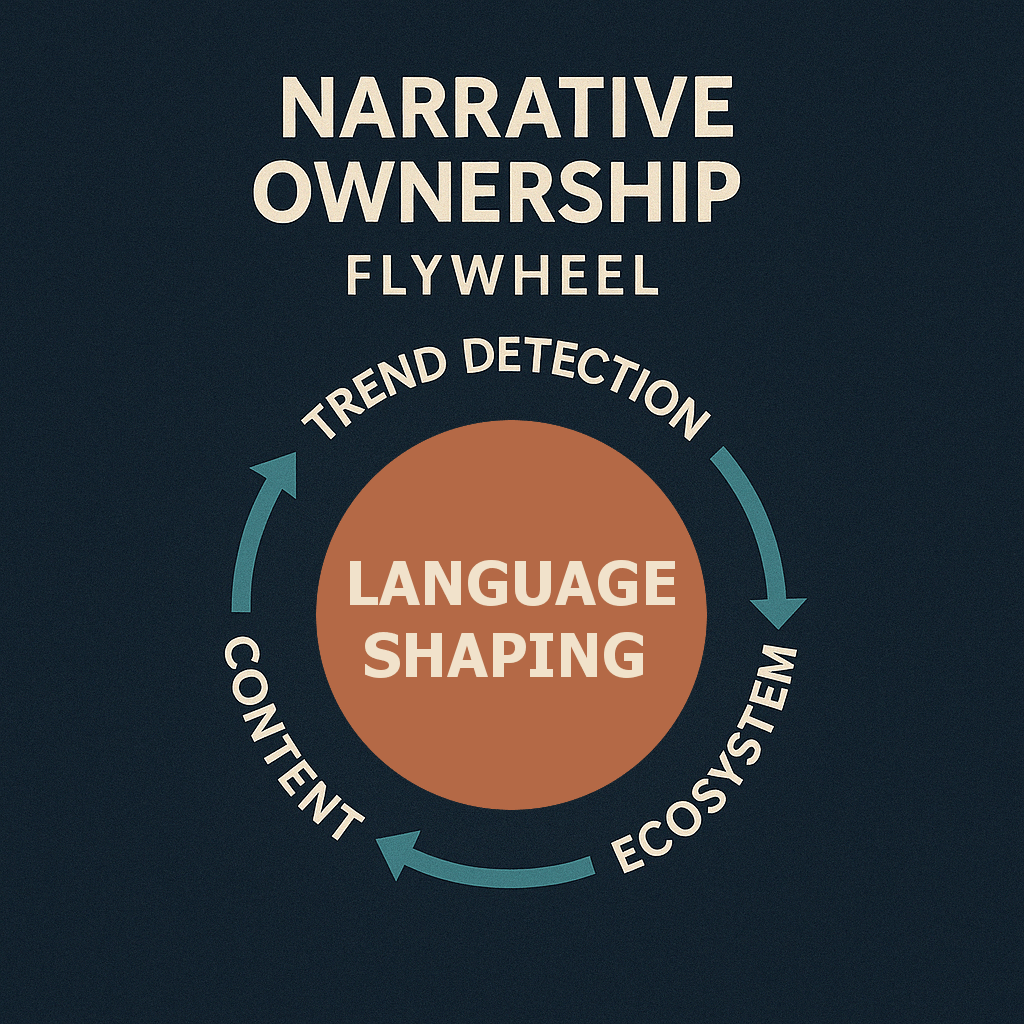
    For companies struggling to scale content marketing and copywriting efforts, AI-driven editorial engines act as force multipliers. These systems don’t just generate words; they learn from search intent, audience response, and trend patterns to construct narrative pathways that adapt and evolve. The result is a self-sustaining content ecosystem—one where each piece fuels discovery, engagement, and authority compounding.

    Maintaining Human Depth in Automated Content

    The greatest fear surrounding AI-generated content is its potential lack of authenticity. Consumers are becoming increasingly discerning, valuing transparency and originality in brand messaging. Content automation risks deteriorating these qualities if not strategically guided. The solution isn’t to replace human creativity but to enhance it.

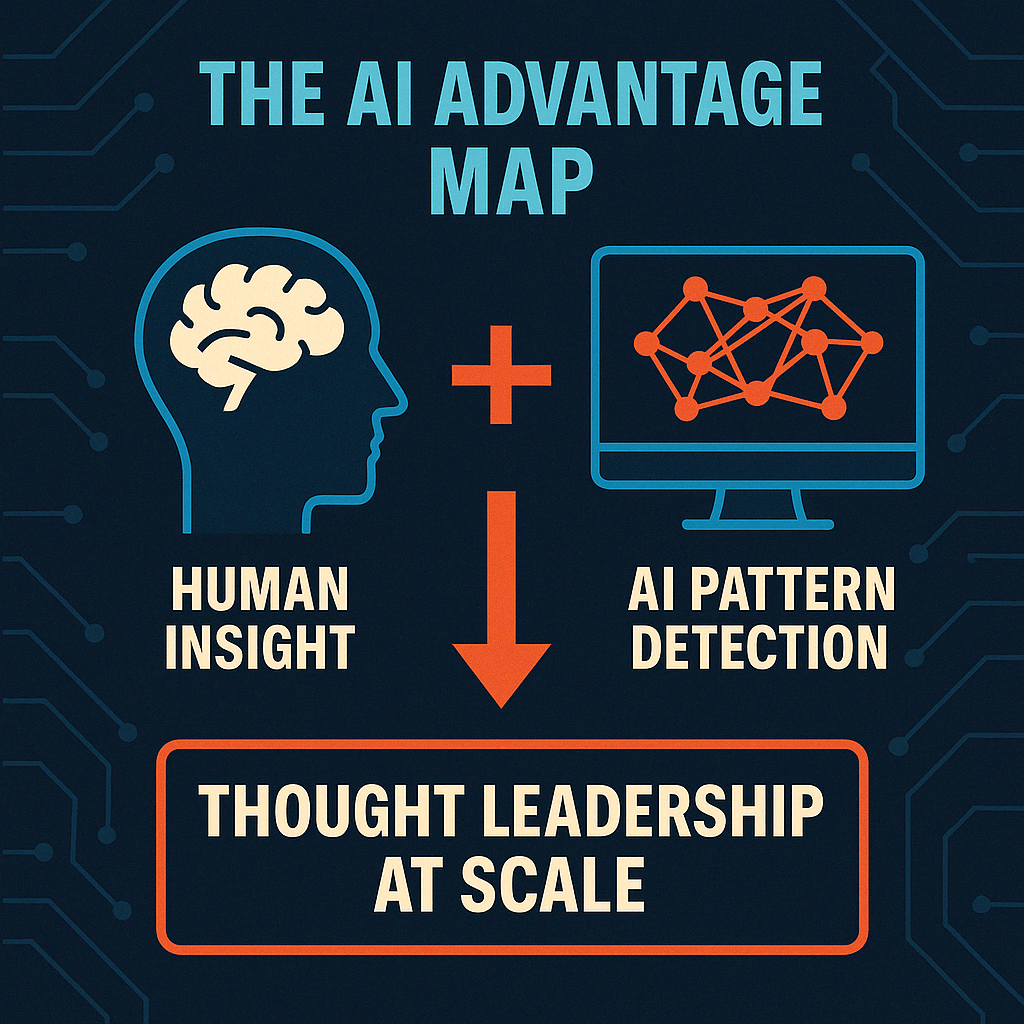
    AI can handle content structuring, optimization, and pattern recognition, freeing human creators to focus on high-level storytelling and emotional resonance. The key is to integrate human oversight at critical junctures—injecting narrative nuance, refining brand voice, and infusing real-world expertise. This hybrid model merges the efficiency of AI with the irreplaceable depth of human insight, ensuring scalable content still feels personal and authoritative.

    Why AI-Driven Narrative Ecosystems Are the Future

    Content marketing and copywriting have entered a new era—one where volume alone can no longer sustain engagement. Brands that understand the interplay between AI’s analytical power and human-driven storytelling will dominate this space. The future isn’t about whether AI can create content; it’s about how businesses use AI to architect content systems that build trust, authority, and long-term audience loyalty.

    The next evolution? How brands can harness AI-powered storytelling strategies to not only generate content but orchestrate multi-platform dominance.

    The Next Era of Content Belongs to Those Who Control the Narrative

    The evolution of content marketing and copywriting has reached a pivotal moment. Businesses still operating under the assumption that fragmented blog posts and isolated campaigns can sustain authority are facing an existential threat. The future doesn’t belong to those who merely produce content—it belongs to those who create full-spectrum, AI-powered narrative ecosystems capable of dominating attention across platforms.

    In an environment where competition escalates daily, brands failing to recognize the shift will experience dwindling engagement, declining search authority, and eroding trust. More content is not the answer—smarter content is. AI isn’t an adversary to human creativity; it’s the ultimate amplifier. But only if wielded correctly.

    Companies that master AI-driven storytelling integrate their content across blogs, videos, emails, and social platforms, creating a seamless experience for their audience. Businesses that hesitate will find themselves drowned out by brands that have already learned to harmonize AI with authentic engagement.

    How AI-Optimized Content Ecosystems Build Market Dominance

    There was a time when businesses could differentiate themselves by simply publishing well-researched articles. That time has passed. Today, AI-driven platforms that intelligently analyze search trends, audience behavior, and engagement metrics dictate content success.

    Elite brands don’t rely on sporadic blog updates or manually crafted campaigns—they deploy AI-powered systems that assess search patterns, optimize audience interactions, and refine messaging in real time. The result? A content strategy that adapts faster than any competitor relying on outdated methods.

    AI-driven insights empower companies to identify the most relevant topics before they even trend, analyze audience sentiment at an unprecedented scale, and optimize content formats for maximum conversions. Instead of merely creating content, forward-thinking businesses engineer influence.

    The Businesses That Fail to Adapt Will Disappear

    If history reveals anything, it’s that every industry shift produces two camps—the innovators who capitalize on transformation and the hesitant brands that fade into irrelevance. Companies that ignore AI’s role in content marketing and copywriting are making a silent but fatal decision: to be left behind.

    Search algorithms continue to favor authoritative, expertise-driven content. Yet, most brands still rely on outdated tactics, crafting articles without strategic depth, publishing content without analysis, and failing to build interconnected marketing ecosystems. The consequences are already visible—traffic stagnation, dwindling engagement, and rising customer acquisition costs.

    Businesses must choose: evolve or be eclipsed. Those who adopt AI-driven content strategy will surge ahead, while those resisting change will be trapped in an outdated past.

    The Smartest Brands Have Already Made Their Move

    Market leaders have already integrated AI-driven strategies. Their workflows don’t rely on the slow, manual adjustments of traditional content teams—they’ve built dynamic ecosystems that amplify their message at scale.

    These companies don’t just write blogs—they create multi-touchpoint content journeys. They don’t guess at audience engagement—they analyze it in real time. They don’t waste effort on redundant content—they refine their strategy at a velocity unmatched by competitors.

    For brands still hesitating, the window to act is closing. The gap between those leveraging AI for content dominance and those struggling with outdated methods will only widen. The question isn’t whether AI will reshape content marketing—it already has. The only question left is whether businesses will move fast enough to keep up.

    Content Marketing’s New Reality: AI Is Not Optional

    The future belongs to those who command the power of AI-driven storytelling. Businesses that optimize their content marketing and copywriting through intelligent automation will capture attention, dominate search visibility, and outmaneuver competitors.

    The shift has already begun. Those who embrace AI-powered content ecosystems will lead the industry. Those who resist will not just struggle—they will disappear.

    AI is not the future of content marketing. It’s the present. And businesses that truly understand this are already shaping the next era of brand authority.
  • Competitor Content Marketing Analysis That Exposes Hidden Growth Opportunities

    Most businesses analyze competitors the wrong way—here’s how to uncover their real weaknesses

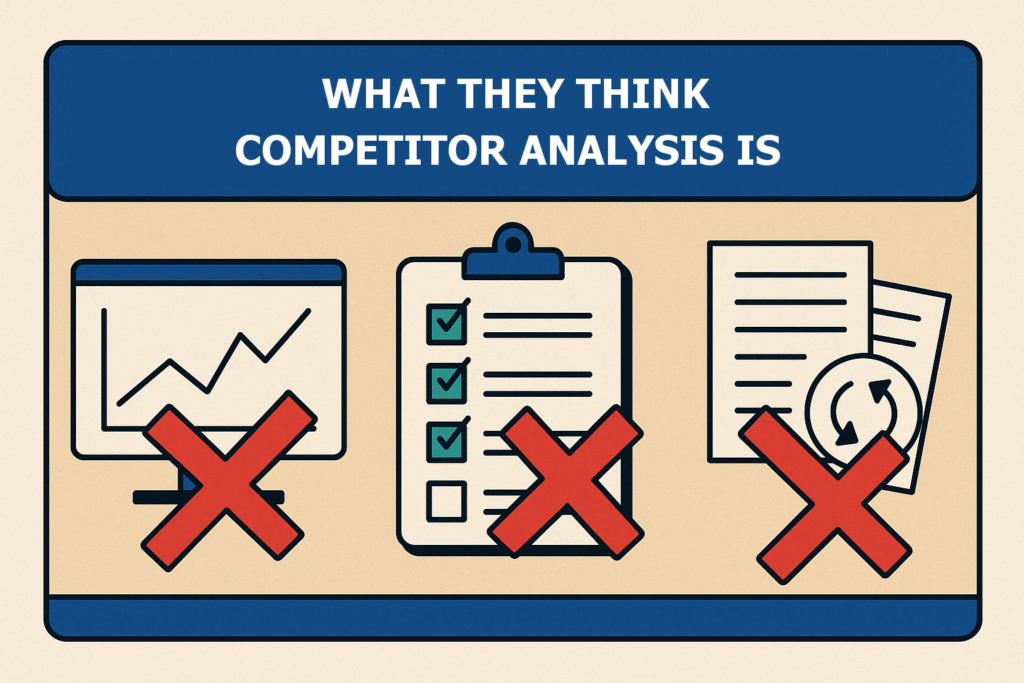
    Every business knows it needs to keep an eye on competitors. But most companies make a critical mistake—they track surface-level metrics without probing deeper into where their rivals are failing. A standard competitor content marketing analysis often focuses on high-ranking keywords, popular blog topics, or engagement levels on social media. While these metrics reveal what works, they don’t expose what’s missing. And it’s the missing elements—the gaps in messaging, the neglected search opportunities, the friction in their audience journey—that hold the real key to market dominance.

    Too often, marketers assume that if a competitor’s content performs well, the best strategy is to replicate and improve upon it. This is a flawed and reactive approach. Instead of competing on what’s already working for others, businesses should dissect what isn’t working. The highest-value opportunities don’t lie in outperforming competitors at their own game—they exist in areas where competitors haven’t yet recognized the demand. Most brands chase visibility, but those who truly understand their market go after relevance. They identify the audience needs left unaddressed, the deeper motivators behind conversions, and the disconnects in existing narratives.

    Consider the difference between optimization and innovation. Many companies optimize their content based on what’s trending in search, but few innovate by creating content ecosystems that shape the trend itself. A business that relies purely on competitor content marketing analysis without assessing underlying weaknesses merely follows the market. A company that analyzes the right gaps dictates the market’s direction.

    The framework to uncover these strategic voids requires more than surface research. It starts with identifying intent misalignment—where are competitors attracting traffic but failing to convert? Are their blog topics addressing symptoms rather than core problems that audiences seek to solve? Are their video topics optimized for views but failing to build brand authority? Simply ranking for keywords or generating social shares does not equate to business growth. Content that converts at scale speaks to the unspoken, fulfilling needs before prospects even articulate them.

    Another key area is engagement efficiency. Growing a community and attracting leads isn’t just about volume; it’s about extracting meaningful interaction from every touchpoint. Many companies have high-traffic blogs, yet their comment sections remain empty, their email subscribers disengaged, and their social shares largely unqualified. This isn’t a success metric—it’s an indication that their strategy lacks connective tissue. Competitor content analysis should measure not just visibility but resonance. Does their content inspire conversation? Does it transform passive readers into brand advocates? If it doesn’t, that’s an open opportunity.

    Moreover, content decay is an often-overlooked competitive vulnerability. Many brands focus on launching new content without maintaining their existing assets. Older blog posts lose ranking power, outdated videos drop in search relevance, and pillar content remains stagnant while industry discussions evolve. Businesses that track content longevity can identify when a competitor’s most valuable assets start slipping, allowing them to position their own resources as the dominant authority. Traffic isn’t just about momentary wins—it’s about sustaining market share by ensuring that value compounds over time.

    The highest-performing brands don’t just monitor what competitors are doing; they anticipate what competitors are failing to see. The goal of analyzing a competitor isn’t to become a better version of them; it’s to exploit their blind spots before they realize they exist. Most companies settle for incremental improvements. The ones who reshape industries find where competitor strategies create friction, inefficiencies, and overlooked demand. That’s how sustainable authority is built.

    The Deceptive Trap of Imitation in Content Marketing

    Competitor content marketing analysis often appears rigorous on the surface—marketers dissect top-ranked blogs, high-performing videos, and the most shared media. They track search rankings, engagement metrics, and keyword density, hoping to replicate what seems to be working. But this approach is a mirage. By learning only from visible success, businesses blind themselves to the deeper inefficiencies in their market landscape.

    Consider the way most companies approach content replication. They see a competitor publishing a series of long-form guides, so they create similar ones. They analyze keyword gaps, trying to outrank their rival for high-traffic search terms. But despite investing time, effort, and budget into mirror-image strategies, their results remain underwhelming. The reason? They aren’t solving a problem the audience actually has. They’re merely adding more noise to an already saturated space.

    True optimization doesn’t come from copying—it comes from disruption. A business that only observes a competitor’s surface-level results will always be one step behind. The goal isn’t to just identify what was created, but why it worked—or didn’t. Brands must uncover the invisible weaknesses competitors are unknowingly reinforcing, not just mimic their strengths for short-term traction.

    Identifying the Hollow Foundations Hidden in Plain Sight

    The most effective form of content marketing isn’t built on what’s being read—it’s built on what’s missing. The real power in competitive strategy lies in uncovering what the audience didn’t engage with, what failed to convert, and what content left them unsatisfied. This is where most analyses stop. They focus on search visibility but ignore the qualitative signals that reveal dangers beneath the surface.

    To analyze properly, brands must shift from observing static numbers to understanding behavioral intent. A blog might rank well, but are readers staying long enough to engage? A competitor might see viral engagement on social media, but are those interactions leading to actual conversions? Too often, companies confuse traffic with traction, overlooking the fact that engagement without loyalty is an unsustainable advantage.

    For example, a report might show a competitor dominating specific terms through sheer publishing volume. Yet, buried beneath that success is a fatal flaw—overproduction without differentiation. Their growth is cannibalizing itself, forcing greater content frequency but yielding diminishing returns in audience loyalty. This creates an opportunity to shift the narrative: instead of focusing on scale, successful brands pivot toward resonance and strategy-driven depth.

    The Power of Narrative Gaps and Unclaimed Territory

    Content marketers regularly ask how to create something better, but a more strategic question is: What hasn’t been addressed at all? Search data reveals keywords, but it doesn’t reveal psychological driver gaps. This is where true authority-building begins—by identifying the narrative elements competitors fail to capitalize on.

    Existing content analysis tools provide a surface-level breakdown—word count, focus terms, backlink numbers—but they do not expose conceptual weaknesses. Are competitors relying on outdated advice? Are they failing to update case studies with recent data? Has their messaging become too generic to maintain audience trust? These overlooked details determine whether content sustains long-term influence or fades into irrelevance.

    Identifying and seizing unclaimed territory requires reading beyond facts and figures. It means watching audience reactions, analyzing sentiment shifts in blog comments and social shares, and detecting emerging pain points before competitors realize they exist. When a competitor produces volume-based media, the counter-strategy is precision—answering high-value questions no one else has explored at depth. Competitive dominance is not about appearing everywhere at once; it’s about being irreplaceable where it matters most.

    Turning Overlooked Signals into Strategic Leverage

    Businesses that successfully outmaneuver competitors don’t just analyze what’s working—they expose vulnerabilities before they turn into major shifts. This approach demands a blend of deep behavioral research and counter-positioning. The brands that consistently outgrow their competitors aren’t reacting to trends; they are setting the conditions for the future.

    One strategy involves studying where competitor content loses engagement. Are video production styles outdated? Do blogs lack substance beyond surface-level analysis? Do newsletters fail to hold attention past the initial open? By mapping these weakness points, businesses can shape content that not only fills those gaps but positions their brand as the inevitable choice.

    This positioning shift moves beyond SEO tactics. Companies that rely solely on search algorithms for their competitive analysis miss the larger structural opportunity—building a brand ecosystem that doesn’t just attract readers but transforms them into long-term advocates.

    Competitive analysis is only useful if it reveals more than what’s public. It must go beneath the surface, where hidden weaknesses fester, waiting to be exploited by the bold. The next phase of content strategy moves from exposure to execution—turning these insights into undeniable market authority.

    Transforming Competitor Content into Authority Leverage

    Competitor content marketing analysis does more than expose industry trends—it reveals where competitors are shaping audience expectations. Most businesses reactively follow these patterns, inadvertently reinforcing rival narratives. But the true opportunity lies in disruption: systematically deconstructing competitor influence while asserting a new standard.

    Successful brands don’t simply create content; they shift the conversation. This begins by identifying the dominant themes competitors have ingrained in the market. For example, if a rival company has positioned long-form blog content as the ideal thought leadership vehicle, the tendency may be to match their format. Instead, a strategic pivot might involve utilizing high-impact video or interactive guides designed for deeper engagement. The goal isn’t to compete on their terms but to redefine what value looks like.

    Consider how major companies reshape industries. When digital media overtook print, some platforms clung to outdated formats, while others embraced video-first storytelling, drastically increasing engagement. The shift wasn’t just technological; it was psychological—matching content delivery with evolving audience expectations rather than internal industry assumptions.

    Identifying Narrative Gaps Competitors Overlook

    To weaken a competitor’s hold on an audience, it’s critical to identify where their content lacks depth, authority, or relevance. This isn’t about surface-level keyword comparisons; it requires a deep dive into audience response patterns. Which competitor blog posts are receiving minimal engagement? Where are customer pain points unmet despite active publishing?

    In many industries, businesses flood the market with repetitive content, chasing rankings rather than resonance. However, customers don’t seek endless variations of the same advice—they seek transformation and clarity. Researching audience feedback, dissecting comment engagement, and analyzing social shares reveals what content genuinely connects versus what merely exists.

    A tech brand, for example, may push high-volume SEO articles that rank but rarely spark discussion. In contrast, a company that taps into industry fears—such as automation displacement or cybersecurity trust—can create emotionally resonant stories that drive organic market leadership. The key is not just identifying these gaps but exploiting them with strategic storytelling.

    Building Authority by Challenging Industry Assumptions

    Market leaders don’t just provide content; they shape perspectives. The difference between a brand that competes and one that dominates is its ability to question prevailing industry narratives without alienating its core audience. This is where thought leadership strategy diverges from simple content replication.

    For instance, many SaaS companies lean on best practices that have gone unquestioned for years—whether it be the necessity of lengthy case studies or the overemphasis on gated content. A bold content strategy would challenge these assumptions, presenting alternative models backed by data and real-world success stories. Companies that take this approach don’t just gain traffic; they gain trust as innovators.

    Prospects are drawn to brands that create clarity amidst confusion. By purposefully addressing industry misconceptions and presenting a new, solution-driven approach, businesses don’t just engage their audiences—they recondition them.

    Creating a Content Strategy That Outpaces the Market

    Once the competitive landscape is fully mapped, businesses must move beyond analysis into execution. It’s not enough to recognize where competitors fall short; the real power comes from systematically replacing stagnant industry narratives with more compelling, effective alternatives.

    First, diversity in content formats is essential. While blog posts and guides remain foundational, integrating video, audio discussions, and interactive media ensures companies stay ahead of shifting audience consumption habits. Businesses that only optimize for current SEO trends inevitably lag behind those that anticipate how people will consume information in the future.

    Next, strategic content distribution must be a priority. Content engineered for impact should not only be published—it should be positioned where it’s most likely to influence decision-making. This includes direct engagement in competitor-dominated spaces, whether through targeted advertising, community interaction, or data-backed content that subtly redirects the audience’s trust.

    Finally, sustainable thought leadership requires continuous refinement. Competitor strategies evolve, but so do audience expectations. Content marketing that builds long-term authority isn’t static—it anticipates, adapts, and always stays one step ahead. Businesses that embed strategic evolution into their content approach don’t just respond to industry shifts; they dictate them.

    By taking competitor content marketing analysis beyond mere observation—turning it into an offensive strategy—brands position themselves as undeniable leaders in their space, shaping the way their industry thinks and engages.

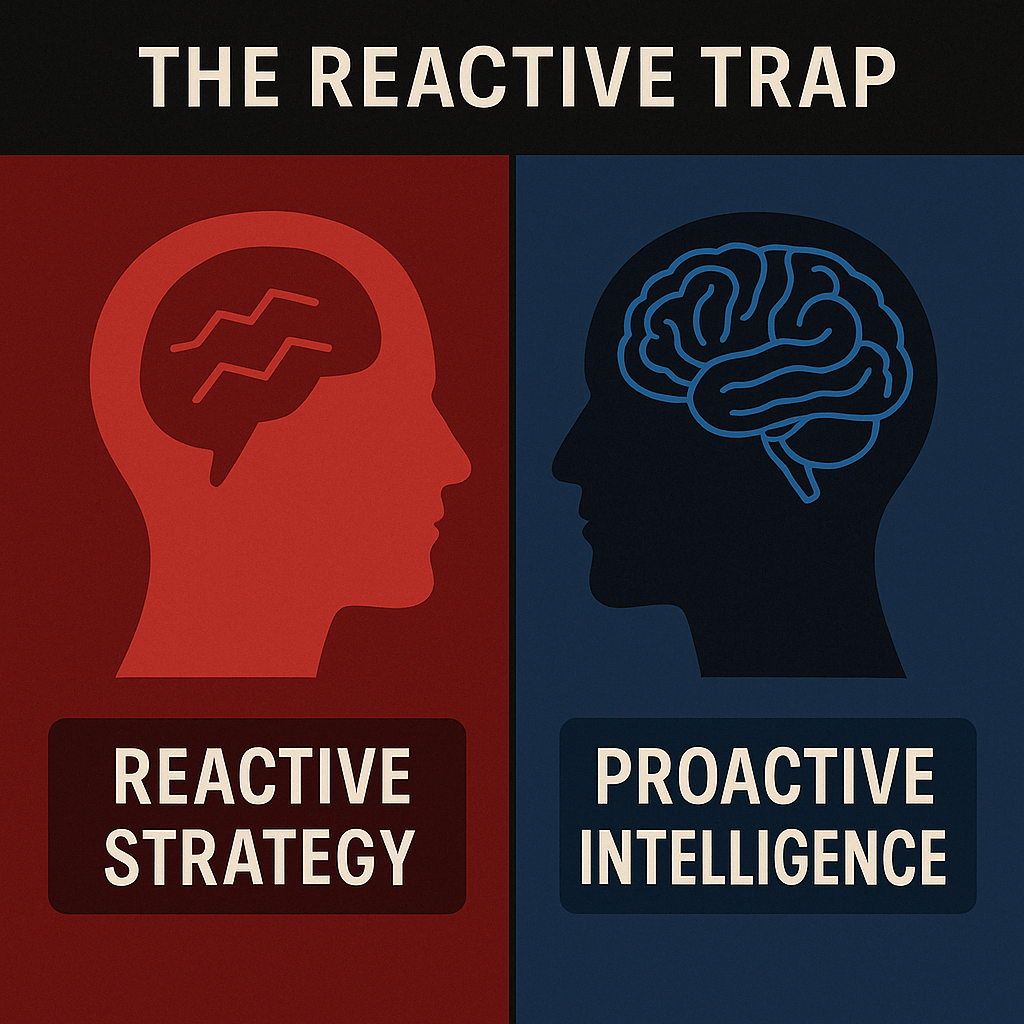
    The Pitfall of Reactive Content Strategy

    Competitor content marketing analysis is often treated as a checklist task—scan what industry leaders are doing, mirror their strategy, and hope to match their success. But this reactive approach leads to stagnation rather than differentiation. The moment businesses base their content entirely on what’s already being done, they concede authority instead of claiming it. Instead of leading conversations, they reinforce existing narratives, blending into the sea of redundant voices.

    Marketers assume that monitoring competitors will reveal gaps to exploit. However, in most cases, those gaps are illusions—temporary shifts in execution, not strategic voids in the market. Businesses that narrowly focus on filling these gaps rather than engineering a new narrative become trapped in a follower mindset. The irony is that attempting to outshine a competitor using their blueprint rarely results in breakthrough success. Instead, meaningful market leadership comes from redefining the category, rather than merely iterating within it.

    The key failure in most competitor-driven content strategies is that they fixate on short-term performance indicators instead of long-term psychological positioning. Readers, audiences, and search engines don’t measure content success simply by keyword targeting or technical optimization. Authority is built through consistent, high-impact storytelling that doesn’t just enter an existing conversation—it transforms it from the ground up.

    Control the Narrative, Don’t Chase the Noise

    Successful companies don’t win by reacting—they win by recalibrating the industry’s expectations. Competitor content marketing analysis should never be an exercise in imitation but a process of identifying where the conversation needs breaking—not where it needs joining. This requires a shift in mindset from gap-finding to expectation-setting.

    Consider how dominant brands keep their audience engaged. They don’t just create content that matches search queries—they generate ideas so powerful that search demand follows them. Instead of simply identifying trending topics, they seed perspectives that change how people think about an industry. This is the essence of category ownership.

    Companies that master this concept don’t need to scramble for rankings or rely on reactive strategies. Instead, their audience grows organically, not because they followed steps in a search optimization guide, but because they fundamentally changed the way people engage with a topic.

    Building Future-Proof Authority Through Strategic Content Engineering

    To dominate a market, businesses must move beyond content creation and into content orchestration. This extends far beyond blog posts, videos, and static website messaging. True authority is built through layered, multi-touchpoint narratives that allow audiences to experience a brand’s perspective at every stage of engagement.

    Instead of focusing on how competitors approach content, businesses must analyze the emotional and psychological triggers driving audience engagement. Why do certain brands amass authority while others with similar insights struggle for traction? The difference lies in perception shaping.

    For example, two companies may offer identical SEO insights—one framed as best practices, the other framed as a failed industry model that needs disruption. The second company isn’t just supplying knowledge; it’s declaring a shift in perspective, forcing its audience to rethink preconceived notions. This is how new industry leaders rise—not by simply answering the same questions, but by challenging the very foundation of those questions.

    From Information to Influence: Engineering Market Movements

    Traditional content marketing sees success as measured in clicks, traffic, and engagement rates. However, dominance in a category stems from moving beyond content as a commodity and into content as an influence engine. This means crafting a sustained campaign where insights don’t just inform but reshape industry conversations.

    One of the most undervalued aspects of content marketing is its ability to dictate how people perceive credibility. A company that states, “We analyzed top-performing competitor content and optimized our strategy accordingly,” positions itself as an efficient player in the market, but ultimately reactive. In contrast, a company that declares, “Search algorithms are rewarding authority differently in the next 12 months—here’s why top competitors will struggle unless they pivot now,” triggers an entirely different type of audience response. The first suggests adaptation; the second demands leadership.

    Marketers who rely solely on tools for competitor content marketing analysis without incorporating a proprietary angle will always fall short. By the time they have adapted to emerging competitor strategies, thought leaders have already redefined the landscape. Future-proofing brand authority requires turning research into movement-building, not just content creation.

    Owning the Evolution of Market Demand

    Strategic content execution isn’t about keeping up with competitors. It’s about forcing them to keep up with a narrative that has already positioned a brand as dominant. When companies stop replicating and start dictating market trends, their influence compounds, making them the reference point rather than a secondary voice in an already saturated space.

    The future of content marketing doesn’t belong to those who analyze existing conversations the fastest. It belongs to those who shape the conversation before competitors recognize its direction. The brands that master this will move beyond SEO rankings and audience engagement metrics—they will dictate how markets evolve, ensuring their longevity and leadership.

    Beyond Engagement The Shift to Self-Sustaining Authority

    Influence in the digital age does not thrive on passive content distribution. It grows through intentional strategy—where every article, video, and email compounds authority. Brands that analyze competitor content marketing analysis effectively recognize a vital shift: true market control isn’t gained merely by attracting an audience but by training that audience to see them as the definitive voice in their industry.

    Unlike businesses that rely solely on sporadic bursts of content creation, elite brands ensure their authority scales without exhausting resources. The key is not just producing, but structuring digital ecosystems where content continuously reinforces trust, expertise, and brand loyalty. This self-perpetuating momentum doesn’t surface by accident. It is engineered—powered by data, audience insights, and an unrelenting focus on strategic positioning.

    The brands that rise above fleeting visibility understand this: the world doesn’t need another generic blog post. Marketers who learn how to transform raw competitor insights into a guided, systematic approach create something stronger than engagement—they build mindshare. And once mindshare is secured, market leadership follows.

    The Hidden Power of Strategic Content Ecosystems

    Most companies chase immediate performance metrics: leads, clicks, shares. While useful, these markers only reveal surface-level traction. Businesses that dominate in the long term understand the deeper game—content is not just about reaching people; it’s about conditioning them to rely on a brand’s perspective. The difference between building a following and building market authority isn’t the volume of content but the system behind it.

    Competitor content marketing analysis is often treated as a reactive practice—marketers search for gaps, emulate successes, and attempt to outperform rivals on individual assets. But reactive imitation does not create category leaders. The true advantage lies in the ability to anticipate competitor weaknesses before they are visible and engineer an ecosystem that guides customer perception before alternatives even enter consideration.

    Strategic content ecosystems are not about sporadic success. They act as a gravitational force—pulling audiences back, time and again, until trust becomes unshakable. Email sequences stop being promotions; they become expected insights. Blogs transcend information; they become reference points. Videos shift from tutorials to brand-defining narratives. Everything compounds. Everything builds.

    The companies that create this momentum understand that content isn’t just a vehicle for attention; it’s an infrastructure for persuasion. And the most effective systems are built with an unwavering commitment to structured expansion, not just creation.

    Turning Competitive Insights Into an Unfair Advantage

    Most competitor content marketing analysis efforts are superficial—brands track rankings, monitor shares, and dissect engagement metrics. But those who truly transform their positioning extract what isn’t overtly measured: the psychological triggers behind audience allegiance.

    The competitors that maintain the strongest market position aren’t always the ones creating the highest volume of content. They are the ones conditioning audiences to associate value, reliability, and category-defining expertise with their brand.

    Rather than simply analyzing which blog posts perform well, dominant brands study the emotional responses generated by competitor narratives. What underlying fears or aspirations are being addressed? How are rival brands framing their authority? Where do gaps in their psychological positioning exist? These insights fuel a different kind of strategy—one that doesn’t just compete on metrics but rewires audience perception itself.

    The goal is not to win in isolated content battles but to ensure the competition never becomes a default choice for prospects. In this approach, every strategic article, every social thread, every piece of shared advice isn’t just responding to industry noise—it’s redefining the signal.

    Self-Sustaining Authority The Future of Market Influence

    Market power belongs to those who don’t just react to industry shifts but architect them. Businesses that build self-sustaining authority don’t operate on content cycles; they develop ecosystems where trust and influence continually reinforce themselves.

    The future belongs to brands that don’t see content as a tactic but as the pulse of their entire growth strategy. Every blog post becomes a conversion trigger, every email an expectation, every search result a validation. By understanding how to systematically analyze and implement competitive insights, businesses move beyond content creation and into the realm of sustained authority.

    Those who master this process don’t just capture attention; they become the standard against which all competitors are measured. And in that position—engagement is no longer a concern. Influence is inevitable.

  • Best Examples of Content Marketing That Transformed Brands

    Why Some Content Campaigns Reshape Industries While Others Fade Away

    Content marketing has reshaped the business world, but not all campaigns leave a lasting mark. Some fade into digital noise, while others ignite industries, redefine consumer expectations, and build empires. What makes the difference? The best examples of content marketing don’t just promote products—they architect movements, answer latent questions, and embed brands into cultural relevance.

    Consider how businesses have evolved their content strategies over the last decade. Companies once focused on SEO hacks and keyword stuffing, believing algorithms mattered more than authenticity. But with search engines prioritizing relevance and engagement, the rules changed. Brands that thrived were those that moved beyond surface-level visibility and built real connections through strategic storytelling and high-quality content ecosystems.

    Take HubSpot, for instance. It didn’t just create a blog—it built an entire knowledge hub that taught businesses how to attract, engage, and convert customers through inbound marketing. This wasn’t content for the sake of traffic; it was a long-term strategy that positioned HubSpot as the definitive authority in its space. Readers didn’t just browse—they learned, they implemented, and they returned for more, ultimately converting into software users and evangelists. The lesson? The best examples of content marketing go beyond individual campaigns; they serve as living, breathing foundations for brand growth.

    Another striking example is Red Bull. Unlike traditional beverage brands that focus on product-centric advertising, Red Bull engineered a content empire that blurred the lines between media and marketing. Its videos, events, and digital experiences weren’t about selling energy drinks—they captured the adrenaline-fueled lifestyle its audience craved. As a result, Red Bull didn’t just create engaging content; it became synonymous with peak performance, extreme sports, and boundary-pushing challenges. This strategic alignment translated into authority, demand, and unwavering brand loyalty.

    The pattern is clear: content marketing success is not about isolated assets—it’s about the compounded power of value-driven narratives. Successful brands don’t just push updates; they invite audiences into dynamic ecosystems where every blog, email, video, and social post ladders up to a larger vision. Whether it’s Nike’s ability to weave emotional storytelling into every campaign or Airbnb’s smart use of user-generated content to create authentic travel narratives, the most effective strategies engage people beyond surface-level attraction.

    While many businesses attempt to replicate these strategies, the reality is stark—most fail. Why? They focus on what worked for others without understanding why it worked. They adopt a format rather than mastering the deeper psychology of content marketing. True scale, influence, and conversion don’t stem from blindly copying industry leaders. They come from an intelligent fusion of data-driven insights, emotional connection, and brand differentiation.

    As search behavior continues to evolve, businesses must rethink content creation through a future-proof strategy, ensuring longevity and search dominance. It’s not about jumping on the latest trends; it’s about creating narratives so valuable and aligned with audience needs that they remain relevant years after publication. The best examples of content marketing prove one thing: brands that focus on impact over immediacy build legacies, not just traffic.

    Survival Isn’t Guaranteed Content Marketing’s Hidden Battlefield

    Many businesses assume that creating blogs, videos, and email campaigns will naturally lead to audience growth. The reality is much harsher. The digital world is oversaturated with redundant advice, recycled insights, and uninspired narratives. Even the best examples of content marketing don’t succeed by accident—they dominate because they understand the battlefield.

    The sheer volume of online content means that most efforts are ignored before they ever reach a prospect. Algorithms dictate visibility, trends shift overnight, and audiences are conditioned to skim, disengage, and forget. For content to break through, it must transcend the noise—it must become indispensable.

    The Fatal Myth of ‘Decent’ Content

    Many businesses believe that if they create ‘good enough’ content consistently, they’ll eventually build authority. This assumption is flawed. The most successful brands don’t settle for being ‘good enough’—they craft narratives so compelling that audiences feel pulled into their ecosystem. ‘Decent’ content may attract a few readers. However, truly transformative content reshapes audience expectations and places brands in a league of their own.

    One of the most overlooked truths is that quality alone doesn’t guarantee visibility. A brilliantly written guide buried on a stagnant blog won’t outperform an aggressively promoted video campaign that blends SEO mastery with audience psychology. Marketers must learn to balance storytelling, authority-building, and search optimization—otherwise, even great ideas remain invisible.

    Strategic Authority Why Some Brands Command the Market

    True dominance in content marketing isn’t achieved through scattered blog posts or one-off viral hits. The best examples of content marketing illustrate a larger strategy—one that systematically positions a brand as the definitive voice in its industry. This authority isn’t granted; it’s engineered.

    Take the companies that have transformed their industries by mastering content ecosystems. They don’t just write articles; they create guides, host engaging webinars, launch video series, and build interactive communities. Their content isn’t an afterthought—it’s the very fabric of their brand’s identity.

    HubSpot, for instance, became the authority on inbound marketing not by merely blogging but by relentlessly educating its audience through courses, reports, and toolkits. Every piece of content led seamlessly into the next stage of the customer journey. It wasn’t about sporadic ‘helpful’ content—it was about constructing an irreplaceable framework that businesses grew dependent on.

    The Currency of Trust Content That Converts

    Brands that consistently generate leads and maintain long-term customer loyalty don’t rely solely on traffic—they build trust. And trust isn’t achieved through promotional fluff; it’s earned through relentless value.

    Businesses that focus obsessively on their audience’s real needs create content that doesn’t just educate—it influences. The best examples of content marketing don’t stop at sharing tips; they become the go-to source their industry looks to for guidance. Whether through high-value reports, in-depth video breakdowns, or interactive webinars, their content becomes the standard.

    Consider thought leaders who use data-driven insights to shape industry conversations. When a brand shares original research, conducts case studies, or dissects real-world success patterns, it transcends basic content marketing. It shifts from ‘one of many’ to ‘the definitive source’ in the minds of its audience.

    Leaving the Commodities Behind

    The brands that endure don’t just create content—they manufacture gravity. Their strategies pull audiences into a sustained journey instead of relying on scattered, one-time interactions. This is the distinction between fleeting engagement and long-term influence.

    The battlefield of content marketing continues to evolve, and those who cling to outdated, transactional approaches will struggle to compete. The next phase isn’t about more noise—it’s about smarter, sharper, and deeply integrated content ecosystems that truly move the needle. What does it take to construct a strategy that endures?

    The Hidden Blueprint Behind Marketing That Doesn’t Fade

    Every year, businesses invest countless hours creating blog posts, videos, and social media campaigns. Yet, most of this content vanishes into digital obscurity. Even viral hits often fail to generate sustainable growth. The difference between ephemeral visibility and lasting dominance isn’t luck—it’s architecture. The best examples of content marketing don’t just share information; they build interconnected ecosystems that compound authority over time.

    Many companies treat content as a task—a blog post here, a campaign there—as if visibility alone were the metric of success. But modern audiences are overwhelmed with fragmented messaging. Scattered content fails to build trust, signal expertise, or create the kind of brand loyalty that turns prospects into lifelong customers. Successful marketing is no longer about isolated outputs; it’s about strategic sequencing, where each piece serves a defined role in a larger structure.

    The Power of Ecosystem Thinking in Content Marketing

    Historically, the best examples of content marketing come from brands that don’t just publish content—they orchestrate it. Apple doesn’t merely advertise its products; it crafts a content universe where launches feel like cultural events. HubSpot turned “inbound marketing” from a concept into an educational fortress of blogs, courses, and resources. These businesses didn’t just create—they connected. They learned how to make each content piece fuel the next, forming a self-sustaining pipeline that attracts, educates, and converts audiences.

    A fragmented content approach forces businesses to restart their engagement efforts over and over. In contrast, an ecosystem strategy ensures that every blog post, video, and email nurtures the next stage of the audience’s journey. Marketers who focus on isolated tactics—hoping a single post will drive results—miss the larger opportunity: to create a structured path that keeps customers engaged long past their first interaction.

    Why Most Brands Struggle to Sustain Impact

    The reason most content fails isn’t a lack of effort—it’s a failure of design. Companies often look at SEO as a detached tactic, focusing only on search rankings instead of contextual authority. They track social shares but neglect whether the content leads to action. The real metric of success isn’t reach—it’s resonance.

    Consider the thousands of companies in competitive markets pushing similar messages. Without differentiation, even high-quality content becomes noise. The most effective strategies don’t just provide information; they shape perception. Instead of centering content on what a company sells, top-performing brands guide their audience with strategic storytelling, weaving relevance into every interaction.

    Rather than relying on intermittent success, businesses must develop structured content frameworks. This means identifying core pillars—the central ideas that define their expertise—and ensuring every piece reinforces these themes. The brands that dominate in search, conversion, and engagement aren’t just informative; they are consistently recognizable in style, approach, and intent.

    The Shift from Transactional Content to Compounding Influence

    Marketing that scales isn’t measured in clicks—it’s measured in compounding influence. The best examples of content marketing don’t chase trends; they create structures that sustain authority. Thought leadership doesn’t emerge from a scattered blog—it’s built through a systemized approach that layers value over time.

    For businesses seeking longevity, the shift is clear: stop creating content in isolation and start building ecosystems. Learn how to align content so that each piece works not as a standalone effort, but as a vital component of a lasting narrative. Those who master this approach won’t just reach their audience—they’ll guide them, influence them, and ultimately, own their market space.

    From here, the question is no longer whether content marketing works—it’s how businesses can ensure their strategy evolves fast enough to outpace the competition. The shift from content creation to content dominance starts with one decision: to stop chasing visibility and start building authority.

    From Isolated Campaigns to Self-Sustaining Growth

    Many businesses approach content marketing as a series of isolated efforts—each campaign treated as a standalone push for visibility, audience engagement, or lead generation. But the best examples of content marketing don’t come from one-off blog posts or disconnected videos; they emerge from ecosystems designed to compound over time. The key lies in shifting from transactional content creation to a strategic framework that continuously builds value.

    The traditional approach—write a blog, share it on social media, send an email blast—can generate traffic in the short term, but it doesn’t create lasting influence. Instead of merely publishing new materials, the focus should be on developing interconnected content hubs that reinforce expertise, authority, and trust. These hubs function not just as temporary marketing assets but as living digital properties that grow stronger with every new piece of content published.

    How Content Hubs Create a Compounding Advantage

    A content marketing ecosystem operates like an ever-expanding web, where each piece interlinks with related content, deepening engagement and reinforcing relevance. Sophisticated marketers don’t just create one-off posts; they build strategic content architectures that guide audiences seamlessly through different stages of the customer journey.

    Take a well-structured blog, for example. A company that consistently publishes industry-leading insights doesn’t just rely on individual articles—they interconnect related blogs, creating a repository of high-quality knowledge that search engines recognize as an authority source. By strategically linking evergreen topics, businesses increase their visibility, prolong session duration, and nurture trust with their audience.

    Brands that have mastered this approach don’t just attract visitors—they create digital properties so valuable that prospects return regularly, treating these platforms not only as learning resources but as crucial industry touchpoints. This continuous engagement fuels long-term relationships, increasing conversions and brand advocacy as a natural byproduct of sustained content interaction.

    Strategic Integration: Blending Multiple Content Formats

    The most effective content ecosystems integrate various media formats, ensuring that no single method bears the weight of audience engagement. While blog articles establish thought leadership, video content enhances retention, and interactive elements such as guides or research reports deepen credibility.

    For example, a brand might publish a detailed research report on an emerging industry trend, then create supporting blog posts analyzing specific sections of the report. A corresponding video series could distill the key findings into engaging, short-form episodes, while an email campaign drives segmented audiences to explore deeper levels of the content based on their past interactions. Social media, meanwhile, provides ongoing amplification, ensuring that each engagement reinforces the overall ecosystem.

    This layered approach ensures that content reaches audiences in their preferred format while reinforcing their learning experience through multi-touch interactions. By mapping out content layers in this way, brands move beyond merely creating to strategically positioning each piece within an overarching system designed for scalability.

    Building an Evergreen Traffic Engine with SEO Precision

    Search engines reward structured content ecosystems, recognizing them for topical depth and breadth. Businesses that meticulously develop internal linking strategies, optimize metadata, and continuously update cornerstone content create a self-sustaining source of visibility. Unlike short-lived promotional efforts, an SEO-driven content framework becomes a compounding asset, delivering increasing returns over time.

    One of the most effective strategies is implementing pillar-cluster models. A pillar page acts as the main authoritative piece on a broader topic, while supporting posts (or clusters) dive into specific subtopics, all interlinked to reinforce relevance. This structure signals to search engines that the company’s website offers comprehensive knowledge, increasing its likelihood of ranking for high-value keywords while keeping readers engaged within the domain longer.

    As content ages, smart marketers ensure regular updates to maintain freshness—revising statistics, adding case studies, and expanding insights to align with evolving industry trends. This continuous optimization ensures that flagship content remains competitive, sustaining visibility and engagement year after year.

    Creating a Feedback Loop for Continuous Optimization

    Successful content ecosystems don’t end once content is published; they evolve based on audience behavior and analytics insights. Progressive companies analyze which topics perform best, which content formats drive the highest engagement, and where drop-offs occur in the customer journey.

    By leveraging real-time data, businesses can refine their approach, doubling down on high-performing formats and adjusting underperforming assets. Reader feedback, search query analysis, and engagement metrics offer valuable signals, allowing marketers to tailor their strategy dynamically rather than relying on outdated assumptions.

    More importantly, businesses that actively engage with their community—whether through responding to blog comments, hosting live discussions, or facilitating user-generated content—enhance their credibility. This two-way exchange between brand and audience transforms one-directional content marketing into a dynamic, ever-evolving ecosystem built for sustained influence.

    The best examples of content marketing don’t rely on temporary promotions. They focus on systems—trust-building frameworks that remain valuable long after they’re published. By constructing interconnected hubs, blending multiple formats, and optimizing for both engagement and SEO, businesses create self-sustaining content engines that act as their most powerful long-term growth asset.

    The Hidden Psychology Behind the Best Examples of Content Marketing

    Understanding content ecosystems is only the beginning—next comes mastering the psychology that turns engagement into lasting influence. Brands that dominate markets don’t just create content; they engineer movements. Every blog, video, and email isn’t just a tactic—it’s a psychological entry point designed to embed their narrative into the minds of their audience. The companies that lead industries understand one fundamental truth: attention is fleeting, but influence compounds.

    The best examples of content marketing are built on an invisible architecture—one that subtly reshapes perception without the audience ever realizing it. This isn’t about viral hits or momentary spikes in traffic. It’s about developing a content strategy that moves people through stages of belief, from passive readers to dedicated advocates. Some businesses master this. Others fade, buried beneath the weight of their short-term, transactional approach.

    So what separates the brands that build movements from those that struggle to maintain relevance? The answer lies in a powerful intersection of behavioral psychology, strategic content placement, and an unrelenting focus on value before conversion.

    How the Best Brands Create Engagement That Never Fades

    Successful businesses don’t just generate content—they sculpt audience behavior. Their blogs, media strategies, and email sequences function as precision-driven psychological tools, guiding prospects through a journey rather than dumping information into the void. Every word, visual, and narrative beat is calibrated to pull people deeper into the brand’s gravitational field.

    By analyzing some of the best examples of content marketing, a clear pattern emerges. Companies that sustain influence do three things exceptionally well:

    • They identify deep-rooted desires. Instead of chasing trends, these brands focus on fundamental human motivations. Whether it’s gaining status, mastery, or a sense of belonging, their content speaks directly to dormant needs that competitors overlook.
    • They design experiences, not just information. A website that simply provides details will always lose to one that immerses visitors in a narrative. The best marketers use interactive content, immersive storytelling, and multimedia experiences to blur the line between education and entertainment.
    • They engineer organic virality. The most successful brands don’t rely on forced social sharing or gimmicks. They craft content so deeply valuable, surprising, or identity-affirming that customers share it instinctively.

    Building influence at this level requires a recalibration of how businesses view their own content. Campaigns don’t just promote—the best examples of content marketing create self-sustaining growth cycles where each blog post, video, or research study builds upon the last, compounding brand equity over time.

    Beyond SEO—Why Depth Wins Over Volume

    Many companies fall into the trap of chasing SEO rankings without truly understanding the psychology behind search intent. They publish rapid-fire blog posts, drowning their website in an ocean of words, hoping to attract attention. But great content marketing isn’t about volume; it’s about depth.

    Search engines have evolved. Google prioritizes content with actual value—pieces that provide new insights, original research, or in-depth solutions to complex problems. The best brands don’t just optimize for keywords; they optimize for transformation. They create guides so extensive, ideas so powerful, and insights so actionable that customers don’t just read the content—they use it to build momentum.

    The brands that master this approach recognize a critical shift in how content works today. Instead of treating blogs, videos, and email marketing as separate channels, they integrate them into a larger media ecosystem. These companies understand that high-quality content isn’t about ‘getting hits’—it’s about embedding their brand into the subconscious awareness of their target audiences.

    Creating Content That Shapes Industries, Not Just Conversations

    Looking at some of the best examples of content marketing, one undeniable truth emerges: the most effective content doesn’t just support a business—it redefines its entire category. Industry leaders know that their blog isn’t just a blog, their videos aren’t just promotional materials, and their email campaigns aren’t just nurturing sequences. These are foundational pillars in an expansive, multi-layered strategy designed to engineer authority at scale.

    They aren’t posting content for content’s sake. They are architecting narratives that shift how their industry thinks. HubSpot didn’t just create blogs about inbound marketing—they institutionalized an entire methodology. Neil Patel didn’t just write about SEO strategies—he became the embodiment of digital marketing intelligence. These brands don’t react to market trends; they set them.

    For businesses looking to build lasting influence, the takeaway is clear. The future of content marketing doesn’t belong to those who simply ‘create more.’ It belongs to those who create better, deeper, and strategically engineered movements that outlast competitors. Every brand has access to the same platforms, tools, and distribution channels. The difference lies in how effectively they wield them.

    The Next Evolution of Content Marketing—Are Businesses Ready?

    The marketing world is shifting yet again. Standing out in a landscape dominated by AI-generated articles and synthetic engagement tactics requires a new level of expertise. The brands that will dominate the next era of digital marketing won’t be the ones that simply follow best practices—they’ll be the ones that redefine them.

    The companies that understand how to analyze audience psychology, craft content ecosystems, and engineer narratives that sustain momentum will be the ones leading industries over the next decade. Every business must decide: will they continue to compete for attention in a saturated market, or will they build an influence machine that turns every customer interaction into long-term brand equity?

    The answer determines whether their strategies will be remembered, or replaced.

  • Content Marketing Australia Unlocking Scalable Growth with AI Driven Strategies

    Why Traditional Content Marketing Is Losing Its Edge

    Content marketing in Australia has reached a critical inflection point. Businesses striving to build authority through blogs, videos, and email campaigns now face an oversaturated landscape. Search engines are flooded with repetitive, low-quality content while audiences, overwhelmed by noise, grow more discerning. Marketers who follow the outdated ‘more is better’ formula find themselves trapped—spending time and budget on content that barely registers on search rankings or audience engagement metrics.

    The conventional content marketing playbook—static SEO tactics, rigid keyword placement, and transactional blog strategies—no longer delivers. As platforms prioritize expertise, trust, and engagement, companies must rethink how they create and promote content. The question shifts from ‘How much content is enough?’ to ‘How can content be engineered to resonate, convert, and scale?’

    At the center of this shift is AI-driven content automation. While many businesses in Australia still rely on manual content strategies, global competitors are embracing intelligent automation to optimize reach and authority. AI doesn’t just generate more content—it refines narratives, ensures strategic keyword alignment, and amplifies engagement signals that search algorithms reward. The brands leveraging AI effectively aren’t just keeping up; they’re controlling the conversation.

    This disruption redefines success in content marketing. No longer is it about publishing vast amounts of shallow material in hopes of driving traffic. Instead, modern strategies focus on deep audience engagement, predictive insights, and automated narrative building—transforming content into an asset that compounds authority over time.

    Yet, skepticism remains. Many marketers fear AI-generated content lacks the authenticity required to truly captivate readers. They worry it produces generic material, damaging brand identity rather than strengthening it. This perception stems from early content automation tools that prioritized volume over quality, flooding the Internet with unstructured, keyword-stuffed articles that did more harm than good.

    However, AI-driven content today is engineered for impact. It integrates audience behavior insights, refines messaging based on industry trends, and enhances credibility through precision-driven storytelling. The gap between human creativity and AI efficiency is closing, allowing businesses to create authoritative, compelling narratives at scale.

    For companies seeking to grow, the challenge isn’t simply adopting AI—it’s strategically deploying it to build influence. Brands that hesitate risk being drowned out, while those that embrace AI-powered content gain a decisive advantage. The shift isn’t coming—it has arrived, and businesses that recognize this early are the ones who will lead.

    As content marketing in Australia evolves, the role of manual strategies diminishes while AI-driven storytelling rises. The real question is no longer whether AI can enhance content—but whether businesses can afford to ignore its potential any longer.

    The Breakdown of Old Content Marketing Strategies

    Content marketing in Australia has long followed a predictable pattern—create blog posts, optimize for search, push campaigns through social media, and hope to capture interest. But this once-reliable framework is losing effectiveness. Businesses are facing audience fatigue, dwindling organic reach, and falling ROI as consumer behaviors evolve at a pace traditional methods can’t match.

    For years, companies have invested in content calendars, keyword research, and multi-channel distribution, expecting steady returns. Yet, even with quality execution, many brands are seeing diminishing engagement. Why? Because the rules of content marketing have changed—but the strategies have not.

    Consumers demand instant value. They don’t just read blogs; they skim, scroll, and dismiss anything that doesn’t grip them within seconds. Google’s algorithm now leans heavily on E-E-A-T (Experience, Expertise, Authority, Trust), making shallow, templated content obsolete. Traditional approaches cannot adapt quickly enough, causing businesses to lose ground while AI-driven competitors surge ahead.

    The Shift to AI: Transforming How Businesses Engage Audiences

    The rise of AI-powered systems is reshaping how marketers work. Instead of manual content creation that takes weeks of brainstorming, writing, and revisions, AI-driven platforms generate high-quality articles, videos, and email sequences in a fraction of the time. The result? Scalable authority-building that doesn’t sacrifice depth or engagement.

    Modern AI tools don’t just create content—they analyze audience behavior, identify emerging trends, and tailor messages to specific customer segments. Businesses leveraging AI can personalize content at unprecedented scales, ensuring relevance while maintaining brand voice. This means companies can develop campaigns that resonate deeply, rather than churning out one-size-fits-all content that fades into digital noise.

    Australian businesses embracing this shift are already seeing measurable results. Companies integrating AI-driven content marketing frameworks are experiencing increased organic traffic, higher engagement rates, and improved conversion metrics. AI tools allow marketers to focus on strategy and creativity while automation handles execution at unparalleled speed.

    Why Speed and Scale Are Now Competitive Necessities

    In content marketing, speed is no longer an advantage—it’s a requirement to stay relevant. Businesses clinging to traditional content workflows are losing momentum to competitors that have automated content production and distribution. AI isn’t replacing creativity; it’s amplifying what’s possible by removing bottlenecks.

    Imagine a brand attempting to build authority in its niche. A manual content strategy may take months to gain traction, requiring extensive research, editing, and optimization cycles. Meanwhile, an AI-driven competitor can launch multiple high-quality content assets in days, attracting audiences quicker and securing top search rankings before slower-moving brands have even published their initial blog post.

    Market leaders aren’t waiting. They’ve shifted toward AI-enhanced storytelling, blending human expertise with machine efficiency to develop dynamic content ecosystems. This means businesses must decide—evolve with AI or risk fading into digital obscurity.

    How Businesses Can Leverage AI Without Losing Authenticity

    There’s a lingering skepticism around AI-generated content—many brands fear losing authenticity. But AI doesn’t need to strip personality from content; when used strategically, it enhances a company’s narrative, allowing businesses to engage at scale without losing brand identity.

    The key is balance: AI should not replace human-driven storytelling but rather support and accelerate it. AI can process data, identify gaps in content strategy, and generate foundational material, while human marketers refine and personalize these outputs. This synergy ensures high-volume, high-quality content without sacrificing emotional resonance.

    The most successful content marketing strategies in Australia are those that merge AI’s analytical power with human creativity. Businesses adopting this approach can develop engaging blogs, personalized emails, and relevant video content efficiently—keeping audiences invested while maintaining brand credibility.

    The Future of Content Marketing in Australia Depends on AI

    Every business must ask a crucial question: Is it adapting fast enough to remain relevant in an AI-driven marketing era? The companies that dominate tomorrow’s digital landscape won’t be the ones that resist change—they’ll be the early adopters redefining content marketing through AI innovation.

    Audiences expect personalized, valuable content delivered on demand. AI-driven content strategies allow businesses to meet these demands while optimizing for search, engagement, and conversions. Companies that embrace AI now will not only survive—they will thrive, leading the charge into a smarter, more scalable future.

    Strategic AI Integration That Strengthens Rather Than Dilutes Brand Identity

    Content marketing in Australia has reached a pivotal moment. The demand for high-quality, conversion-driven content has never been higher, yet businesses face a dilemma—automation promises scale, but at what cost to authenticity? Marketers must learn how to balance efficiency with trust, ensuring their brand voice remains distinct even in an AI-driven world.

    The fear of losing authenticity stems from the growing prevalence of AI-generated blogs and videos that feel generic, uninspired, and disconnected from a company’s core essence. Businesses that blindly adopt automation without a focused strategy risk becoming just another voice in an algorithmic crowd, struggling to engage customers meaningfully. Instead, the most successful Australian brands adopt AI with precision, guiding machine-generated outputs through a framework of human oversight.

    Preserving Trust in an AI-Enhanced Content Strategy

    Trust is the foundation of every successful brand-customer relationship. The challenge for businesses integrating AI into their content strategy is ensuring that automation enhances rather than erodes credibility. When algorithms dictate messaging without human refinement, audiences can immediately sense the disconnect. Customers seek value-driven content—not just optimized material, but insights that resonate on a personal and emotional level.

    There’s a strategic way to achieve this. First, companies must identify the elements of their brand story that are non-negotiable. What makes their voice unique? What core principles define the way they communicate? By establishing these pillars, brands can program AI systems to operate within reinforced brand parameters, preventing content from feeling mechanical or impersonal.

    Another critical tactic is maintaining human editorial oversight. AI can generate drafts, analyze search trends, and structure optimized content. However, content must pass through an editorial stage where expert marketers refine messaging, ensure tone consistency, and add the unique perspective that builds long-term trust.

    Human-Guided AI: The Missing Link in Scalable Content Strategies

    Businesses that succeed at AI-driven content marketing in Australia recognize that AI should be a collaborator, not a replacement. Pure automation lacks the ability to intuitively respond to audience sentiment, cultural nuance, and the shifting dynamics of consumer psychology. This is where human-guided AI comes into play.

    Consider the difference between two competing companies using AI to create SEO-driven articles. One company allows AI to generate and publish without refinement. Their blogs might rank temporarily, but the audience senses a lack of originality over time. Their engagement metrics decline, SEO rankings falter, and trust diminishes. Meanwhile, the competing company uses AI for efficiency but guides the output with strategic human input. Writers enhance AI-generated insights with first-hand research, add storytelling depth, and ensure content speaks directly to their specific audience’s concerns. This dual approach compounds authority over time, creating competitive longevity in content marketing.

    Case studies reinforce the necessity of this balance. Australian brands that consistently generate high-performing blogs, video content, and social engagement do not merely rely on automation but leverage AI as an enabler of thoughtful, authoritative messaging.

    AI-Optimized Content Without Sacrificing Depth or Value

    One of the greatest misconceptions surrounding AI-driven content marketing is that automation reduces the value of human-centric thought leadership. This is only true when AI is used thoughtlessly. By contrast, companies that integrate AI effectively expand their capabilities—scaling output while improving content quality. The key lies in how automation is used.

    Marketers must focus on developing content that is not only optimized for search engines but resonates deeply with real readers. This means AI should be leveraged for research, topic identification, and structured outlines, while human insight is applied in creating narratives that engage audiences on an experiential level.

    AI’s greatest strength lies in its ability to analyze data at scale—tracking keyword trends, predicting audience behavior, and optimizing delivery timing. However, what keeps audiences engaged is the originality, expertise, and authenticity injected into the final product. Australian businesses that master this balance will not only attract more leads but also sustain meaningful, long-term engagement.

    Charting the Future of AI and Content Marketing Synergy

    The future of content marketing for Australian brands lies in strategic AI utilization without sacrificing human connection. Companies that integrate AI without a structured system risk losing their brand’s distinct identity. However, those who refine AI-generated output with expert oversight retain credibility while scaling efficiently.

    To stay competitive, businesses must not only embrace automation but also find ways to use it intelligently—leveraging AI for efficiency while ensuring human creativity sharpens the final execution. This approach doesn’t just create content; it builds an ecosystem of value-driven engagement, where AI enhances brand authority instead of diminishing it.

    The next section will explore how this cutting-edge approach translates into tangible growth—expanding reach, increasing traffic, and boosting conversions in a data-driven, AI-powered content marketing landscape.

    The Paradigm Shift in Content Marketing Australia Can’t Ignore

    The landscape of content marketing in Australia is undergoing a seismic shift. The businesses that once relied on traditional methods—manually crafting every blog, carefully curating social media, and painstakingly optimizing for SEO—are now facing an uncomfortable truth: speed, scale, and sustained engagement are impossible without AI integration. The challenge isn’t merely about keeping up; it’s about redefining how content is created, distributed, and leveraged for compounding business growth.

    Marketers who still hesitate to integrate AI-powered content automation are watching competitors surge ahead. The fact is, search algorithms reward brands for consistency, depth, and strategic engagement. That level of execution isn’t humanly possible at scale without leveraging intelligent automation. While many businesses fear AI will dilute brand voice or authenticity, the reality is, when wielded correctly, AI refines messaging, enhances audience insights, and fuels a level of personalization that manual methods can’t replicate.

    One clear example can be found in video content strategy. With AI-driven tools, companies are generating thousands of variations of a single product video tailored to different customer segments—something that, historically, would demand weeks of work from creative teams. Blog automation with narrative structuring ensures that businesses don’t just publish for quantity, but for engagement, driving organic reach without falling into the trap of low-value content.

    Why AI-Driven Content Creates More Valuable Engagement

    Creating content is no longer the endgame—it’s about generating engagement that converts. Whether through SEO-optimized blog posts, hyper-personalized email campaigns, or dynamic landing pages that shift in real time based on user behavior, AI equips brands with an unfair advantage in understanding what resonates with audiences and when.

    Previously, Australian companies struggled to maintain momentum in content marketing due to resource constraints, making it difficult to scale effort-intensive strategies like long-form blogs or data-driven whitepapers. AI has eliminated this roadblock, allowing businesses to move beyond foundational SEO to a predictive, learning-based approach. By analyzing user intent, search trends, and conversational data from customer interactions, AI content tools identify audience interests before they even fully materialize—allowing brands to meet demand before competitors catch on.

    This shift is particularly evident in brands that have embraced AI-assisted content creation for niche topics. By synthesizing vast amounts of industry data, AI helps organizations develop deep-dive articles that not only rank in search but also position them as thought leaders. Meanwhile, dynamically adjusted email marketing ensures that outreach efforts remain relevant, enhancing open rates and engagement without manual segmentation.

    How Companies Are Building Community with Automated Content

    Beyond traffic and rankings, AI content marketing is actively changing how businesses build and nurture communities. In an era where audience loyalty is just as critical as discovery, AI-powered automation helps brands maintain personalized, context-aware interactions at scale. Rather than relying on generic email blasts or static blog updates, businesses in Australia are deploying AI-generated responses, interactive content experiences, and real-time recommendations to deepen customer relationships.

    The result? A fundamental shift from transactional marketing to advocacy-driven ecosystems where customers feel heard, valued, and continuously engaged. AI doesn’t replace human creativity—it amplifies it, offering businesses the ability to foster meaningful connections through storytelling precision and data-backed personalization.

    The Future of AI in Australian Content Strategy

    It’s no longer about whether AI has a role in content marketing—it’s about how effectively businesses wield it. In Australia, forward-thinking companies are already proving that intelligent automation isn’t just an advantage; it’s the key to sustained relevance. Those who learn to work with AI rather than fear it will dominate the digital space, outpacing brands that remain shackled to outdated manual workflows.

    From predictive insights to real-time customer engagement, AI isn’t just reshaping content marketing—it’s redefining what’s possible. As competition intensifies, the companies that embrace AI-driven content marketing in Australia are setting the stage for unprecedented growth, customer loyalty, and long-term success.

    The Inevitable Shift from Automation to Authority

    Content marketing Australia is no longer about simply maintaining an online presence—it’s about creating long-term authority. The businesses thriving in this space have realized that AI isn’t just a tool for automation; it’s an engine for establishing digital leadership. The question isn’t whether AI-driven content will shape future marketing—but who will wield it most effectively.

    Algorithms evolve. Consumer expectations shift. Search engines refine their ranking criteria. While traditional content strategies once focused solely on volume, today’s most successful businesses understand the real objective: building undeniable authority. This authority isn’t just built by producing more—it’s established through value-driven, research-backed content that AI can optimize at an unprecedented scale.

    Marketers now analyze advanced data points to identify audience patterns, search trends, and engagement behaviors. AI refines these insights in real-time, enabling businesses to create content that doesn’t just attract fleeting website traffic but retains and converts customers. The real winners in content marketing aren’t simply those who automate—it’s those who leverage AI to elevate quality, consistency, and authenticity.

    Why AI-Driven Content Resonates in the Australian Market

    Australian businesses operate in a unique digital landscape. Unlike volume-driven global markets, Australia’s consumer base demands trust before engagement. Search engines recognize this, favoring brands that create content with clear expertise, experience, and credibility. AI empowers businesses to refine messaging, analyze audience response, and consistently deliver top-tier content tailored to specific consumer mindsets.

    Consider a company looking to build thought leadership in their industry. Historically, establishing authority required years of networking, guest blogging, and media presence. Today, AI accelerates this trajectory by rapidly analyzing high-performing keywords, researching competitor gaps, and optimizing articles for search relevance—all while maintaining a uniquely human tone.

    Marketers who integrate AI don’t just work faster; they work smarter. AI doesn’t replace strategy but amplifies it. Instead of spending months testing which blog topics resonate most with audiences, AI forecasts success probabilities based on historical data. Brands can create, test, and scale valuable content with precision, ensuring they meet consumers where they are—at the right time, with the right message.

    Building a Scalable Content Ecosystem for Long-Term Growth

    For years, content marketing was treated as a campaign-by-campaign effort—write an article, post it, repeat. But today, brands are recognizing the power of an interconnected content ecosystem. Instead of isolated blog posts, marketers build long-form guides, repurpose content into videos, and enhance website content with AI-driven recommendations.

    Australian businesses investing in AI-driven content marketing don’t just attract audiences; they create content networks that keep customers engaged across multiple touchpoints. Blog articles are no longer one-off pieces but foundational assets that fuel email sequences, social media threads, and even interactive tools.

    Take the example of a fast-growing SaaS company. Instead of manually producing every marketing asset from scratch, AI helps analyze how a single high-performing blog post can be expanded into an entire content series—webinars, video tutorials, email guides—all designed to maintain audience retention. The ability to scale content without diluting quality has become a competitive advantage, ensuring brands stay top-of-mind while efficiently managing resources.

    The Future of Content Marketing in an AI-Optimized Business World

    The evolution of content marketing in Australia is no longer just about presence—it’s about precision. Businesses that integrate AI-driven strategies today are setting a precedent for the future. They’re not creating content simply to meet SEO requirements; they’re developing digital ecosystems that establish their brand as the authority in their industry.

    As AI advances, businesses that fail to adapt will find themselves struggling to compete—not because their content lacks quality, but because their competitors will have scaled authority at an unmatchable pace. The next year will define which brands understand this shift and which remain stagnant.

    For companies seeking to future-proof their content marketing strategy, the path is clear: AI isn’t just an enhancement—it’s the new foundation for sustainable digital growth.

  • How to Do Competitor Analysis in Content Marketing to Outrank and Outmaneuver

    Most companies think they know their competitors—but most are wrong. Here’s what they’re missing and how to exploit it.

    Infographic comparing reactive strategy with proactive intelligence in content marketing competitor analysis.

    The biggest mistake businesses make in content marketing isn’t a failure to create—it’s a failure to analyze. Most companies believe they understand their competitive landscape, yet their strategies remain reactive, not predictive. Without a data-driven approach to competitor analysis, brands risk publishing content that is redundant, uninspired, or—worse—ineffective. As search algorithms favor authority-driven content and audiences gravitate toward businesses that deliver real value, failing to dissect the competitive field isn’t just a disadvantage; it’s a slow march toward irrelevance.

    Misconceptions about how to do competitor analysis, including flawed methods like tracking charts and copying blog checklists.

    On the surface, competitor analysis appears straightforward—benchmarking rankings, tracking social presence, and noting content trends. However, this approach barely scratches the surface. While most marketers scan top-performing search results and replicate keywords, the true advantage lies beneath the visible metrics. The businesses that dominate content marketing are those that uncover strategic blind spots—the gaps competitors don’t even realize exist. The key isn’t just analyzing what the competition is doing, but identifying what they haven’t done yet. The uncharted territory holds the greatest potential.

    Infographic showing core components of effective content marketing competitor analysis, including strategic gaps, blind spots, psychographic insights, and search behavior clusters.

    Take, for example, a SaaS company attempting to build thought leadership in a crowded market. They track competing blogs, monitor social shares, and follow industry influencers—yet they still struggle to gain authority. Why? Because their competitors are defining the conversation, and they are merely responding. Instead of reacting to what already exists, a strategic competitor analysis surfaces the unaddressed pain points, the unanswered questions, and the emerging trends before they become mainstream. By doing so, businesses not only compete—they bypass competitors entirely.

    The process begins with a deep audit—not just of competing blogs or websites, but of intent. What are customers searching for but not finding? Which content formats dominate, and which have yet to be leveraged? Are competitors relying too heavily on blog posts while neglecting video or in-depth research assets? Are they capturing demand but failing to build community? Effective competitor analysis demands companies move beyond SEO checklists and into behavioral insights—understanding not just what ranks, but why it resonates.

    Flowchart showing the dopamine loop in future-proof competitive marketing analysis, moving through hook, micro-insight, CTA, and scroll behavior.

    Moreover, blind replication of successful content marketing signals complacency, not innovation. If a competing brand ranks for a high-traffic keyword and a business simply mimics their format, they aren’t positioning themselves as a leader—they’re reinforcing another brand’s dominance. A more effective tactic is to analyze the weaknesses within that top-ranking content. Are the insights surface-level? Are there missing data points that could be expanded upon? Can an existing concept be transformed into a more engaging, multimedia experience? Every competitor’s strength hides a potential vulnerability—businesses that recognize this turn their competitor’s success into their own opportunity.

    Quadrant chart categorizing content marketing strategies by insight depth and content volume, contrasting noise, followers, leaders, and original thought leadership.

    Consider the search space itself: while brands often focus on direct competitors, indirect competitors—those targeting the same audience but offering different solutions—can be equally instructive. Retail brands competing in content marketing don’t just vie with other sellers; they contend with blogs, industry publications, and influencers who capture organic traffic and shape consumer trust.

    Visual metaphor for hidden competition in content marketing, featuring social media influencers and non-traditional content creators shaping search visibility.

    Traditional competitor analysis often overlooks these alternate players, yet understanding how to disrupt their content flow can unlock untapped audiences and uncontested attention.

    Ultimately, winning in content marketing isn’t about playing catch-up—it’s about redefining the game. By shifting from passive observation to proactive strategy, companies not only outrank competitors but render them secondary. The brands that succeed aren’t merely louder; they are smarter, predicting where attention will shift before it happens. True competitor analysis, when done properly, doesn’t just help marketers understand the competition—it allows them to make the competition irrelevant.

    Breaking the Cycle of Reactionary Content

    Understanding how to do competitor analysis effectively means avoiding a fundamental trap—reacting rather than leading. Most teams look at their competitors’ blog posts, videos, and social media marketing campaigns and attempt to mirror their success, believing that this will help them stay relevant. In reality, this mindset only ensures they remain one step behind—adapting to trends rather than setting them.

    The key isn’t to duplicate what works for others but to expose patterns, disrupt expectations, and build a content marketing machine that makes competitors scramble to keep up. This requires marketers not just to analyze but to anticipate—understanding the underlying psychology of audience engagement rather than merely responding to it.

    Identifying the Hidden Gaps in the Competitive Landscape

    It’s not enough to read competitor blogs or track their SEO keywords. Effective competitor analysis requires a detailed map of where competitors are excelling, where they are failing, and—most importantly—where they are completely unaware of emerging opportunities.

    Consider a SaaS company targeting enterprise-level businesses. Competitor research might reveal multiple players dominating standard comparison blogs and case studies. However, a deeper dive into audience behavior might show that decision-makers engage more deeply with interactive tools, proprietary research, or hyper-specific industry predictions. This gap represents an opportunity to create uniquely valuable, authority-driven content rather than just another iteration of the same information.

    By conducting qualitative research—customer interviews, community engagement, and ethnographic analysis—brands can uncover forms of content competitors overlook. The fact is, true differentiation comes not just from what marketing asset is created but how it is positioned, amplified, and structured for long-term influence.

    Engineering Content Marketing That Forwards the Conversation

    Marketers often aim to match the success of brand leaders by producing similar articles, whitepapers, and video content. The more effective approach is to shift the framework entirely. Instead of playing catch-up, businesses must focus on origin points—developing the key conversations and insights that others eventually capitalize on.

    For instance, if the competition focuses on broad ‘how-to’ content, strategic differentiation might involve exclusive industry insights, experimental methodologies, or narrative-driven storytelling. AI-powered content automation, like Nebuleap, helps pinpoint these emerging patterns, ensuring that published material doesn’t just participate in the conversation but controls its trajectory.

    Visual map showing how human insight combined with AI pattern detection produces scalable thought leadership in content marketing and competitor analysis.

    The concept is simple—when competitors react to what has already been created, they validate the authority of the originator. Businesses that consistently introduce new forms of valuable and relevant content cement themselves as brand leaders rather than followers.

    Building a Scalable System for Market Influence

    Once competitive gaps have been identified and forward-thinking content developed, the next step is ensuring longevity. Many brands create one breakthrough piece but fail to build a self-sustaining ecosystem around it. Content that truly dominates markets is not a single article or video—it’s a network of strategic pieces that compound visibility, engagement, and authority over time.

    This requires an interconnected content architecture—blogs that lead into industry reports, videos that generate interactive discussions, email campaigns that nurture prospects through distinct stages of decision-making. When well-orchestrated, this system doesn’t just respond to competitors; it forces them to adjust their strategy, making them reactive by necessity.

    The advantage of an AI-driven approach like Nebuleap is automation without dilution—content guided by deep storytelling and psychological intent rather than mechanical replication. By leveraging AI to scale high-value insights, brands don’t just create content; they shape dialogue.

    The Shift from Competitive Analysis to Competitive Command

    The transition from observation to domination requires a fundamental shift in perception. Instead of seeing competitors as benchmarks, businesses must understand them as variables within a controlled system—elements to be studied, leveraged, and ultimately outpaced.

    Cinematic quote slide reading 'It's not about seeing what exists. It's about defining what must.' representing strategic leadership in content marketing and competitor analysis, with Nebuleap branding.

    Companies that thrive aren’t the ones that follow best practices but the ones that set them. And that begins not by looking at how the market is structured today, but determining how it should evolve tomorrow.

    In the next section, the discussion moves from strategic positioning to execution—how content ecosystems built with the right frameworks don’t just generate engagement but create movements.

    The Shift from Passive Observation to Strategic Execution

    Simply knowing how to do competitor analysis content marketing is not enough—execution determines whether insights become momentum or remain untapped potential. Most businesses fall into the trap of passive observation, where data is collected but never activated into a strategy that shifts industry positioning. The key difference lies in how AI transforms static information into a living, evolving content ecosystem.

    Traditional competitor analysis hinges on manually reviewing website traffic, backlinks, and keyword rankings. While foundational, this method is reactive—by the time trends become evident, competitors have already moved forward. The modern approach integrates AI-driven insights to detect emerging shifts before they solidify into dominant trends. Smart organizations use this intelligence not just to replicate performing content but to engineer content ecosystems that outpace competitor cycles entirely.

    Visual concept showing how to break through content marketing echo chambers by disrupting repetitive competitor strategies.

    The question is no longer what competitors are doing—it’s how to preempt and disrupt market behavior before others realize the shift. This requires a system that continuously analyzes search behaviors, audience engagement patterns, and algorithmic changes to refine content positioning in real time. AI turns research into an advantage, eliminating delays in market adaptation.

    AI-Driven Competitor Analysis: Engineering Authority, Not Just Content

    AI refines competitor analysis beyond keywords and backlinks—it identifies content patterns that dictate audience loyalty. By analyzing search intent, engagement depth, and information gaps, AI-driven platforms decode the underlying psychology guiding content consumption. This is where most traditional marketers fall short. They categorize content by topics, while AI dissects emotional and cognitive triggers that turn readers into buyers.

    For SaaS companies looking to scale, this distinction is vital. Generic blogs and SEO-driven articles no longer secure rankings or conversions. Search engines prioritize E-E-A-T (Experience, Expertise, Authority, Trust), meaning businesses must engineer credibility, not just visibility. AI-driven tools process millions of data points to pinpoint not just what to create, but how to frame narratives that establish definitive thought leadership.

    Consider a SaaS company marketing to automation-focused decision-makers. Traditional competitor analysis might highlight top-performing keywords like “best workflow automation software.” But AI goes further—it reveals high-intent triggers such as decision paralysis, budget hesitations, and ROI proof-seeking behaviors. With this intelligence, brands don’t just mirror competitive topics—they shape content that addresses unspoken objections and fuels decision momentum.

    Execution: Automating Strategic Deployment Without Losing Depth

    The challenge most businesses face isn’t identifying gaps—it’s executing strategies at scale without diluting quality. AI removes the bottleneck by automating the synthesis, distribution, and optimization of content across multiple touchpoints while preserving human depth.

    Marketers often fear automation sacrifices quality. This misconception stems from early AI-generated content that lacked nuance, originality, and emotional engagement. However, today’s AI doesn’t just generate content—it co-engineers with human expertise to uphold brand identity while scaling authority. This hybrid execution ensures that businesses not only reach wider audiences but imprint themselves as thought leaders in evolving industry conversations.

    For example, AI-powered systems can analyze competitors’ backlink profiles, identifying content types that attract high-value shares. Instead of merely replicating their approach, AI reconstructs value-driven alternatives, ensuring that brands claim authority in their unique positioning rather than competing on oversaturated topics.

    When well-executed, this turns competitor analysis from a chase into a preemptive advantage. Instead of reacting to trends, businesses dictate them. The result isn’t just higher search visibility—it’s sustained leadership that competitors struggle to reclaim.

    The next phase is where true differentiation happens—securing long-term dominance through perpetually evolving AI-driven market leadership.

    The Shift From Market Adaptability to Marketing Command

    Understanding how to do competitor analysis content marketing has historically been framed as a reactive skillset—teams track their rivals, identify gaps, and attempt to outmaneuver them. But in a world where every business has access to the same SEO tools, analytics dashboards, and competitive insights, being data-smart is no longer a strategic advantage. The brands ascending to true industry leadership are no longer just responding to demand shifts; they are driving the demand itself.

    Digital landscapes are no longer simple arenas of competition—they are dynamic ecosystems where those who influence buyer perception shape markets before others even recognize the shift. The power has moved from those who analyze competitor content to those who dictate what competitors must respond to. In this new paradigm, actionable research alone isn’t enough—companies must now master the art of proactive content strategy, creating indispensable thought leadership that alters customer expectations altogether.

    Identifying Narrative Gaps That Redefine Competitive Positioning

    The mechanics of market leadership go beyond traditional SWOT analysis or keyword benchmarking. True dominance is built on uncovering narrative gaps—unspoken challenges, emerging pain points, and industry shifts that haven’t yet been fully articulated by competitors. When brands obsess over what existing rivals are doing, they miss what no one is talking about—yet.

    For marketers, the challenge becomes not just analyzing competitor strategies, but finding the white space where their brand can own the conversation. This means shifting focus from keyword competition to language evolution: What terms are audiences searching for that lack strong content answers? What emerging topics are gaining traction in niche communities but remain underdeveloped in mainstream content?

    Rather than chasing visibility in already saturated topics, industry leaders architect their own relevance, ensuring that by the time competitors catch on, they are already several steps ahead. Effective positioning is no longer about being slightly better; it is about being fundamentally different in a way that renders comparison irrelevant.

    Engineering Influence Rather Than Chasing Engagement

    Businesses locked in traditional competitor analysis limit themselves to tactical execution rather than systemic authority building. The difference is subtle but game-changing: reacting to rankings and engagement metrics positions companies as players in an existing game—while shaping industry discourse turns them into the referees controlling the rules.

    Consider the companies that define industries today—not simply reacting to audience behavior but influencing it. These companies don’t just optimize for SEO; they anticipate shifts before the broader market detects them. They deploy content frameworks designed for deep search authority, leveraging AI to map industry queries years ahead rather than matching current trends. They don’t promote products reactively to meet demand; they build ecosystems that cultivate demand where none existed before.

    Flywheel diagram showing how trend detection, language shaping, and content dimensions work together to create narrative control in content marketing.

    This move from passive content marketing to market engineering requires a different mindset. Marketers must stop viewing competitor insights as mere data points and instead use them as leverage to manufacture a new competitive reality—one where their company dictates audience expectations rather than merely fulfilling them.

    Owning the Industry’s Lexicon Before Others Catch Up

    One of the most underestimated tactics in industry leadership is owning the language of an vertical. When a brand establishes the terms, structures, and frameworks that competitors are forced to adopt, it becomes the intellectual cornerstone that others must build around.

    This is why leading brands don’t just refine messaging—they create new lexicons. They coin phrases, introduce frameworks, and embed storytelling elements into their content ecosystems that become industry-standard terminology. Marketers who understand this concept do not simply optimize existing search queries; they create new ones that define an entire sector’s thought process. Those that control the lexicon—whether through blog content, strategic reports, or video insights—organically become the reference points that others cite, amplifying their dominance without traditional advertising.

    The question marketers must ask isn’t just ‘How do we rank for existing industry terms?’ but ‘How do we create terminology so indispensable that our competition has no choice but to use it?’

    The New Competitive Reality Proactively Constructing Market Influence

    Old models of competitor analysis relied on following existing patterns, using past trends to predict future shifts. But the brands defining industries today aren’t forecasting the future—they are constructing it in real-time. Rather than working reactively with search algorithms, companies must employ intelligent content automation that doesn’t just optimize for visibility but architects perception itself.

    The future belongs to businesses that redefine the field instead of competing within it. The next section explores how AI-driven content ecosystems don’t just scale content production—but create narrative authority that compounds over time, making competition obsolete before it even begins.

    Beyond Market Rivalry Creating Unmatched Brand Authority

    Leveraging how to do content marketing competitor analysis starts with a crucial realization—competition thrives where differentiation fails. When multiple companies compete on the same playing field, creating repetitive content, chasing the same keywords, and mimicking each other’s strategy, no one truly wins. At best, a business secures short-term visibility; at worst, it drowns in digital noise. The brands that dismantle this cycle do not compete—they overshadow the markets before others grasp what’s happening.

    AI-driven content ecosystems transcend traditional SEO tactics and standard keyword-based strategies. They do not just analyze industry trends; they predict and shape them. Instead of reacting to competitors’ moves, these ecosystems automate authority-building, creating strategic narratives that evolve, optimize, and expand without external interference. When perfected, such a system reduces nearly all dependency on reactive marketing, positioning a brand as the defining voice within its space.

    The key lies in sustainability. Marketers who still rely on short-term content bursts, blog-by-blog strategies, or social media trial-and-error fail to create long-term traction. However, growth teams that integrate AI to engineer content at scale without losing storytelling depth transform digital presence into an expansive, self-sustaining authority model. They don’t just attract traffic; they set the conversation, drive industry evolution, and eliminate the very notion of conventional competition.

    The Structural Shift from Volume Marketing to Influence

    A decade ago, businesses assumed that more content equaled more traffic. With the rise of AI tools, content generation reached unprecedented levels—but volume alone means nothing without strategic influence. Simply producing more blogs, videos, or guides does not equate to sustained impact. The shift occurring now is a move away from raw content production toward precision-engineered media ecosystems designed for industry ownership.

    Consider two SaaS companies marketing to the same audience. One constructs blog posts based on frequently searched topics, occasionally publishing long-form content, and distributing material through social media. The other implements an AI-driven framework that continuously learns from audience interactions, competitors’ missteps, and search trends to create content clusters that preemptively dominate search rankings. The latter brand never worries about competition—it becomes the primary resource for its market.

    Brands that rely purely on short-term SEO adjustments or surface-level research can only react to market shifts, always a step behind those who proactively shape perception. AI-powered content ecosystems shift this paradigm entirely. They create sequences of interconnected narratives, each reinforcing the next, saturating the digital space with a singular authority-driven voice—eliminating the need for constant reinvention.

    Intelligent Automation That Compounds Influence

    Traditional content strategies require continuous manual effort—analyzing competitors, adjusting for SEO trends, and revising outdated material. This treadmill approach not only drains resources but also fails to build momentum. Effective AI-driven ecosystems, by contrast, function as a compounding asset. Each piece of content feeds into the next, reinforcing the brand’s position, optimizing itself based on real-time data, and expanding its domain without direct human intervention.

    Instead of treating content production as an endless cycle of creation and re-creation, intelligent frameworks transform it into an evolving entity. Time-consuming tasks such as prospect research, topic clustering, and engagement tracking become automated assets—freeing marketers to focus on higher-level strategy rather than granular execution. The result is a self-strengthening content structure where influence compounds indefinitely.

    By strategically implementing AI-guided frameworks, businesses not only streamline their workflow but also ensure consistency in messaging, SEO refinement, and audience engagement. Unlike traditional content calendars that expire, AI-enhanced ecosystems dynamically adapt, reorganizing topics, interlinking pages, and refining calls-to-action based on real-time audience behavior. This continuous optimization process results in sustained visibility, stronger brand identity, and an ecosystem that outpaces rather than follows industry shifts.

    Why Competition Ceases to Exist in an AI-Engineered Space

    Once an AI-driven content ecosystem achieves full integration, competition in the traditional sense vanishes. Competitor analysis shifts from defensive strategy to market foresight; instead of reacting to industry trends, the brand dictates them. The very metrics by which businesses gauge success—search rankings, engagement, and conversions—change in meaning. They are no longer battlefields but proof of authority.

    Organizations that leverage AI intelligently recognize a fundamental truth: winning in content marketing is not about visibility alone—it is about defining the conversation before others realize it needs to happen. Standard businesses chase rankings; leaders use AI to make rankings irrelevant. The point is not to outperform other blogs, websites, or email sequences—it is to ensure that no alternative source holds comparable authority.

    This shift demands a new mindset. Instead of focusing on incremental improvements or keeping pace with industry trends, businesses should concentrate on building foundational narratives that establish thought leadership at scale. The advantage is not just in content volume but in content permanence—a structured, evolving ecosystem that continuously amplifies a brand’s relevance.

    The Future of Market Domination Starts Now

    The landscape of content marketing is no longer a predictable arena of SEO tactics, keyword targeting, and periodic competitor analysis. The brands that will define industries in the coming years are those that embrace AI-driven ecosystems today—systems that automate, adapt, and expand influence without constraint. Building such an infrastructure is not an optional enhancement; it is an imperative for long-term ownership of market conversations.

    For businesses still clinging to outdated content methodologies, the moment is now to pivot. Embracing AI for authority-driven marketing is not about keeping up—it is about ensuring that by the time competitors recognize the shift, they are already irreversibly behind. The era of chasing competition is over; the future belongs to those who eliminate the need for it altogether.

  • Content Marketing Phoenix The Rise of AI-Driven Authority

    The Content Saturation Crisis—And Why Marketers Must Reinvent

    The digital landscape has never been more overcrowded. Every second, millions of blogs, emails, videos, and social posts flood the internet, competing for a finite reserve of attention. Once a powerful tool for businesses to grow and engage, content marketing now faces an existential crisis—one driven by overproduction, declining quality, and an audience drowning in information fatigue.

    Marketers were once the architects of industry authority, using skillful storytelling and SEO to build brands that audiences trusted. Yet, today’s content landscape is different. The sheer volume of uninspired, generically automated material has left readers disengaged, rendering traditional tactics ineffective. Companies that once thrived on consistent blog creation now struggle to reach, let alone convert, their audiences. In a world where search engines prioritize experience, expertise, authority, and trust (E-E-A-T), content that lacks depth and authenticity fades into oblivion.

    For businesses, the question is no longer whether they need content but how they can make theirs irreplaceable. The old model—publishing for the sake of visibility—is dead. Companies that continue to focus on surface-level checklist marketing will be outrun by those who understand what true authority demands. The traditional content ‘machine’—churning out articles, videos, and media with no strategic cohesion—is failing. Businesses that don’t adapt will disappear into the content abyss.

    What if content marketing wasn’t about volume but precision? What if AI could be leveraged not to replace creativity but to amplify it? The misconception that AI-driven automation merely produces more content faster is exactly why so many brands are missing the shift. AI’s real power lies not in content creation alone, but in building an ecosystem where every piece fuels a larger, strategic narrative—one that positions the brand as an industry phoenix, rising above the noise rather than drowning in it.

    The shift toward AI-powered authority-building is already happening. Leading brands are no longer relying on outdated content production strategies. Instead, they are harnessing AI to analyze search trends, identify high-value audience segments, and craft content experiences strategically aligned with user intent. These companies are not just attracting visitors—they are guiding customers through a seamless journey that keeps them engaged long-term. This isn’t content automation for the sake of output. This is content engineering for scale, impact, and sustained industry relevance.

    The brands that win this content evolution are those that understand one fact: content without purpose is noise. AI-driven content marketing doesn’t replace human creativity—it optimizes it. Businesses that refine their strategy now—before the industry fully shifts—will set themselves apart as the authoritative voices that search engines and audiences prioritize. Content marketing is undergoing a rebirth, and only those who evolve will rise.

    The End of Generic Content—Why AI Alone Won’t Save Brands

    For years, businesses have relied on content marketing to attract, engage, and convert audiences. But the marketplace has shifted. Saturation has hit its peak, and the days when marketers could flood the internet with keyword-stuffed blogs and expect results are long gone. Search engines are becoming more discerning, prioritizing signals of expertise, depth, and human engagement. The rise of AI-powered content generators initially seemed like a solution—businesses could automate blogs, website copy, and even video scripts at an unprecedented scale. But scale without strategy leads to irrelevance.

    AI-driven content without a unifying narrative lacks soul. It becomes static, indistinguishable from the millions of other AI-generated pieces flooding search results. Businesses that once rode the wave of automation to reach SEO rankings are now seeing diminishing returns. Consumer trust is eroding as audiences grow more skeptical of mass-produced content that feels impersonal. The fact that AI can generate words doesn’t mean those words will resonate, persuade, or convert.

    A New Content Battlefield—Where Storytelling Meets AI

    The shift happening now isn’t about whether brands should use AI—it’s about how they use it. The brands seeing exponential success have recognized that content is not just about keywords, but about crafting an interconnected ecosystem of influence. AI alone cannot create authentic authority. However, AI guided by intelligent storytelling can transform content marketing into an engine of trust, engagement, and long-term brand differentiation.

    It’s the strategic fusion of AI and narrative dynamics that separates high-impact brands from struggling competitors. While some businesses focus on merely generating content, visionary companies are structuring AI-driven stories into layered, psychologically compelling assets that build incremental momentum. This isn’t just about a single blog or email—it’s about orchestrating a narrative that audiences actively follow, remember, and return to.

    The brands succeeding today aren’t just publishing more; they’re creating immersive experiences—videos, blogs, email sequences, and social content that work as a unified force, not isolated pieces. They aren’t chasing clicks; they’re engineering authority.

    The Phoenix Effect—How Narrative-Driven AI Revives Failing Content Strategies

    For businesses that have seen their content marketing stagnate, the challenge is clear: reinvention is required. Applying AI without a strategic storytelling approach is like throwing sparks on wet wood—it might create smoke, but it won’t ignite sustainable momentum. However, when businesses align AI-generated content with a structured, evolving narrative, the entire dynamic changes. Content marketing becomes an authority accelerator rather than a passive exercise in SEO compliance.

    This transformation is what can be called the “Phoenix Effect” in digital marketing—a revival of brand influence through content that no longer chases algorithms, but defines industries. Companies that embrace this model find themselves not just competing, but leading, attracting organic traffic, engagement, and conversions at a level rivals can’t replicate.

    From Words to Legacy—Why AI-Enabled Stories Build Long-Term Authority

    The businesses that take the time to analyze what truly engages audiences understand that storytelling isn’t optional—it’s essential. Cold AI-generated articles may rank temporarily, but they don’t build loyalty. Brands that integrate powerful narratives into their AI workflows begin to see compounding results—content that doesn’t just perform in the short term, but compounds in influence over time.

    It’s an undeniable fact: the future of content marketing isn’t just about AI; it’s about AI-powered storytelling. Companies that grasp this shift will not only attract audiences today but solidify themselves as authorities for years to come.

    The Death of Static Content and the Rise of AI-Narratives

    The traditional content marketing approach has collapsed under its own weight. Once considered a way to build organic authority, SEO blogs and keyword-driven strategies are now lost in an endless stream of forgettable posts. Businesses struggling to maintain visibility find their hard work buried beneath pages of algorithmically optimized yet soulless articles. Simply producing content no longer guarantees relevance.

    Yet, some companies defy this decline—those that understand that attention isn’t won through brute force but through strategic storytelling. A shift is occurring, one likened to the mythical Phoenix. Content marketing, once choked by predictable tactics, is being reborn through AI-driven storytelling—an approach that not only scales but deepens engagement by learning from each interaction. While others drown in content redundancy, these companies rise above the noise, creating a dynamic brand presence that fuels compounding authority.

    Learning from the System that Never Sleeps

    The power of AI-driven content marketing isn’t in automation alone—it’s in refinement over time. Unlike traditional content strategies that require manual updates and revisions, AI-powered systems analyze audience behaviors, search trends, and content performance in real-time. The result? Narratives that evolve alongside shifts in market demand.

    Think about a website struggling to gain traction. Manually updating blogs, analyzing audience preferences, and adapting to SEO changes is an exhausting, never-ending process. However, when AI storytelling integrates into the system, content is no longer stagnant. Instead, data-driven insights identify what resonates, which keywords elevate search rankings, and how readers emotionally engage with the material. Each piece of content learns, adjusts, and improves—making engagement conversion-ready at every stage.

    For marketers accustomed to static blog strategies, this transformation is a revelation. Instead of spending months creating editorial calendars based on outdated research, companies can now deploy AI to generate and optimize narratives that remain relevant indefinitely.

    From Passive Readers to Engaged Audiences

    The issue plaguing most businesses isn’t content scarcity—it’s engagement failure. Low-quality, AI-generated content floods the internet, reducing audience trust and brand differentiation. Companies relying on surface-level content experience declining organic reach, fewer conversions, and disengaged website visitors.

    However, AI-driven storytelling systems defy this trend. These aren’t just content-generation tools; they are engagement amplifiers. AI analyzes browsing behaviors, social interactions, and user sentiments to personalize narratives based on audience psychology. Instead of passively consuming a blog, readers feel immersed in a brand’s world—drawn in by stories that answer their needs before they even articulate them.

    Consider an AI-driven system that learns from customer interactions. If a business identifies that its audience frequently searches for ‘effective marketing strategies for startups,’ the system doesn’t just produce one blog around the topic. It continually optimizes and expands based on evolving search queries, ensuring the brand remains the go-to authority.

    Building a Future-Proof Content Ecosystem

    AI integration in content marketing isn’t about short-term wins; it’s about building an evergreen presence. Companies adopting AI-driven storytelling aren’t fighting for fleeting visibility—they’re constructing ecosystems where content works autonomously to attract, engage, and convert prospects at scale.

    This future-proofing approach doesn’t rely on constant output. Instead, it focuses on creating high-value narratives that self-optimize, ensuring relevance over time. While competitors scramble to ‘keep up’ with algorithm changes, AI-powered brands solidify their dominance, consistently serving valuable, evolving insights tailored to their audience.

    The rise of AI-driven storytelling isn’t just a trend—it’s the necessary evolution of content marketing. Companies embracing this approach transform from static to adaptive, from reactive to authoritative. They aren’t just participating in the digital landscape; they are shaping it, outpacing traditional competitors before they even recognize the shift.

    The Compounding Power of Story-Engineered Content

    Traditional content marketing operates under an unsustainable model—chasing immediate wins, optimizing for short-term engagement but failing to build a scalable advantage. AI-driven storytelling shifts this paradigm. Instead of treating content as a fleeting transaction, it transforms each piece—whether a blog, video, or email—into an evergreen asset that continually attracts, engages, and converts. This reinvention of content marketing is what fuels business scalability.

    The concept of compounding is well understood in financial markets but significantly underutilized in digital marketing. Businesses often focus solely on real-time performance metrics: immediate clicks, short bursts of traffic, and campaign-driven conversion spikes. Yet AI-powered content mechanics operate on a different level. By seamlessly integrating SEO precision with narrative depth, AI storytelling creates assets that increase in value over time. Each strategically engineered article, video, or infographic doesn’t just perform once—it builds equity, strengthening the brand’s digital footprint long after publication.

    AI Storytelling as a Scalable Growth Catalyst

    The key to sustained business expansion is momentum. Traditional manual content production struggles to maintain this forward motion. It’s time-intensive, unpredictable, and dependent on fluctuating human effort. AI-driven storytelling removes these bottlenecks. Instead of producing isolated content pieces, brands can design a narrative architecture—intelligent content ecosystems that interlink, reinforce authority, and position the company as an industry leader.

    Consider how the most successful brands approach storytelling. They don’t just create one-off campaigns. Instead, they develop interconnected narratives, ensuring that each piece of content feeds into a larger, evolving storyline. AI content engines replicate this at scale, structuring content sequences that maximize audience retention, strengthen brand identity, and extend market influence. This evolution in content marketing is why brands leveraging AI today will dominate industry discourse in the years ahead.

    How Compounded Authority Drives Market Leadership

    Beyond engagement metrics, the real power of content lies in authority-building. In highly competitive sectors, trust is both the currency and the barrier to success. AI-driven storytelling directly addresses this challenge by structuring content strategies that deepen expertise, convey experience, and cement trust signals—meeting the exact expectations of modern search algorithms.

    Content that is optimized for SEO without depth is disposable. The internet is saturated with listicles, shallow guides, and AI-generated fluff disconnected from real audience needs. Google’s algorithm prioritizes content with E-E-A-T (Experience, Expertise, Authority, Trust), meaning brands must engineer narratives that showcase credibility rather than generate generic keyword-dense pieces. AI amplifies this process, ensuring that businesses create sustained authority instead of chasing ephemeral rankings.

    The Strategic Advantage of AI-Driven Content Momentum

    Unlike traditional content marketing that relies on sporadic bursts of creativity, AI-driven storytelling maintains a continuous stream of high-quality, interconnected narratives optimized for both engagement and search. This long-term strategy ensures businesses remain visible, relevant, and trusted by their customers.

    More than just creating content, AI mechanisms allow companies to refine, optimize, and expand existing assets dynamically. A blog post doesn’t simply sit static on a website—it evolves, interlinks with new insights, fuels pillar content, and continually improves based on audience behavior and search trends. This iterative growth model transforms content into a compounding asset, ensuring that early investments in quality storytelling yield increasing returns over time.

    The future of business growth isn’t reactive; it’s structured. Companies that recognize the power of intelligent content frameworks are not just keeping pace with market trends—they are setting them. With AI-driven storytelling, content marketing transitions from a cost center to a strategic growth engine, ensuring sustained relevance and dominance in an ever-evolving digital world.

    The Rebirth of Content Marketing How AI Ignites an Unstoppable Momentum

    In the relentless digital battleground, where content fatigue drowns even the boldest voices, businesses face a choice—resist automation and risk stagnation or embrace AI-driven storytelling and rise as a dominant force. The landscape isn’t just evolving; it’s combusting into an entirely new era. Those who master the fusion of artificial intelligence and authentic narrative engineering will shape the future. This isn’t about incremental gains. This is about full-scale reinvention.

    The key lies in recognizing that content marketing is no longer a linear funnel but a self-sustaining ecosystem. Traditional companies still measure their success in blog traffic, transient engagement, and isolated conversions. The true visionaries have already moved beyond—leveraging AI to create multi-layered storytelling frameworks that hypnotize audiences, magnetize SEO, and compound authority.

    AI-driven storytelling doesn’t just accelerate content creation—it transforms it into an organic, ever-evolving system. Businesses leveraging intelligent automation are seeing their website traffic surge, their content rank effortlessly, and their audience transition from passive readers to fierce brand advocates. But the shift isn’t automatic. It requires precision, strategy, and a new mindset.

    Building the Infinite Content Engine Where Storytelling Meets Scalable Growth

    For companies to dominate in a saturated space, content must exist not as individual pieces but as an interconnected framework, reinforcing authority at every stage of the customer journey. Businesses that fixate on sporadic blog posts, isolated videos, and disconnected email campaigns are starving their own potential. Instead, they must construct a dynamic content engine—one where AI optimizes performance, predicts audience behavior, and fuels engagement that compounds over time.

    This approach integrates advanced analytics, search optimization, and psychological triggers. AI doesn’t just generate content—it methodically refines it. Businesses using data-driven content analysis identify gaps before competitors, refine messaging with audience-tested insights, and ensure readers stay engaged through seamless, strategic evolution.

    As companies scale beyond one-dimensional blogging, they tap into a broader arsenal—interactive video narratives, immersive multimedia storytelling, and AI-personalized email sequences. The most powerful brands don’t just create—they orchestrate. They engineer content ecosystems designed for constant amplification over time. The result? Not just increased traffic, but conversions that surge with every piece of AI-refined content.

    Harnessing AI-Powered Brand Influence The New Architecture of Trust

    Merely reaching audiences is insufficient. Today’s digital world demands trust—not just in SEO performance or content relevance, but in the authority behind it. Businesses must move beyond surface-level automation and master AI’s true strength: guided, human-driven refinement. The blend of AI efficiency with human strategic intelligence ensures credibility is preserved while scale is maximized.

    Search algorithms now prioritize transparency, expertise, and reliability. Businesses that embrace AI storytelling without strategic oversight risk diluting their brand credibility. Companies that integrate AI with a deliberate brand voice, however, establish an unassailable presence. AI refines messaging, A/B tests resonant narratives, and adapts to evolving audience sentiment, keeping content both relevant and authoritative.

    The most successful marketers learn to wield AI not as a detached tool, but as an extension of brand identity. Businesses that identify the balance between automation and human authenticity control the narrative—they dictate industry trends rather than chase them.

    Creating a Brand Ecosystem That Dominates Its Industry

    AI-driven content marketing isn’t just about volume; it’s about presence. Companies that design an ecosystem where every blog, video, research piece, and email connects into a singular, scalable strategy ensure audiences return not just to read—but to trust, engage, and buy. The brands that consistently earn search priority are those that intersect authority with automation.

    The evidence is irrefutable. Businesses that develop AI-fortified content ecosystems experience exponential search ranking improvements, stronger audience retention, and higher sales conversions. These companies work smarter, not harder—deploying precise AI optimization to streamline their marketing infrastructure, eliminate wasteful content production, and make every piece of content convert.

    Success in this new paradigm belongs to those who invest in a strategic, AI-powered approach to content marketing. The future doesn’t belong to companies waiting to adapt—it belongs to those who build faster, scale smarter, and lead decisively.

    The Momentum Formula Future-Proofing Content Strategies for Unstoppable Growth

    Every digital powerhouse has one defining trait—momentum. The companies disrupting industries aren’t simply creating content; they’re mastering perpetual engagement. By refining AI automation, optimizing search strategies, and engineering brand ecosystems, businesses eliminate stagnation and build an unstoppable force.

    The digital future won’t be won by those who hesitate. It will belong to those who embrace automation without losing authenticity—who orchestrate AI-driven storytelling with tactical precision. Content marketing isn’t dying—it’s being reborn. And those who construct its future will rise as industry titans.

  • Content Marketing Agency Dubai The Hidden Power of Storytelling in Digital Domination

    Why Most Content Fails and How to Break Through

    The digital landscape has reached a saturation point. Every business is publishing—articles, blogs, email sequences, videos—filling the web with more content than audiences could ever consume. Yet, despite the relentless production, most brands see little engagement, minimal conversions, and fleeting search rankings. The problem isn’t quantity. It’s strategy.

    For businesses seeking lasting impact, a content marketing agency in Dubai isn’t just about pushing more material into the void. The real advantage lies in engineering a narrative ecosystem—one that captures attention, builds authority, and compels audiences toward action. But why do so many companies fail to crack this code?

    The answer is simpler than most marketers realize: Visibility doesn’t guarantee engagement. Having an article rank on page one means nothing if readers skim past without resonance. Social shares or high traffic numbers don’t translate to conversions when the message fails to imprint itself in the consumer’s mind. Without a structured approach to storytelling, businesses are simply competing on volume—a race that no one truly wins.

    Consider the brands that dominate the modern content landscape. They don’t just create—they transform information into an experience. They weave insights with emotion, logic with persuasion. Apple doesn’t just talk about product features; they elevate their technology into a lifestyle. Nike doesn’t sell shoes; they ignite an inner drive for greatness in their customers. These companies have mastered the science of engagement, making content a pivotal force in their expansion rather than a background task.

    Nowhere is competition fiercer than in markets like Dubai, where businesses operate on the cutting edge of digital transformation. Here, a content marketing agency must function beyond traditional blogging or SEO tactics. The challenge isn’t just to rank—it’s to articulate a brand’s authority so persuasively that competitors fade into irrelevance.

    Yet most businesses miss the essential component: Content alone doesn’t build market dominance; strategic narrative intelligence does. An effective strategy doesn’t begin with keywords or distribution plans—it begins by identifying the emotional and intellectual triggers that move audiences toward action. From there, content becomes an architecture of influence rather than a collection of posts scattered across platforms.

    The problem many companies face is not a lack of effort but misaligned execution. They hire writers to produce more, invest in ad spend to amplify reach, or optimize websites to increase traffic—but none of these elements drive sustainable success unless there’s a foundational narrative strategy in place. Without it, businesses fall into the same trap: endless creation with diminishing returns.

    What separates elite brands from the masses is their ability to develop a content strategy that doesn’t merely inform but transforms. Every piece must have a defined place in the larger journey of the audience—whether it’s creating curiosity, deepening trust, or prompting decision-making. This is where AI-powered content marketing shifts the paradigm.

    For those looking to elevate their businesses beyond transactional engagement, the approach must shift from producing more content to creating higher-value experiences. By integrating AI with expert-driven storytelling, companies can engineer content ecosystems that not only rank but resonate deeply, positioning their brand as an unavoidable authority in their space.

    In an industry grappling with saturation, the brands that win aren’t the ones shouting louder—they’re the ones speaking with precision, engaging audiences at the moments that matter. A content marketing agency in Dubai, equipped with AI-powered strategy and human insight, isn’t just a service—it’s the foundation for business expansion at a level competitors can’t replicate.

    The Architecture of Influence in Modern Content Strategy

    A content marketing agency in Dubai can no longer operate in a world where sporadic blog posts, scattered social media updates, and disconnected videos hold any real value. The digital economy demands alignment—building a narrative that doesn’t just inform but embeds itself into the subconscious of its audience. The question is no longer about creating more but about ensuring that what is created inherently attracts, holds, and converts.

    At the heart of scalable content success lies engineered influence. A brand that owns its space doesn’t merely distribute content—it architecturally assembles an ecosystem that works in synergy. Businesses must analyze audience behavior, search trends, and emotional triggers to develop a framework that moves prospects from awareness to deep loyalty.

    Brands that dominate their niche didn’t achieve authority by accident. They identified the cognitive biases within their target market, structured messaging to resonate with psychological triggers and leveraged SEO dynamics to ensure discoverability was an inevitability, not a possibility. This level of precision is why some companies effortlessly attract leads while others remain buried in irrelevance despite their efforts.

    From Noise to Necessity—Designing an Ecosystem That Converts

    Growth-driven businesses don’t just publish—they program attraction. Content is no longer about standalone blog posts or isolated email campaigns; it is about interconnectivity. An article must prime an audience for a follow-up guide, that guide should link seamlessly to a video strategy, and the video should direct traffic back to an offer that feels not just relevant but essential.

    Engineered ecosystems convert random website traffic into a structured pathway. A content marketing agency in Dubai that understands this strategy doesn’t merely build a campaign—it builds a digital infrastructure where touchpoints reinforce authority. Every interaction compounds value, ensuring that when a reader engages with a brand, they aren’t presented with just content but a roadmap tailored to their journey.

    The fact remains: attention is not owned; it is earned through strategic engagement. Those who capture and maintain it have an unshakable advantage in competitive markets.

    Data Precision Meets Human Psychology in Content Execution

    Analyzing success isn’t about vanity metrics—it’s about behavioral shifts. Understanding why a certain form of content retains users for an extra twenty seconds or why a particular topic drives massive engagement isn’t arbitrary; it’s scientific. Data provides insight, but psychology dictates impact.

    AI-powered platforms that analyze search intent, engagement patterns, and audience sentiment allow brands to deploy precision-based content strategies. Through this, companies no longer guess what their customers find valuable—they identify, refine, and structure content that aligns with real-world behaviors. A prospect who reads a blog post on SEO strategies and later watches a brand’s video on technical optimization isn’t consuming content randomly—they are following a structured psychological sequence.

    In an era where businesses can’t afford to spray content into the void, those who integrate data-guided storytelling with human-centric engagement strategies emerge as unshakable leaders. What separates the best content providers from companies that struggle for traffic isn’t just volume—it’s the synchronicity of research, execution, and strategic momentum.

    The Power of Continuous Refinement in Dominance

    Engineered ecosystems aren’t built once—they are refined constantly. A brand that dominates audience attention does not merely create—it iterates, analyzes, and optimizes. Every campaign, every article, and every engagement is an opportunity to sharpen messaging, increase traction, and eliminate friction in the customer journey.

    A strategic methodology isn’t about waiting to see what works—it’s about testing, predicting, and evolving before competitors even identify the shifts occurring. To create authority is to remain irreplaceable in the minds of consumers, and that only happens when companies learn to integrate narrative depth with real-time analytics.

    With content saturating every platform, it’s not the loudest brands that win but those with the most methodical and data-driven structures. Those who engineer their strategies effectively don’t just grow—they dominate.

    The Invisible Architecture of Market Dominance

    Every business reaching for authority in the digital world faces the same defining moment—recognizing that content isn’t a transaction, but an ecosystem. The best content marketing agency Dubai has to offer will understand that growth isn’t just about producing more material; it’s about engineering a landscape where audience engagement, SEO precision, and brand positioning reinforce each other. Without this foundation, even the most ambitious companies will stagnate beneath waves of generic, low-value content.

    Yet, most brands chase visibility the wrong way. They publish endlessly, hoping volume will translate into relevance. They optimize mechanically, mistaking algorithms for audiences. Or worse, they hire external marketers who lack the depth to create authority-driven ecosystems. The result? Shallow traction and fleeting engagement.

    The brands that scale don’t produce content faster—they construct architectures that multiply impact. These companies don’t just build audiences; they cultivate movements. They don’t just rank on search engines; they own digital conversations. The difference isn’t effort; it’s orchestration.

    The Science of Perceived Authority

    Consumers instinctively identify leaders based on patterns they can’t consciously articulate. A website that ranks consistently at the top of search results is perceived as credible. A company that repeatedly shares valuable insights is assumed to be an industry authority. A brand that appears everywhere—blogging, publishing, engaging, and speaking—becomes synonymous with expertise.

    For businesses in Dubai positioning themselves as leaders, these patterns must be deliberately designed. Authority isn’t just earned; it’s simulated through strategic repetition, optimized exposure, and sustained value delivery. When paired with AI-driven content marketing strategies, businesses can amplify these effects exponentially while maintaining a deeply human connection.

    But the real game-changer isn’t producing more—it’s learning to control the perception of expertise. The most effective marketing doesn’t persuade through claims; it convinces through omnipresence.

    Scaling Content Without Losing Depth

    Most brands struggle to scale content because they assume growth means dilution. The fear of losing quality prevents them from expanding at pace. But a brand that masters structured amplification can increase its content volume without diminishing its strategic depth.

    The key is systematizing content into modular elements—topics, pillars, micro-assets—that integrate across multiple platforms. An effective content marketing agency in Dubai wouldn’t just create isolated blogs or videos; it would construct dynamic content ecosystems where blogs fuel SEO, videos enhance engagement, and long-form guides drive conversion.

    Each piece of content isn’t standalone—it’s a node within a larger framework designed for sustainable authority. When executed correctly, this approach ensures that every topic, engagement, and search engine interaction contributes to the business’s growing influence.

    The Intersection of AI and Human-Driven Storytelling

    AI is indispensable for scalability, but it’s not authority’s foundation—human storytelling is. The brands that thrive in competitive markets combine AI’s precision with the psychological depth of human-driven narratives. They don’t automate content for efficiency alone; they enhance every piece with strategic intent.

    The most compelling brands in Dubai merge data insights with brand psychology, analyzing search intent while crafting stories that resonate with their audiences’ deeper aspirations. Whether through blogs, videos, or expertly curated thought leadership, they engineer narratives people want to follow—not just consume.

    Authority is no longer about being the loudest voice; it’s about creating conversations audiences want to join. The next section reveals how leading brands have executed this strategy, sustaining influence and driving high-value conversions.

    How Authority is Built and Sustained

    For a content marketing agency in Dubai, the playing field is both lucrative and fiercely competitive. Businesses launch campaigns, marketers refine messaging, but only a handful carve out enduring influence. This distinction lies not in creating content but in architecting authority—an approach that premium brands masterfully execute.

    Authority isn’t built through sporadic content pushes or viral spikes; it’s established through consistency, depth, and a system that turns insights into industry-standard narratives. This shift is especially apparent in high-growth brands that have surpassed short-lived visibility to establish themselves as irreplaceable voices in their sector.

    Take, for example, a global SaaS leader that initially struggled with engagement. Their content performed decently, but the conversions didn’t justify the investment. By revamping their approach—integrating behavioral content models, intelligence-driven SEO, and adaptive storytelling—they shifted from competing for attention to owning categorical trust. The result? A drastic boost in organic traffic, inbound leads, and customer lifetime value.

    The Framework Behind Sustained Visibility

    Marketers who study brand longevity will find an undeniable pattern: authority isn’t about size; it’s about continuity. The brands that consistently dominate search engines, attract customers, and maintain relevance follow a disciplined framework—one that prioritizes momentum over momentary wins.

    First, top-performing brands treat their content ecosystem as a living entity. Instead of scattering blog posts and videos in response to trends, they build evergreen pillars designed to educate, engage, and convert over time. The best companies don’t just create content—they engineer ongoing audience journeys that ensure every piece builds upon the last.

    Second, they focus on content layering. A single article is never isolated; it connects back to supporting webinars, guides, and strategic emails, ensuring that prospects don’t just visit—they stay, learn, and take action. This integrated model compounds trust while optimizing for search algorithms, making their presence difficult to displace.

    Third, leading companies know that content success doesn’t begin at publication—it starts with precision research. They analyze audience intent, search evolution, and competitive blind spots, ensuring that each piece they develop isn’t just relevant but indispensable.

    The Hidden Power of an Iterative Approach

    Adaptation is an essential force in content marketing. While many businesses launch campaigns and move on, market leaders revisit, refine, and reinvest in their strongest assets. This iterative discipline allows them to sustain relevance while competitors chase fleeting trends.

    A clear example is a luxury real estate developer in Dubai that once relied on traditional advertising. Despite a robust sales team, their digital content lacked refinement, leading to underwhelming lead conversion rates. Recognizing this bottleneck, they partnered with a content marketing agency in Dubai to overhaul their strategy.

    Instead of rolling out new campaigns, they optimized past high-impact content, building structured series that addressed every stage of the buyer’s journey. High-value blog posts were turned into interactive guides, well-performing videos were extended into strategic drip campaigns, and previously scattered social media content was transformed into a cohesive narrative. This approach didn’t just generate traffic—it created an integrated authority loop that continually brought in qualified prospects.

    The results? A 240% increase in organic engagement, a rising SEO rank that surpassed industry incumbents, and conversion rates that outperformed expectations within the first two quarters.

    Why Most Businesses Fail to Maintain Authority

    Despite clear evidence supporting a structured content strategy, many companies remain stuck in inconsistent, surface-level execution. The most common obstacles? A lack of long-term commitment, an overreliance on transactional engagement, and failure to develop intellectually deep, emotionally resonant content.

    Many brands depend on one-off pieces to generate leads, but standalone content rarely builds trust at scale. Readers, customers, and prospects don’t engage with companies that publish content—they align with brands that create immersive information ecosystems tailored to their problems, aspirations, and industry challenges.

    Furthermore, most businesses underestimate the competitive advantage of content optimization. Strong content isn’t just created—it’s engineered, tested, and evolved. Those who ignore this end up with stagnant blogs, disengaged audiences, and declining ROI.

    Applying These Strategies for Long-Term Success

    For businesses looking to scale their content marketing efforts, the shift must begin with a mindset change. The goal is no longer to promote content—it’s to build a system where trust, engagement, and conversions reinforce one another continuously.

    Step one is identifying cornerstone content. Whether it’s high-performing blogs, in-depth guides, or educational videos, companies must audit their strongest assets and amplify them through repurposing, SEO refinement, and audience segmentation.

    Step two is creating structural depth. Businesses that succeed don’t just publish—they build narrative sequences that guide readers through progressive stages of decision-making. The power isn’t in any single article but in the full ecosystem working together.

    Step three is ensuring consistency through agile content iteration. Leaders treat content as a growth investment, constantly refining and optimizing performance based on search data and audience behavior.

    For a content marketing agency in Dubai specializing in long-term visibility, these strategies aren’t just effective—they define the difference between a business that creates and a brand that dominates. And as the digital landscape rapidly evolves, those who master this approach won’t just adapt—they will lead.

    The New Battleground of Authority: Content That Shapes the Future

    The rules of content marketing are no longer dictated by isolated campaigns or short-lived engagement tactics. Leading businesses recognize that the future belongs to those who build narrative ecosystems—fully integrated content infrastructures that expand brand authority exponentially. Traditional playbooks are crumbling, leaving behind companies that still treat content as an isolated asset rather than a dynamic force that fuels future market dominance.

    A content marketing agency in Dubai is no longer just a service provider; it is an architect of long-term authority. Businesses that rely on fragmented content efforts—sporadic blog posts, disconnected social updates—find themselves drowning in irrelevance. In contrast, those committed to an AI-driven, storytelling-based strategy gain more than visibility; they secure a permanent competitive edge.

    Brands that have embraced this new paradigm are witnessing a transformation that goes beyond traffic and engagement. They no longer chase customers; customers come to them. Their content is no longer an expense; it generates sustained inbound momentum. Scaling becomes not just a goal but an inevitable outcome.

    Why Businesses That Fail to Evolve Are Already Losing

    The assumption that producing more content equates to greater impact is a fatal miscalculation. The digital space is flooded with endless blog posts, videos, and social updates—yet most fail to convert. Search engines and audiences are more selective than ever, prioritizing quality, depth, and strategic coherence over sheer volume.

    The difference between thriving brands and those fading into obscurity lies in their ability to create content that doesn’t just exist but commands attention. True authority isn’t built from reactive strategies that chase algorithm updates. It’s constructed through content ecosystems that work harmoniously to build trust, engagement, and long-term relevance.

    Marketers who still rely on outdated playbooks—templates, keyword stuffing, short-lived campaigns—are unknowingly steering their business toward irrelevance. The companies that secure enduring influence are those that integrate AI with high-impact storytelling, creating a seamless, scalable content structure that not only ranks but resonates.

    The Science of Perpetual Brand Influence

    Search engines no longer reward generic content—they prioritize depth, experience, authority, and trust. This evolution means that brands must shift from transactional content strategies to narrative-driven ecosystems that sustain engagement beyond one-off interactions.

    Companies that invest in AI-powered content marketing aren’t just automating creation—they are engineering influence. By leveraging predictive analytics, audience data, and SEO precision, they ensure that every piece of content isn’t just a post but a strategic asset designed to drive long-term visibility and customer loyalty.

    AI-driven optimization doesn’t replace human strategy—it enhances it. The most powerful brands don’t just drive traffic; they build digital communities that repeatedly return, engage, and promote. This is where a content marketing agency in Dubai must evolve beyond being a content provider—it must be a growth engine, fueling perpetual brand presence without limits.

    What Future-Proofing Looks Like in Practical Terms

    Future-proofing isn’t just about creating content for today—it’s about ensuring that brand relevance compounds over time. Successful companies follow key foundational principles:

    • Automated yet Human-Optimized Narratives: The fusion of AI precision with human storytelling ensures content remains both scalable and deeply engaging.
    • Evergreen Authority Instead of Trend-Chasing: Instead of reacting to fleeting digital trends, leading brands build asset libraries that attract audience trust and solidify long-term ranking.
    • Network Effects from a Cohesive Content Ecosystem: A single blog or video doesn’t build authority, but a deeply interconnected content structure does—one that drives continuous traffic, engagement, and conversions.
    • SEO-Integrated Stories That Rank and Resonate: The best content isn’t written for algorithms—it’s written for human impact while strategically optimized to meet search intent at scale.

    The future belongs to brands that don’t just publish content but build an irreplaceable digital presence that continuously attracts, influences, and scales.

    The Final Shift: When Scaling Becomes Inevitable

    Every major transformation in business history has been met with skepticism before becoming the new standard. The adoption of AI-driven content ecosystems is no different. Companies that hesitate—those waiting for validation from others—will soon find themselves overtaken by competitors that seized the advantage early.

    True industry leaders aren’t those who question whether AI-driven content marketing works; they are the ones already leveraging it to dominate. The time to shift has already passed. The only question now is who will lead and who will be left behind.

  • Why Quality Content Marketing Now Determines Market Leaders

    The Silent Divide Between Growth and Obscurity

    Quality content marketing has become the invisible force dividing thriving businesses from those struggling to stay relevant. The challenge isn’t simply about producing more content—it’s about ensuring that content delivers tangible business growth while sustaining audience trust. Marketing teams worldwide have access to AI tools that generate countless blog posts, videos, and email campaigns at scale, yet many still fail to engage, convert, or even rank effectively in search engines.

    This shift has revealed a critical gap. Brands that rely on mass-produced, generic content are discovering that automated volume does not equate to sustainable influence. Instead, those that invest in high-value, deeply strategic storytelling are carving out market dominance. The digital landscape is flooded with information, but only companies that create meaningful, relevant content rise above the noise.

    Marketers are beginning to realize there is no neutral ground. Audiences today seek not just information, but authoritative perspectives that solve problems, answer questions, and provide genuine insights. Keyword-stuffed articles and AI-spun blogs no longer earn trust, let alone drive conversions. The real measure of success lies in a brand’s ability to deliver content that builds relationships, fosters engagement, and continually adapts to search engine shifts.

    It’s no longer enough to simply distribute blog posts or release promotional videos. Businesses must rethink how they create value for their audiences. Every piece of content should act as a catalyst—building authority, generating leads, and strengthening customer connections. This is where many brands falter. They overlook the necessity of audience-driven strategies, choosing rapid production over meaningful storytelling. However, the most effective marketers understand that scalable authority isn’t built on frequency alone, but on substance and precision.

    SEO, once a simple game of keywords and backlinks, now prioritizes depth, relevance, and user experience. Search algorithms have evolved to recognize and reward quality, emphasizing Experience, Expertise, Authority, and Trust (E-E-A-T). This means businesses that rely on outdated tactics or content mills are now seeing diminishing returns. Meanwhile, those that leverage AI intelligently—enhancing human strategy rather than replacing it—are setting new industry standards.

    The fundamental truth is this: those who fail to adapt to this evolving landscape will not merely stagnate; they will disappear. As competition intensifies, only brands that position themselves as knowledge leaders will continue to attract audiences, drive traffic, and secure long-term success. The cost of neglecting quality content marketing is no longer just missed opportunities—it is irrelevance.

    Companies at the forefront of this shift have already begun to refine their strategy. They analyze search trends, identify audience pain points, and develop content ecosystems that nurture prospects through every stage of the buyer’s journey. They don’t just create content—they build authority engines that work continuously, strengthening brand credibility and customer loyalty over time.

    Now, as businesses reassess their content approaches, one question becomes paramount: Is their current strategy engineered for compounding authority, or is it simply adding to the digital noise? Those who hesitate to answer—or worse, believe content marketing is merely a checkbox—risk being left behind in an era where visibility equals viability.

    The End of Low-Value Content

    The days of mass-producing generic content for SEO gains are over. Search engines have evolved, and so have audiences. Businesses relying on outdated keyword stuffing, shallow blog posts, and disconnected email sequences are bleeding organic traffic and losing customer trust. The shift is undeniable: quality content marketing is no longer about sheer volume—it’s about delivering relevance, engagement, and strategic value.

    Modern audiences are overwhelmed. Social feeds are saturated, inboxes flooded, and search results dominated by templated content that blends into white noise. Marketers need to recognize that today’s consumers don’t just search for information; they evaluate credibility, scrutinize authenticity, and choose brands that demonstrate expertise. The companies still relying on quantity over quality will struggle to build lasting authority.

    The Algorithm Knows the Difference

    Google’s algorithm updates have dismantled shortcuts that once fueled SEO success. E-E-A-T (Experience, Expertise, Authority, Trust) dictates rankings now, raising the bar for content quality. Brands that do not evolve will see organic reach plummet. More critically, they’ll lose relevance in the eyes of their audience.

    Consider the businesses that once dominated search results by churning out dozens of surface-level articles per month. Despite high publishing frequency, engagement never followed. Bounce rates climbed, conversions plateaued. Then, with the latest search engine updates, rankings collapsed overnight. What happened? The algorithm recognized the content had no depth, no originality, and no tangible value for readers.

    Meanwhile, forward-thinking companies that invested in depth, storytelling, and true expertise witnessed the opposite. Their traffic grew. Their authority solidified. They weren’t just meeting SEO guidelines—they were creating content that commanded attention, sparked engagement, and reinforced their market leadership.

    Engagement Is the New Metric That Defines Success

    Traffic alone is no longer the defining metric of content marketing success. Brands need to engage, educate, and convert. High-performing content creates a dialogue with its audience—it offers insights, challenges perspectives, and prompts action. The most competitive businesses have recognized this shift and adapted their strategy accordingly.

    Leading marketers now work to develop a content ecosystem, not just isolated pieces. A single, well-researched blog can evolve into a compelling LinkedIn discussion, an engaging email series, and an SEO powerhouse that attracts customers searching for real solutions. AI-driven platforms like Nebuleap empower businesses to automate and scale this strategy—turning every content investment into a high-value, multi-channel asset.

    The New Playbook for Sustainable Content Growth

    Adapting to these tectonic shifts requires a fundamental rethinking of strategy. Businesses need to prioritize audience-focused, research-backed, and authority-driven content. They must integrate search intent into their planning, ensuring that every article, video, or guide not only ranks but resonates.

    Companies thriving in this new landscape leverage AI intelligently—not to mass-produce, but to refine and enhance. The technology doesn’t replace human judgment; it amplifies it. The result? A streamlined yet highly intentional content strategy designed to build long-term engagement and visibility. Brands ignoring this shift will find themselves struggling to compete, losing ground to those embracing the future of content marketing.

    The Shift from Isolated Efforts to Content Ecosystems

    Businesses that once relied on isolated blog posts, sporadic social media updates, or one-off SEO campaigns are rapidly losing traction in a digital landscape where quality content marketing requires more than just consistency—it demands cohesion. A single high-performing article or viral video is no longer enough to build sustained authority. Instead, companies must engineer an interconnected content ecosystem capable of driving engagement, credibility, and long-term dominance.

    This evolution is not just about volume but about strategic alignment. Every form of content—whether blog posts, email sequences, videos, or social media threads—should support a larger narrative framework that deepens audience trust and fuels business growth. Marketers who still operate within the siloed approach are struggling, while those embracing AI-driven content ecosystems are pulling ahead by engineering narratives that operate like self-sustaining engines.

    Beyond Automation: Creating Depth in AI-Generated Content

    There’s a misconception that integrating AI into content strategies leads to generic, low-value material. However, leading companies have proven that AI’s real power lies in amplification, not replication. When combined with expert storytelling and deep audience analysis, AI-driven content ecosystems don’t replace human creativity; they scale it.

    Brands leveraging AI-driven quality content marketing don’t simply generate more material—they create content that interacts, evolves, and compounds in value. An article isn’t just written and published; it’s repurposed into podcasts, transformed into newsletters, dissected for social media insights, and referenced in future campaigns. This level of interconnectivity ensures content isn’t just consumed—it becomes a continuous driver of customer engagement.

    The success of AI-driven ecosystems hinges on their ability to maintain a consistent voice while dynamically adjusting to audience feedback. Companies that treat AI as a blunt tool for mass production fail, while those who use it as an intelligent collaborator to optimize, refine, and strategically expand their narratives establish a serious competitive edge.

    Strategic Automation Without Sacrificing Human Expertise

    Businesses often hesitate to integrate AI into their processes out of fear that automation will dilute the authenticity of their brand voice. However, the most successful brands are those that combine AI’s efficiency with human insight—an approach that enables them to scale without sacrificing relevance.

    Consider seasoned marketers who have spent years refining their messaging strategies. They don’t abandon their expertise when implementing AI; they use these tools to optimize their decision-making. AI analyzes search trends, identifies content gaps, and pinpoints opportunities for engagement—yet it’s the human expertise behind those insights that builds brand authority.

    The key lies in balance. AI handles data-driven elements such as SEO optimization and performance predictions, while human strategists bring the creativity, emotional nuance, and narrative depth necessary to truly engage audiences. This synergy allows businesses to not just produce larger volumes of content, but to ensure that every piece serves a larger strategic purpose.

    How Brands Can Implement a Content Ecosystem Today

    Transforming fragmented content efforts into a thriving AI-driven ecosystem doesn’t happen overnight, but companies that take the first step today will be the industry leaders of tomorrow. The process begins with structuring content strategies around thematic pillars—core topics that reinforce brand positioning and provide a foundation for content expansion.

    For instance, a SaaS company specializing in automation software might define three core themes: efficiency, scalability, and digital transformation. Instead of creating isolated blog posts on these topics, they build an interconnected content ecosystem where blogs reference each other, case studies reinforce key insights, and podcasts expand on industry trends. Every piece of content not only promotes itself but strengthens the authority of everything surrounding it.

    Additionally, brands must integrate AI tools that provide real-time insights into content engagement. AI-driven analysis helps marketers refine their strategy by identifying which topics resonate most with their audiences, which formats drive the highest conversions, and which distribution channels maximize reach. This continuous learning cycle creates a self-sustaining content engine—one that delivers growing returns over time.

    The Era of Scalable Authority Has Arrived

    The rules of content marketing have changed. The companies that thrive in the coming years won’t be those simply producing more content—they will be the ones structuring intelligent ecosystems that maintain engagement, adaptability, and authority at scale. AI doesn’t eliminate the need for quality; it amplifies those who use it strategically. Businesses willing to embrace this shift will not just keep up—they will redefine industry leadership.

    Building an AI-Powered Content System That Works

    Quality content marketing no longer thrives on isolated efforts or short-term publishing bursts. The only sustainable path to growth is through an AI-driven content system—one that continuously builds authority, expands audience reach, and compounds engagement over time. Businesses clinging to outdated models see diminishing returns, while competitors leveraging automation and strategic storytelling are accelerating ahead.

    But here’s a critical distinction: AI alone does not guarantee success. The most effective companies integrate human oversight, brand positioning, and data intelligence into their automated workflows. They deploy AI not to replace marketers, but to amplify the storytelling and SEO precision that fuels long-term dominance.

    The challenge isn’t just creating content—it’s engineering an ecosystem that works throughout the entire customer journey. A strategic system doesn’t merely publish; it guides, nurtures, converts, and sustains attention. Without this infrastructure, businesses waste time crafting content that fails to yield meaningful results.

    The Three Pillars of a Scalable AI Content Engine

    The foundation of an AI-driven content strategy rests on three critical pillars: automation, human augmentation, and authority scaffolding. Each plays a distinct role in transforming fragmented content efforts into a seamless growth system.

    First, automation optimizes efficiency. AI-driven research tools analyze industry trends, identify high-value keywords, and map out the most relevant topics to engage target audiences. Predictive analytics ensure content stays ahead of search trends rather than reacting to them after the fact. The right AI engine eliminates guesswork and generates a content roadmap that aligns with search demand, buyer intent, and brand positioning.

    Yet automation alone is insufficient. The second pillar—human augmentation—ensures content quality remains high. AI can generate outlines, summaries, and drafts, but human expertise refines language, sharpens storytelling, and injects brand voice. Marketers who blindly rely on AI risk creating bland, generic content that fails to differentiate. AI should assist, but humans must refine.

    The third pillar, authority scaffolding, transforms content from mere written assets into a market-dominating strategic advantage. This involves continuous topic clustering, internal linking strategies, and the compounding effects of strategic narratives that reinforce industry expertise. AI can recommend the ideal frequency and depth for publishing, but only a well-calibrated system ensures each piece strengthens brand authority over time.

    From Content to Conversion: The Role of Intelligent Distribution

    High-caliber content means little without strategic distribution. AI-powered content workflows do not stop at creation; they optimize syndication across email, video, blogs, social media, and search algorithms. Smart businesses integrate AI to track audience engagement, analyze content performance, and refine distribution strategies in real-time.

    Content should not live in isolation. Search algorithms reward interconnected content ecosystems—ones that reinforce expertise, illustrate depth, and keep readers on a website longer. This means ensuring every blog post, video, and email aligns within a larger strategic framework rather than existing as a standalone effort.

    AI-driven analysis helps brands identify what works—and, crucially, what doesn’t. Businesses that fail to analyze performance risk producing content that attracts without converting. AI solves this by analyzing traffic sources, tracking engagement time, and understanding which narratives drive action. If a piece underperforms, the system can refine its SEO, alter its positioning, or optimize its internal linking structure to maximize impact.

    The Competitive Edge of AI in Market Positioning

    The businesses that dominate tomorrow’s digital landscape will not be those merely publishing more—they will be the ones strategically creating, syndicating, and optimizing at scale. AI is no longer a bonus; it is the competitive advantage that separates brands struggling for visibility from those driving market influence.

    Yet simply adopting AI is not enough. The real differentiator lies in how businesses integrate it within a strategy that prioritizes long-term authority building. Tools alone do not create influence—systems do. Those who successfully blend AI efficiency with human-driven expertise outperform competitors who rely on disconnected tactics and short-term campaigns.

    The shift has already begun. Brands that have invested in AI-powered content frameworks are not just keeping up; they are setting the pace for the industry. While others play catch-up, these businesses are compiling years’ worth of authority, reach, and engagement—creating resilience against search volatility and algorithm shifts.

    The path forward is clear. The future of quality content marketing belongs to those who master AI-driven systems—not as a replacement for expertise, but as an accelerator of brand authority, reach, and conversion.

    The Silent Shift That Will Reshape Content Marketing Forever

    Quality content marketing has long been the bedrock of digital success, but a fundamental recalibration is underway—one that most businesses have yet to fully grasp. Algorithms are no longer the primary gatekeepers; audience behavior has become the new algorithm. Companies that fail to recognize this shift will struggle to attract and engage their customers, watching as their hard-earned traffic declines. The rules are being rewritten, and the winners will be those who adapt before the tides turn completely.

    The old approach to content relied on predefined formulas—keyword placement, structured links, and high-volume production—to gain visibility. While technical SEO still plays a role, search engines now prioritize dynamic, high-value engagement patterns. The metrics that matter most are not just clicks but meaningful interactions. Brands that create content with depth, resonance, and strategic narrative development will be the ones to dominate rankings. This is not just about search rankings—it’s about shaping a brand identity that audiences actively seek out, regardless of algorithmic shifts.

    The implications are profound. Companies must rethink how they build authority, shifting from transactional content strategies to experience-driven ecosystems. Search engines are mirroring human preferences, rewarding content that fosters genuine community, trust, and sustained user engagement. Content must no longer be merely optimized—it must be indispensable.

    Mastering the New Standard: Creating Value Beyond Optimization

    For businesses to thrive in the coming era, they must go beyond traditional technical SEO strategies and reframe how they approach content creation. It is no longer enough to simply find relevant keywords and populate a blog with surface-level insights. Instead, brands must learn to create irreplaceable value—content that readers return to, reference, and share.

    In this transformation, the most successful marketers will not focus on volume, but precision. Every asset—from blogs and videos to email campaigns and social shares—must work cohesively to build authority. It is no longer about promoting products with templated marketing; instead, businesses must focus on creating a content experience that prospects trust implicitly.

    Companies that analyze audience behavior will have the upper hand. Understanding why people engage, what captures their attention, and what prompts conversions should dictate content strategy, not outdated keyword density formulas. Brands must develop personalized, adaptive content that speaks directly to their audiences rather than chasing ever-changing algorithm updates. The key is to shift from reactive marketing to strategic content ecosystems that self-sustain engagement and brand loyalty.

    The Final Adaptation: A System That Evolves With Its Audience

    Scaling a brand through content is no longer just about production—it requires mastering perpetual relevance. The most effective companies are not those merely producing quality content but those creating a system that consistently evolves alongside their audience. This is the foundation of future-proof marketing.

    One of the most overlooked factors in maintaining content longevity is the ability to refine and refresh rather than just create. Businesses that continually analyze, repurpose, and optimize their highest-performing assets will extend their reach without constantly starting from scratch. Content should not be viewed as a one-time production effort, but as a living entity that grows, adapts, and compounds authority over time.

    The modern approach leverages AI-assisted analysis and real human insights to ensure sustainable relevance. Companies that apply these tools to identify emerging topics, optimize underperforming assets, and adapt content to shifting consumer behaviors will maintain market leadership. Instead of chasing short-term tactics, they will build adaptable ecosystems where content remains authoritative regardless of external changes.

    The Future Belongs to Those Who Engineer Influence

    The final shift in quality content marketing is not just about creation—it is about influence. Brands that position themselves as indispensable will not be affected by algorithm updates, platform changes, or fleeting trends. Customers will seek out authoritative sources organically, rewarding companies that provide lasting value.

    This is where most businesses falter. They optimize for platforms but fail to optimize for people. The companies that dominate will be the ones that prioritize building lasting community engagement rather than focusing solely on immediate traffic. The measure of content success is no longer in vanity metrics—it is in brand-owned influence, organic reach, and perpetual relevance.

    In this new era, businesses must stop competing for attention and start commanding it. This shift will define the next decade of content marketing, separating those merely chasing visibility from those engineering lasting authority. The future belongs to those who integrate AI with strategic human amplification to create content ecosystems that grow, adapt, and dominate indefinitely.

  • Content Marketing vs SEO The Battle for Digital Dominance

    Which strategy truly drives growth, engagement, and long-term success

    The battle between content marketing and SEO is not a new one, but it has never been more critical. As businesses navigate an increasingly saturated digital landscape, choosing the right strategy often feels like a make-or-break decision. Marketers know that compelling content attracts audiences, but without search visibility, even the most valuable insights remain buried. Conversely, a strong SEO foundation drives traffic, but without engaging narratives, visitors leave just as quickly as they arrive. The question persists: which strategy holds the real power in driving sustainable business growth?

    For years, companies have swung from one extreme to the other. Some have invested heavily in creating blog posts, videos, and guides without a defined SEO strategy, only to realize their valuable content gathers dust in the depths of the internet. Others have obsessed over search rankings, optimizing every keyword and technical element, only to find their website barren—void of engaging material that actually converts visitors into loyal customers.

    What sets leading brands apart is not their commitment to one approach over the other, but their ability to integrate both. Businesses that understand how to align content marketing with strong SEO principles gain visibility and influence—attracting audiences who not only find their content but remain engaged. Still, many struggle to strike the right balance, often prioritizing short-term SEO gains at the expense of deeper narratives that foster trust and authority.

    Consider a rapidly growing SaaS startup looking to compete in an aggressive market. Executives may initially focus on SEO-driven tactics—learning high-ranking search terms, identifying keyword gaps, and analyzing competitors. However, over time, they recognize that ranking alone is not enough. Without valuable, well-crafted content, their audience skims their pages and moves on, failing to convert into paying customers. By contrast, a company that invests in a long-term content strategy, creating thought leadership articles, case studies, and educational material, builds authority within its industry. Even Google’s own evolving algorithms favor brands that prioritize useful, experience-driven content over keyword stuffing.

    Yet, misconceptions persist. Some see content marketing and SEO as competing forces rather than complementary components of a unified strategy. The reality is that SEO ensures discoverability, while content marketing sustains engagement and conversion. Businesses that fail to grasp this synergy often find themselves investing heavily in traffic generation without securing lasting brand influence.

    In a world where attention spans are shrinking and digital noise is deafening, the brands that thrive understand one fundamental truth: it is not simply about creating or optimizing—it is about engineering a system that makes both work in unison. A brand’s ability to convert prospects into loyal customers does not rest solely on its position in search rankings or the frequency of its content output, but in how well it aligns strategic messaging with audience intent.

    The challenge is no longer simply about driving traffic or growing an email list—it is about sustaining engagement in a way that compounds influence over time. Companies that fail to align the two find themselves constantly chasing numbers without ever building true momentum. The race is no longer just about ranking higher—it’s about staying relevant, resonating with audiences, and proving value beyond a fleeting click.

    Optimization Without Engagement Is Like Traffic Without Conversions

    In the debate of content marketing vs SEO, businesses often fall into a dangerous trap—prioritizing one while neglecting the other. Some build their entire strategy around search optimization, refining keywords, analyzing algorithms, and securing backlinks without asking a critical question: Do these efforts engage actual people? Others focus exclusively on storytelling, brand identity, and customer relationships but struggle to gain visibility, leaving their message buried beneath competitors who understand algorithmic power.

    This divide isn’t by accident. It stems from an outdated mindset that separates technical precision from emotional resonance. Companies locked in this false dilemma wrestle with growing traffic that doesn’t convert or compelling narratives that no one sees. Each side clings to its strengths while ignoring a fundamental truth—businesses that win don’t choose between optimization and engagement. They master both.

    The Cost of Viewing SEO and Content as Separate Strategies

    For years, marketers have watched websites rank high in search results yet fail to retain visitors. The assumption is that traffic equates to success—a belief that has led many brands to chase search engine rankings at the expense of meaningful engagement. But traffic alone doesn’t build authority. Customers don’t remember the tenth blog they skimmed through in a search—they remember the brand that spoke to them, solved their problem, and made an impact.

    The flip side is equally damaging. Content that is rich in storytelling but lacks optimization becomes an invisible masterpiece. Blog posts filled with valuable insights, product guides answering real user concerns, and videos designed to educate audiences remain undiscovered, drowned out by competitors who devour search visibility through structured SEO dominance. Marketers who fail to bridge this gap don’t just lose rankings; they lose potential customers before they even have a chance to make an impression.

    Businesses Need More Than Traffic—They Need Connection

    Traditional SEO operates on logic. It identifies search trends, analyzes keywords, and refines technical elements to make content easily discoverable. But discoverability alone doesn’t create trust, loyalty, or conversions. The fact is, businesses today are navigating a world where users demand relevance and authenticity. Customers don’t simply want more blogs, emails, or social media updates—they want content that speaks directly to their needs, appearing at the right time, in the most useful form.

    Google’s evolving algorithms reflect this shift. Search engines no longer reward keyword-stuffed pages with mechanical phrasing; they prioritize content that demonstrates expertise, authority, and trustworthiness. Businesses stuck in outdated SEO tactics risk not only ranking losses but also erosion of credibility. Meanwhile, companies that align their content to both technical best practices and human resonance position themselves as thought leaders, outpacing competitors too focused on either side of the spectrum.

    Unlocking Scalable Growth Through Integrated Strategy

    Future-proofed brands are not making arbitrary choices between content marketing and SEO—they are integrating both into a single, scalable approach. They analyze search intent to identify real audience needs, craft valuable narratives that address those needs, and structure their content so it reaches—and engages—the right prospects. They aren’t simply chasing rankings or storytelling for the sake of storytelling; they are building systems that attract high-value leads while fostering trust.

    This shift requires a fundamental mindset change. Marketers must stop viewing SEO as a mechanical function existing separately from content and start recognizing it as the amplification mechanism that ensures their messaging reaches the right audience. Similarly, content strategists must discard the idea that great storytelling alone is enough and embrace SEO as a force multiplier that elevates their message beyond organic reach.

    Brands that integrate optimization with engagement no longer face the dilemma of content marketing vs SEO. Instead, they develop a strategy that not only attracts but deeply resonates—transforming passive visitors into loyal customers and thought leaders into market dominators.

    The Breakthrough That Transforms SEO Into an Authority Engine

    The rigid divide between content marketing and SEO has held businesses back for years. Traditional thinking positioned them as separate forces—one optimizing for search engines, the other designed to engage audiences. But elite brands aren’t making that mistake anymore. Instead, they’ve discovered how to integrate both into a singular momentum-building force, with each element reinforcing the other rather than competing for attention.

    This shift is not just about tactics; it’s about a fundamental change in marketing psychology. Businesses that still view this as a debate—”content marketing vs SEO”—are operating under an outdated framework that weakens their ability to scale. In contrast, market leaders have broken free from artificial constraints, using content not just to rank but to dominate mindshare.

    From Traffic to Trust The Invisible Strategy That Converts at Scale

    Visibility is meaningless without trust. Businesses that focus exclusively on search rankings without considering how content actually engages an audience chase short-term traffic—and end up trapped in endless optimization cycles with minimal returns. On the other hand, brands that treat SEO as part of a larger authority-building strategy create a compounding effect. They turn passive readers into loyal customers, transforming organic traffic into high-value conversions.

    This is where the integration of search strategy and content marketing becomes a growth accelerant. Companies that align their SEO methodology with deeply valuable storytelling don’t just capture traffic; they capture attention. They understand that ranking on search engines is only part of the equation—what happens after a visitor lands on the page is just as critical.

    Leading brands achieve this by mapping search intent to high-impact narratives. Rather than just answering a query with surface-level information, they develop content that engages, builds authority, and keeps audiences in their ecosystem longer. This not only strengthens engagement metrics but also signals to search engines that their content is worth prioritizing.

    Why Marketers Who Still Separate SEO and Content Are Losing the Race

    The companies still debating “content marketing vs SEO” often fail to recognize how modern search algorithms have evolved. Google’s emphasis on Experience, Expertise, Authority, and Trust (E-E-A-T) means that content must do far more than hit keyword placements—it must demonstrate real-world value. Simply ranking isn’t enough; brands must create deep, engaging, and authoritative insights that compel visitors to stay, explore, and take action.

    While many marketers continue optimizing keyword density, high-performing brands are analyzing behavioral signals—the amount of time visitors spend engaging with a page, the depth of their interactions, and whether they return. This means that traffic alone is not the win—engagement, retention, and trust determine long-term success.

    Traditional SEO strategies often overlook this entirely. Many companies pour resources into ranking blog posts and website pages only to see visitors bounce within seconds, failing to convert. The separation of SEO from meaningful content creation results in a self-sabotaging loop where businesses invest in visibility but fail to establish an actual connection with their audience.

    How to Build a Content and SEO Ecosystem That Compounds Over Time

    The secret to making SEO work synergistically with content marketing lies in creating a narrative ecosystem. High-performing brands do not treat content as isolated blog posts or one-off keyword-driven assets; they build interconnected resources that guide customers through a journey. Every piece of content reinforces previous touchpoints while leading naturally into future interactions.

    This approach transforms content assets from single-use articles into evergreen authority engines. Instead of writing to chase rankings, businesses develop content clusters—strategically linked blogs, videos, and media that support core brand messaging. This ensures that when a visitor lands on one piece of content, they don’t just consume information and leave; they’re pulled into a deeper engagement loop that strengthens trust over time.

    By structuring content as a long-term asset rather than a transactional tool, companies drastically increase their organic reach, authority, and customer loyalty. The shift from chasing short-term rankings to engineering an environment where search and content marketing fuel each other creates a compounding effect—one that builds momentum year after year.

    The Future of Digital Growth Belongs to Integrated Strategies

    The businesses that continue treating this as a competition—”content marketing vs SEO”—will remain trapped in outdated marketing cycles that struggle to achieve sustainable scale. Those that recognize the power of integration, however, will dominate. The future will not belong to brands that choose between content strategy and search visibility; it will belong to those that seamlessly connect both, transforming traffic into market-wide influence.

    Leading brands no longer optimize in isolation. They construct ecosystems where authority, engagement, and search performance compound, ensuring that every piece of content serves a larger strategic function. Companies that embrace this shift will outpace competitors locked in the old content-vs-SEO paradigm, securing not just rankings but industry authority that commands attention.

    Moving forward, digital dominance isn’t about SEO or content marketing—it’s about the power of both, working together at scale.

    The Foundational Shift in Content Marketing vs SEO

    The debate surrounding content marketing vs SEO has outlived its usefulness. The perception of these as separate, even competing strategies, has repeatedly led businesses into misguided efforts—either focusing too much on technical optimization without compelling narratives or creating high-quality content that remains invisible in search. Both approaches fail because they neglect a fundamental truth: SEO fuels visibility, while content marketing captures and nurtures engagement.

    Industry leaders have already recognized this shift. Companies that continue to develop isolated SEO campaigns or disconnected content strategies struggle to build sustained traction. Without strategic cohesion, even the best articles, blogs, videos, or resources fail to reach their full potential. The challenge now is no longer about choosing between content marketing and SEO but understanding how to weave them into a seamless, self-reinforcing system.

    The Engine of SEO-Infused Content Architecture

    The key to overcoming outdated marketing silos lies in an SEO-driven content architecture—one that strategically layers technical optimization into long-form assets, video scripts, pillar blogs, and omnichannel messaging. Rather than producing random pieces in isolation, successful brands engineer each asset to work as part of an interconnected narrative designed to engage audiences while systematically enhancing search visibility.

    Consider how modern brands leverage authority-driven content hubs: Instead of creating one-off blog posts that fade into digital obscurity, they assemble topic clusters, internally linking assets to deepen contextual relevance. Each guide, article, and case study in the cluster supports a broader pillar, reinforcing domain expertise while signaling authority to search engines. This transforms scattered content into a self-sustaining ecosystem that drives both traffic and engagement.

    Equally critical is the integration of real user behavior insights. Search engines continue to evolve to prioritize experience-based signals—including how audiences consume and interact with content. Companies that optimize exclusively for keywords without aligning their output to human psychology lose momentum. Successful brands analyze how people engage with articles, guides, and videos, adjusting format, structure, and delivery to sustain attention.

    The Compound Growth of SEO-Enhanced Narrative Strategy

    Businesses that rely on static SEO tactics often see diminishing returns as algorithms shift. In contrast, those embedding SEO principles into evergreen content strategies benefit from an unparalleled compounding effect. When content resonates deeply with its intended audience, it not only ranks today—it builds authority over months and years, attracting consistent traffic while continuously expanding brand impact.

    This compounding acceleration is most visible in brands that master layered narrative structures. By weaving educational insights with search-optimized frameworks, they ensure that one core asset branches into multiple high-impact forms—repurposed as video guides, email sequences, and short-form media shares. This multiplies content exposure across platforms while reinforcing SEO value over time.

    Furthermore, the real power of blending content marketing with SEO lies in its predictive capacity. Brands that understand evolving consumer search patterns are positioned to create assets before demand peaks, effectively shaping industry conversations before competitors react. This proactive approach enables scalable, category-defining influence.

    Implementation Without Bottlenecks

    Understanding the synergy of content and SEO is one thing; executing it without overwhelming resources is another. While traditional workflows require manual optimization at every stage—keyword research, metadata refinement, internal linking, and content amplification—AI-driven narrative engineering streamlines implementation without quality degradation.

    Brands leveraging AI-backed frameworks can now deploy high-value, search-optimized content systems that sustain rankings and engagement while scaling effortlessly. Modern tools analyze search behavior, automating topic identification, semantic structuring, and even adaptive personalization, ensuring content relevance remains high. This removes bottlenecks, enabling companies to sustain momentum without increasing workload.

    The result? A fully integrated strategy where brands no longer need to choose between optimizing for search engines or audiences. Instead, quality and discoverability converge in a way that compounds authority, engagement, and long-term business expansion.

    As the industry moves forward, businesses that fail to integrate content marketing deeply with SEO will struggle to maintain visibility, while those mastering this synergy will experience self-reinforcing, exponential growth.

    The Trap of Stagnation How Even Strong Strategies Fade

    Success in content strategy isn’t a finish line; it’s a moving target. Companies that once dominated search rankings through rigorous blogging and keyword optimization begin to see diminishing returns. What worked last year no longer moves the needle. The competition intensifies, and audiences evolve, expecting deeper value, faster insights, and more engaging formats.

    The debate of content marketing vs SEO often pushes businesses into narrow thinking—some focus entirely on search-driven content, while others double down on brand storytelling. Both approaches eventually hit ceilings. SEO-run businesses see their rankings plateau as algorithms shift, while brand-focused companies struggle to attract traffic without tactical optimization. Without a dynamic system to sustain growth, even the most powerful marketing strategies can stall, making it imperative to build an adaptive foundation.

    Breaking the Cycle How Brands Can Stay Ahead of the Curve

    To scale content-driven authority, businesses must shift from a reactive mindset to a predictive one. Instead of responding to algorithm updates or short-term trends, high-growth companies establish frameworks that anticipate shifts before they happen. The key lies in merging data-driven SEO insights with narrative depth—giving audiences what they crave while maintaining search visibility.

    Understanding audience behavior is critical. Studies show that readers engage most with content that aligns with their intent at different stages of their journey. Companies that invest in content depth—guides, research-backed insights, evergreen resources—continually attract not just immediate traffic but long-term authority. Meanwhile, tactical SEO refinement ensures that content remains visible as search dynamics evolve.

    AI-driven content automation, when properly integrated, offers an exponential advantage. While traditional marketers manually adjust strategies, AI-powered systems analyze shifts in engagement, content decay, and search trends, enabling brands to stay ahead. Businesses that master this balance between data intelligence and compelling storytelling hold a competitive advantage that others struggle to replicate.

    From Transactional Content to a Content Ecosystem

    The future belongs to businesses that create content ecosystems rather than isolated pieces. Engaged audiences don’t consume content in one form—they discover a blog, subscribe to an email newsletter, watch a video, and deepen their relationship with the brand over time. Companies that rely solely on search optimization risk missing the bigger picture, where true influence is built through continuous multi-channel engagement.

    Consider leading businesses that dominate digital spaces. They don’t just create content—they own conversations. They analyze audience pain points, produce authoritative research, engage communities, and provide actionable insights that people trust. Interactive media, long-tail authority guides, video analyses, and AI-driven personalization weave together to form a living content network that anticipates what prospects need before they search for it.

    By adopting this ecosystem approach, companies transition away from chasing traffic spikes and toward cultivating a trusted, ever-expanding audience. This is how brands scale past their competitors—not through singular tactics but through content strategies that compound authority over time.

    The Final Shift Securing an Unstoppable Competitive Edge

    While many businesses will continue approaching content marketing vs SEO as a choice between strategies, future-proofed brands understand the reality—winning the digital landscape requires continuous evolution. Growth-driven marketers align storytelling with search performance, ensuring their content remains both discoverable and deeply compelling.

    Scalability isn’t just about creating more content—it’s about creating strategic momentum. The best brands don’t chase trends; they establish relevance before trends emerge. They implement automated systems that refine content effectiveness, update engagement strategies, and keep them perpetually ahead of digital shifts.

    The companies that adapt today won’t just thrive in the immediate future; they will shape the very conversations and industries they operate in. The question is no longer whether a business should choose SEO or content marketing. The real decision is whether they’re willing to evolve before the landscape forces them to.

  • Nonprofit Content Marketing That Converts How to Build Authority and Inspire Action

    Most nonprofits struggle to turn content into engagement—but one strategic shift changes everything

    Nonprofit content marketing has never been more critical—or more challenging. Organizations flood digital spaces with blog posts, videos, emails, and social media updates, hoping to attract supporters. Yet, most fail to translate content into action. Generic messaging, disconnected storytelling, and a lack of strategic structure leave supporters unmoved. But there is a clear, powerful way forward—if nonprofit leaders learn to shift their approach.

    At its core, effective nonprofit content marketing isn’t about volume—it’s about resonance. The key isn’t just to create content; it’s to create authority. When content serves as a sustained strategic force—rather than a set of isolated posts—nonprofits don’t just reach audiences. They build movements.

    The problem is that most organizations treat their content strategy as an afterthought. They work tirelessly to raise funds, expand programs, and engage communities, but content remains a fragmented effort—reactive, inconsistent, and easily diluted. Without a clear plan, even well-produced materials fail to gain traction.

    To build authority, nonprofits must stop viewing content as a peripheral tool for outreach and recognize it as their most underutilized asset for trust-building. This means moving beyond generic fundraising appeals or sporadic blog updates. The shift starts with reframing content as a system—a compounding, strategic force designed to engage supporters at every stage of the journey.

    Consider an organization advocating for climate action. Simply posting articles about environmental concerns won’t create movement-level engagement. But an interconnected ecosystem of content—expert-driven reports, search-optimized guides, high-impact storytelling, and audience-driven conversations—can position that nonprofit as the definitive leader in its space. The mistake many organizations make is failing to leverage that same strategic depth.

    Building authority through nonprofit content marketing requires a commitment to precision. This means identifying the exact problems the audience cares about, aligning content with search behavior, and structuring material for sustained trust. It’s about much more than producing well-crafted messaging—it’s about engineering trust pipelines through strategic storytelling.

    Nonprofits that thrive in the modern digital landscape don’t just create content. They deploy it like an asset—compounded, precise, and deeply attuned to audience psychology. This shift transforms engagement from sporadic to predictable. It isn’t simply about a compelling message—it’s about positioning, momentum, and sustained authority.

    For those willing to make this shift, the results are undeniable. Nonprofits that master authority-driven content strategies don’t just increase traffic and engagement—they mobilize action, grow donor bases, and establish themselves as the go-to voice in their field. The choice is clear: remain in reactive content cycles that fail to generate lasting impact, or transform nonprofit content marketing into a force that builds sustained influence.

    The Trap of Transactional Engagement

    Nonprofit content marketing efforts often falter because they operate within a transactional framework. Organizations push out blog posts, newsletters, and social media updates with a singular goal—to elicit immediate responses from donors, volunteers, or audiences. Content becomes an extended pitch rather than an ecosystem of value-driven storytelling. This approach assumes participation is a simple exchange: exposure leads to action. But modern audiences are inundated with causes pulling for their support. The hard truth is that people don’t engage just because they’ve seen a post or read a blog.

    This challenge grows more severe as nonprofit marketers attempt to scale. The pursuit of more content—more videos, more articles, more promotions—becomes a numbers game instead of a strategy-driven initiative. When nonprofits measure effectiveness through sporadic spikes in traffic rather than sustained audience connection, they remain locked in a cycle of diminishing returns. The problem isn’t the volume of content—it’s the absence of a structured narrative infrastructure guiding its progression.

    Why Engagement Without Authority Leads to Declining Impact

    The power of nonprofit content marketing doesn’t lie in scattered visibility; it lies in systemic credibility. Without a compelling framework that nurtures long-term engagement, nonprofits get lost in the noise. Many organizations mistakenly believe that if they keep sharing their mission through blogs, emails, and social media, they will build awareness and support. But awareness without authority is fleeting. Search engines, donors, and advocates don’t just look for causes—they seek expertise and trust.

    Search algorithms increasingly prioritize content that demonstrates expertise, authenticity, and structured value. Brands that establish an authoritative presence through strategic storytelling outrank those who rely on sporadic, one-off engagements. For nonprofits, this means shifting from fragmented content distribution to a deliberately engineered system that continuously reinforces credibility.

    Those who fail this transition find themselves chasing visibility rather than commanding it. Instead of building a scalable presence, nonprofits remain reactive—competing for fleeting search rankings, struggling with declining email open rates, and watching their community engagement stagnate. True authority isn’t just about showing up—it’s about structuring content in a way that reinforces leadership in a cause.

    The Mindset Shift That Changes Everything

    The most effective nonprofit content marketing strategies don’t focus on short bursts of engagement. They build intellectual and emotional ecosystems that guide audiences through a progressive relationship with the organization. Instead of pushing for immediate action, they construct a layered content pipeline that educates, deepens trust, and ultimately converts engagement into long-term advocacy.

    For this to happen, nonprofit marketers must transition from reactive posting to orchestrated authority-building. This means treating content not as a collection of isolated materials but as a strategic web of influence—designed to pull audiences through a journey of learning and trust. Every article, social post, and video must serve a defined role within a greater system of persuasion.

    This shift requires alignment between audience needs and content progression. The focus moves from sporadic outreach to a structured engagement strategy where each piece of content builds on the last. Instead of competing for attention, nonprofits must create a self-sustaining narrative ecosystem that keeps audiences engaged over time.

    Breaking Free from the Commodity Trap

    Many organizations assume that producing more content will eventually lead to greater visibility. But in an era where AI-generated materials flood digital platforms, content quantity alone holds little power. The only path to sustained impact is differentiation—and differentiation is built through precision storytelling, strategic search optimization, and a framework that continuously compounds authority.

    Nonprofits that evolve beyond transactional engagement position themselves as industry thought leaders rather than just another organization seeking support. By creating structured, authoritative content sequences, these organizations escape the noise of generic nonprofit marketing and develop an ecosystem that turns passive readers into committed advocates.

    Understanding this shift is just the beginning. The next stage is execution—how to design a content strategy that maximizes visibility, deepens engagement, and drives momentum. The next section will break down this framework into actionable components.

    Precision Beats Volume Nonprofit Content Marketing Must Have a Strategic Core

    Nonprofit content marketing is not a game of sheer volume. A flood of disconnected blog posts, social media updates, and scattered email campaigns might fill channels, but they won’t create lasting influence. Instead, nonprofits must shift focus to strategic precision—building content ecosystems that educate, inspire, and activate their audiences. Organizations that learn to work within a structured framework will develop sustained authority, ensuring every post, video, or campaign has a compounding effect.

    The primary objective isn’t just to create content—it’s to anchor a brand’s presence with a narrative that resonates. This involves understanding audience intent at every stage. People looking to join a cause don’t respond to the same messaging as long-time contributors. First-time visitors to a nonprofit’s website seek validation, while repeat donors want deeper engagement. Effective nonprofit content marketing sharpens its messaging to align with these varied audience needs.

    The key lies in structured storytelling—aligning content with core advocacy topics while building layers that guide audiences toward meaningful action. Emails that nurture relationships, blog posts that drive search traffic, videos that humanize the mission—each form of content must connect seamlessly, reinforcing the organization’s credibility and impact.

    Audience-Led Content Planning Learn to Speak to the Right People

    Successful nonprofit content marketers don’t just create campaigns based on what they want to promote. Instead, they reverse-engineer their content strategy based on audience behavior. This requires deep research into donor psychology, volunteer engagement drivers, and broader social impact trends.

    Audiences aren’t passive—they engage with content when it speaks directly to their concerns and aspirations. Marketers must identify key search trends among prospective donors, activists, and supporters, ensuring their content answers the right questions at the right time.

    For example, prospects searching for ways to support environmental causes are looking for clear, actionable guidance. A well-optimized nonprofit blog that provides specific, effective strategies to get involved can drive significant traffic and conversions. Meanwhile, donors already involved in a cause require impact-focused storytelling—case studies, progress reports, and data-driven insights reinforcing the organization’s effectiveness.

    The research phase should never be skipped. Teams must analyze search trends, engage with audience feedback, and track content performance to refine their approach. Understanding these insights allows nonprofits to develop a powerful content system that feels natural yet is deeply optimized for engagement.

    Content That Engages and Converts Nonprofits Must Guide Action

    Nonprofits face a core challenge: creating content that doesn’t just educate but compels action. It’s easy to produce articles that spread awareness, but the real test is in crafting digital experiences that move audiences from passive readers to active supporters.

    Strategic nonprofit content marketing follows a layered persuasion model. First, it must establish trust—offering valuable insights that demonstrate expertise. Next, it heightens emotional engagement through storytelling, helping audiences emotionally invest in the cause. Finally, it transitions smoothly into action-based content, with clear CTAs driving donations, memberships, or community participation.

    For instance, a well-crafted video might highlight a social initiative’s impact with real-world examples, followed by a compelling call-to-action to join a larger movement. Blog content can strategically build authority by educating readers on relevant topics, while seamlessly integrating donation prompts or engagement opportunities. Networks like YouTube and social media amplify this process, allowing nonprofits to create evergreen content that continuously attracts and converts supporters.

    Leveraging SEO for Long-Term Traffic Smart Ranking Strategies for Authority Growth

    For nonprofit brands to successfully scale their digital outreach, search engine presence cannot be an afterthought. A well-ranked article on Google can continue to drive new supporters, donors, and volunteers for months—or even years—after publication.

    The core success factor lies in topic prioritization. Rather than randomly generating blog ideas, nonprofits must structure content around high-impact keywords, ensuring strong visibility where audiences already search for answers. Identifying evergreen topics—those with ongoing relevance—further strengthens this strategy.

    For example, a nonprofit helping small businesses grow might find that “how to fund a startup in 2024” is a highly-searched topic. By creating a comprehensive guide addressing this need and optimizing it effectively, the organization positions itself as a knowledge leader while attracting continuous search traffic.

    SEO doesn’t just revolve around text. High-quality videos, interactive resources, and downloadable guides also feed into search algorithms, increasing rankings and engagement. Nonprofits must approach search strategy holistically—merging technical optimization with compelling storytelling.

    Building a Narrative Ecosystem Content Strategy That Compounds Over Time

    Authority isn’t built overnight. It’s constructed through consistent, high-quality content that reinforces expertise while amplifying reach. Nonprofits that treat content marketing as a singular effort—separating social media, blogs, and email marketing—miss out on the compounding effects of a connected narrative.

    True sustainability comes from creating content in layers. A deep-dive research guide might serve as a foundational evergreen piece, with supporting blog posts dissecting core topics. These blogs then feed into social discussions, emails nurture further engagement, and video content adds new dimensions. Every piece serves as both a self-contained asset and an interconnected layer within a much bigger framework.

    Longevity belongs to nonprofit brands that build strategically—integrating storytelling, search optimization, and engagement tactics into a seamless authority engine that doesn’t just generate traffic but transforms audiences into lifelong supporters.

    Nonprofit content marketing succeeds when executed with precision. Building a narrative ecosystem aligns digital assets into a cohesive authority-building machine—one that grows and converts in ways reactive strategies never could.

    Breaking the Scale Barrier With AI-Driven Nonprofit Content Marketing

    For nonprofits poised for growth, content marketing is no longer just about storytelling—it’s about scalability. The challenge has never been in creating meaningful narratives but rather in delivering those narratives at scale while maintaining authenticity. This is where AI-driven automation transforms the landscape. By intelligently integrating technology into their strategy, nonprofit organizations can grow reach, deepen engagement, and sustain long-term authority without burdening limited teams.

    The stakes are higher than ever. Traditional content creation cycles struggle to keep pace with the speed at which today’s digital world demands fresh, relevant insights. Blog updates, SEO optimization, email campaigns, and social media outreach all require a level of consistency that manual content teams often struggle to maintain. With AI-powered automation, nonprofits can manage these efforts at scale—without losing the personal touch that makes their mission resonate.

    The Power of AI in Crafting Human-Centric Content

    Critics of AI-generated content argue that automation lacks the emotional depth necessary to move audiences. However, the truth lies not in the tool itself but in how it is wielded. Smart nonprofits use AI not to replace human insight, but to amplify it. AI-assisted research, trend analysis, and optimization enable organizations to identify content opportunities more efficiently, ensuring that every blog post, video, or email nurtures prospects and strengthens community relationships.

    Nonprofit content marketing thrives on trust. Automated platforms analyze audience behaviors, search trends, and engagement patterns to tailor messaging without feeling robotic. For example, AI can segment donor audiences and personalize outreach based on past engagement patterns, making mass communication feel individually crafted. This level of relevance transforms one-time readers into long-term supporters and donors.

    Automation That Builds, Not Replaces, Creative Expertise

    Nonprofit teams worry that AI-powered automation may replace creativity, turning inspiring missions into mechanical output. The reality, however, is far more nuanced. AI-assisted tools take on the heavy lifting—formatting blogs for SEO, automating social publishing schedules, and generating dynamic content recommendations—freeing human teams to focus on strategy, storytelling, and impact measurement.

    Successful organizations leverage automation for repetitive tasks while maintaining human oversight where it matters most. AI can generate topic ideas, analyze keyword trends, and optimize content structure, but the essence of a nonprofit’s mission—the emotional pull, the call to action—stays human-led. This hybrid approach ensures that nonprofit content marketing remains both scalable and deeply resonant.

    SEO Optimization at Scale: The Game-Changer for Nonprofits

    SEO remains the backbone of effective nonprofit content marketing, ensuring that mission-driven organizations attract the right audiences. Yet, many nonprofits lack the time to continuously analyze search trends, update metadata, and optimize content for evolving algorithms. Here, AI automation becomes transformative.

    Smart automation tools continuously analyze search intent shifts, flag outdated content, and suggest improvements based on real-time search data. Instead of manually revising hundreds of blog posts, AI optimizes content libraries automatically, ensuring that nonprofits maintain high visibility in search engine rankings. This allows organizations to focus on creating high-value, mission-driven content while AI manages technical optimization.

    Implementation: Moving from Inspiration to Execution

    The real challenge in scaling nonprofit content marketing isn’t understanding AI’s potential but integrating it effectively. The transition from traditional content workflows to AI-enhanced automation requires a strategic roadmap.

    First, organizations must identify repetitive tasks that steal valuable creative time—such as content scheduling, SEO tracking, and engagement analysis—then apply automation tools to remove inefficiencies. Second, nonprofits should train their teams on AI-assisted content creation, empowering them to use automation as an ally rather than a replacement. Lastly, regular performance analysis ensures that AI-driven strategies stay aligned with the organization’s evolving mission and audience needs.

    AI-powered automation does not diminish authenticity—it enhances it. Nonprofits that learn to merge human insight with scalable automation will not only grow their reach but also deepen their impact, ensuring they remain industry leaders in an increasingly competitive digital landscape.

    The Long Game of Influence and Authority

    For nonprofits, content marketing is not just about visibility—it’s about building trust, fostering deep connections, and sustaining momentum. The impact of AI-driven storytelling doesn’t fade after a single campaign. Instead, it compounds, accumulating influence and solidifying an organization’s position as a leader in its mission.

    Nonprofits that leverage intelligent automation aren’t just producing more content; they are architecting a communication ecosystem that continuously nurtures relationships. Every blog post, social media update, and email outreach feeds into a broader narrativescape—one that grows stronger with time. This isn’t mere promotion; it’s perpetual engagement.

    Yet, many organizations hesitate. The fear of losing authenticity in AI-generated content lingers. However, those that embrace the technology strategically know that automation is not a replacement for human depth—it’s an amplifier of it. By feeding AI engines with mission-driven insights, nonprofits ensure that every piece of content resonates, retains emotional depth, and fuels long-term trust-building.

    Content That Doesn’t Just Attract—It Retains

    Visibility means nothing if it’s fleeting. The real power of nonprofit content marketing lies in retention—keeping communities engaged and invested over time. This is where AI’s analytical precision meets human storytelling to form a sustainable engine for influence.

    Through real-time data analysis, AI identifies content patterns that resonate most with an audience. It pinpoints high-engagement topics, optimizes SEO strategies for sustained discovery, and refines messaging to maintain relevance. More importantly, it prevents stagnation. Repetitive messaging can dissolve interest, but adaptive AI ensures that narratives evolve alongside audience expectations.

    Nonprofits that integrate AI into their content strategy shift from reactive storytelling to proactive influence-building. They don’t just create content—they create movements. Instead of constantly seeking new supporters, they nurture long-term advocates who amplify their message organically.

    The Compounding Impact of Authority

    Authority in the nonprofit space is not given—it’s accumulated. Every valuable article, every engaging video, and every meaningful connection feeds into a cycle of credibility. AI-powered platforms streamline this process, helping nonprofits analyze which content formats best engage their community and which distribution channels provide maximum reach.

    Consider an environmental nonprofit aiming to educate the public on climate policies. With AI-fortified content marketing, their website doesn’t just host general awareness blogs. It evolves into an authoritative hub—offering data-backed reports, interactive videos, and personalized engagement through AI-driven email automations. Over time, search engines begin to favor their content, ranking it higher. Journalists cite their reports. Policymakers reference their insights. The audience doesn’t just read—they return, they share, and they trust.

    Traditional content efforts, reliant on limited manual capacity, struggle to scale at this level. But AI-driven nonprofits experience a different reality. As each piece of content builds on the last, they move beyond mere presence into permanent influence.

    Future-Proofing Nonprofit Storytelling

    The digital landscape shifts constantly. What works today may fade tomorrow. However, nonprofits that embrace AI-driven storytelling don’t wait for trends to dictate their strategy—they set the narrative themselves.

    By analyzing engagement dynamics, AI helps organizations anticipate shifts in donor behavior, volunteer interests, and emerging social conversations. It identifies moments when community engagement peaks and ensures that content delivery aligns with those phases. Instead of reacting to digital noise, AI-powered nonprofits orchestrate their voices to cut through it.

    This is more than a marketing advantage—it’s a strategic necessity. Organizations that fail to adapt risk fading into irrelevance, struggling to maintain engagement amidst the relentless flood of competing information. Meanwhile, those wielding AI-powered content automation don’t just stay relevant; they dictate the conversation, ensuring their mission remains at the forefront of societal focus.

    Nonprofits That Scale Through Smart Automation

    Nonprofit content marketing has entered a new era—one where impact is not determined by budget size but by content strategy precision. AI doesn’t strip away human authenticity; rather, it amplifies it, ensuring that every message delivered has the highest potential to inspire action.

    The equation is clear: nonprofits that use AI to refine storytelling, automate engagement, and compound influence are the ones that scale sustainably. The organizations that thrive in the future are not those that create the most content but those that create the most strategically impactful narratives.

    In a world where attention spans shift rapidly, where information overload threatens engagement, nonprofits that commit to AI-powered content automation don’t just survive—they lead. They ensure their voices are heard, their missions are championed, and their communities continue to grow year after year.